Connect with us

News

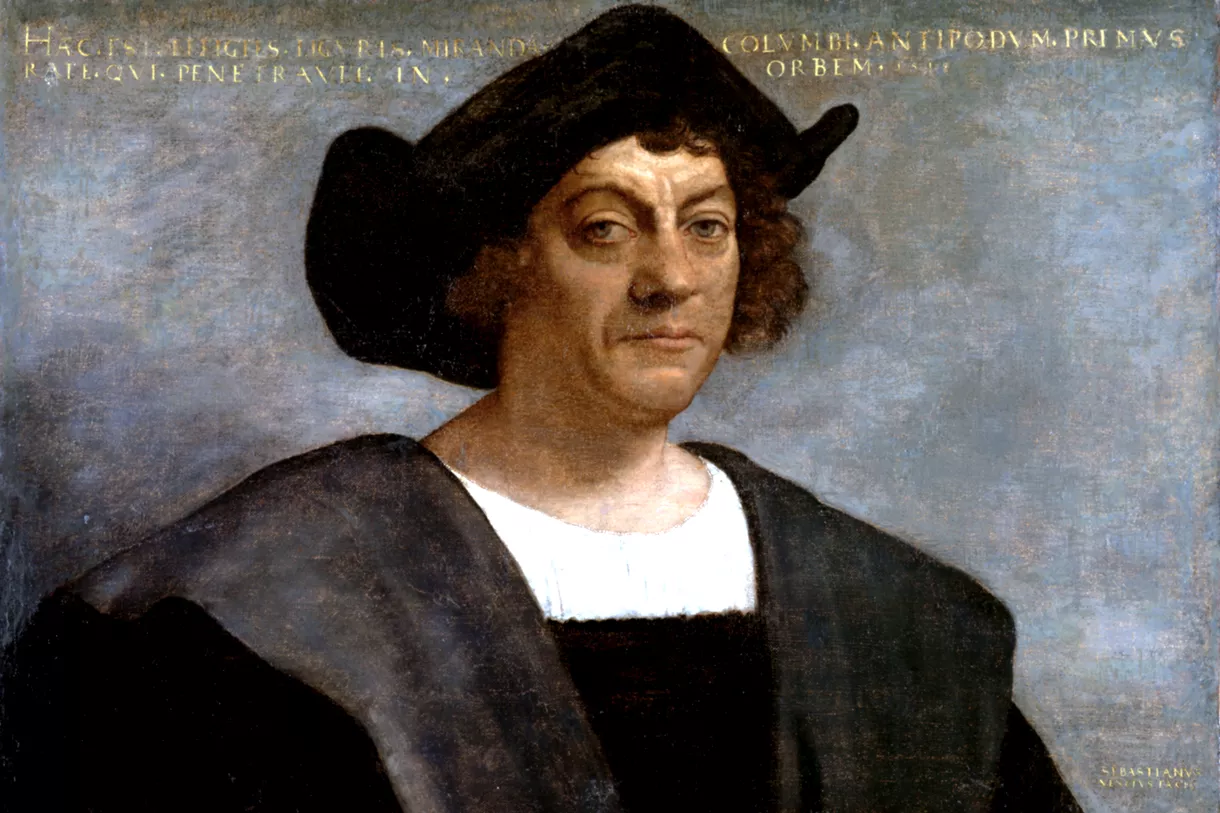
9 reasons Christopher Columbus was a murderer, tyrant, and scoundrel

Published

on

Why do we even celebrate Columbus Day


It’s somewhat old hat at this point to point out that Christopher Columbus — in whose name children are off school and mail isn’t delivered today — was a homicidal tyrant who initiated the two greatest crimes in the history of the Western Hemisphere, the Atlantic slave trade, and the American Indian genocide.

Rehashing all of his crimes would require a much longer article, not least because evaluating the claims of contemporary primary sources is a somewhat tricky historiographical enterprise. Philadelphia Magazine’s Michael Coard has a good survey here; Howard Zinn’s work on this is controversial, but you can find a good excerpt at Jacobin and an illustrated version at the Oatmeal.

Here are just a handful of specific cases, mostly culled from Laurence Bergreen’s recent biography, Columbus: The Four Voyages, of almost unimaginable cruelty inflicted by Columbus and his crew during their time in the Caribbean.

1) Columbus kidnapped a Carib woman and gave her to a crew member to rape

Bergreen quotes Michele de Cuneo, who participated in Columbus’s second expedition to the Americas (page 143):

While I was in the boat, I captured a very beautiful woman, whom the Lord Admiral [Columbus] gave to me. When I had taken her to my cabin she was naked — as was their custom. I was filled with a desire to take my pleasure with her and attempted to satisfy my desire. She was unwilling, and so treated me with her nails that I wished I had never begun. I then took a piece of rope and whipped her soundly, and she let forth such incredible screams that you would not have believed your ears. Eventually we came to such terms, I assure you, that you would have thought she had been brought up in a school for whores.

2) On Hispaniola, a member of Columbus’s crew publicly cut off an Indian’s ears to shock others into submission.


After an attack by more than 2,000 Indians, Columbus had an underling, Alonso de Ojeda, bring him three Indian leaders, whom Columbus then ordered publicly beheaded. Ojeda also ordered his men to grab another Indian, bring him to the middle of his village, and “‘cut off his ears’ in retribution for the Indians’ failing to be helpful to the Spaniards when fording a stream.” (Bergreen, 170-171)

3) Columbus kidnapped and enslaved more than a thousand people on Hispaniola

According to Cuneo, Columbus ordered 1,500 men and women seized, letting 400 go and condemning 500 to be sent to Spain, and another 600 to be enslaved by Spanish men remaining on the island. About 200 of the 500 sent to Spain died on the voyage, and were thrown by the Spanish into the Atlantic. (Bergreen, 196-197)

4) Columbus forced Indians to collect gold for him or else die

Columbus ordered every Indian over 14 to give a large quantity of gold to the Spanish, on pain of death. Those in regions without much gold were allowed to give cotton instead. Participants in this system were given a “stamped copper or brass token to wear around their necks in what became a symbol of intolerable shame.” (Bergreen, 203)

5) About 50,000 Indians committed mass suicide rather than comply with the Spanish

Bergreen explains, page 204:

The Indians destroyed their stores of bread so that neither they nor the invaders would be able to eat it. They plunged off cliffs, they poisoned themselves with roots, and they starved themselves to death. Oppressed by the impossible requirement to deliver tributes of gold, the Indians were no longer able to tend their fields, or care for their sick, children, and elderly. They had given up and committed mass suicide to avoid being killed or captured by Christians, and to avoid sharing their land with them, their fields, groves, beaches, forests, and women: the future of their people.

6) 56 years after Columbus’s first voyage, only 500 out of 300,000 Indians remained on Hispaniola

Population figures from 500 years ago are necessarily imprecise, but Bergreen estimates that there were about 300,000 inhabitants of Hispaniola in 1492. Between 1494 and 1496, 100,000 died, half due to mass suicide. In 1508, the population was down to 60,000. By 1548, it was estimated to be only 500.

Understandably, some natives fled to the mountains to avoid the Spanish troops, only to have dogs set upon them by Columbus’s men. (Bergreen, 205)

7) Columbus was also horrible to the Spanish under his rule

While paling in comparison to his crimes against Caribs and Taino Indians, Columbus’s rule over Spanish settlers was also brutal. He ordered at least a dozen Spaniards “to be whipped in public, tied by the neck, and bound together by the feet” for trading gold for food to avoid starvation. He ordered a woman’s tongue cut out for having “spoken ill of the Admiral and his brothers.”

Another woman was “stripped and placed on the back of a donkey … to be whipped” as punishment for falsely claiming to be pregnant. He “ordered Spaniards to be hanged for stealing bread” (Bergreen, 315-316). Bergreen continues:

He even ordered the ears and nose cut off one miscreant, who was also whipped, shackled, and banished from the island. He ordered a cabin boy’s hand nailed in public to the spot where he had pulled a trap from a river and caught a fish. Whippings for minor infractions occurred with alarming frequency. Columbus ordered one wrongdoer to receive a hundred lashes — which could be fatal — for stealing sheep, and another for lying about the incident. An unlucky fellow named Juan Moreno received a hundred lashes for failing to gather enough food for Columbus’s pantry.

8) Settlers under Columbus sold 9- and 10-year-old girls into sexual slavery

This one he admitted himself in a letter to Doña Juana de la Torre, a friend of the Spanish queen: “There are plenty of dealers who go about looking for girls; those from nine to ten are now in demand, and for all ages a good price must be paid.”

9) Indian slaves were beheaded when their Spanish captors couldn’t be bothered to untie them

Benjamin Keen, a historian of the Spanish conquest of the Americas, noted that multiple sources confirmed accounts of “exhausted Indian carriers, chained by the neck, whose heads the Spaniards severed from their bodies so they might not have to stop to untie them.”


Source: Vox

Comments

News

Eid: Oseni Calls for Vigilance, Lauds Security Operatives

Published

on

As Muslims across Nigeria and the world celebrate Eid-ul-Adha, Hon. Aderemi Oseni, Member of the House of Representatives representing Ibarapa East/Ido Federal Constituency, has urged Nigerians to exercise heightened community vigilance.

In a statement issued by his media aide, Idowu Ayodele, the lawmaker, who also chairs the House Committee on the Federal Roads Maintenance Agency (FERMA), tasked security operatives at all levels to ensure peace and safety during the festive period.

Oseni, who has emerged as the All Progressives Congress (APC) candidate for Oyo South Senatorial District in the 2027 general elections, noted that Eid is a time for joy, spiritual reflection, and renewal.

The federal lawmaker added that the period is also an opportunity to recognize the critical role of security personnel in protecting lives, property, and public spaces.

“Eid-ul-Adha reminds us that peace and security are shared responsibilities,” the statement read.

“As we celebrate with our families and loved ones, let us remain vigilant and supportive of the men and women in uniform, whose courage, dedication, and professionalism make it possible for citizens to enjoy this festive season safely.”

Oseni commended security agencies across Oyo State and Nigeria, noting their unwavering commitment, discipline, and resilience, often under challenging conditions. He further urged citizens to partner with security operatives, report suspicious activities, and strengthen neighborhood cohesion, emphasizing that national security is a collective responsibility that transcends political, local, or individual interests.

The APC chieftain also highlighted the importance of responsible citizenship, calling on Nigerians to reflect the values of compassion, integrity, and communal solidarity that the Eid festival embodies.

“Our collective vigilance, cooperation, and commitment to the common good are what sustain peace and foster sustainable development,” he added.

The legislator extended warm Eid-ul-Adha greetings to all Nigerians, praying that the season brings joy, unity, and renewed hope for peace across the nation.

Continue Reading

News

Oyo Abduction: SWEGOP Demands Swift Rescue of Pupils, Teachers

Published

on

The South West Guild of Online Publishers (SWEGOP) has urged the Federal Government and the Oyo State Government to intensify efforts to secure the immediate release of pupils and teachers abducted in the Oriire Local Government Area of Oyo State.

The media group described the incident as heartbreaking and traumatising, warning that it had deepened fears over worsening insecurity in Oyo State and the wider South-West region.

In a statement jointly signed by its Chairman, Bisi Oladele, and Publicity Secretary, Remi Oladoye, SWEGOP said the abduction was not only a painful attack on the victims’ families and affected communities but also a direct assault on the peace and stability of the region.

The guild lamented that many residents were gradually losing confidence in the safety of their environment, noting that the growing wave of insecurity had continued to inflict fear and psychological trauma on citizens.

According to the group, the continued captivity of the victims further exposes the fragility of Nigeria’s security architecture and underscores the urgent need for more coordinated and proactive responses to insecurity.

“The unfortunate abduction of innocent pupils and teachers in Oriire is deeply disturbing and unacceptable. Beyond the immediate pain inflicted on affected families and communities, this incident has heightened anxiety and fear among residents across Oyo State and the South-West,” the statement partly read.

While commending security agencies for ongoing rescue operations, SWEGOP urged the Federal and Oyo State governments not to relent until the victims were rescued unharmed and reunited with their families.

The guild also called for stronger collaboration between government and relevant stakeholders capable of supporting rescue efforts, stressing that all necessary resources must be deployed to secure the victims’ freedom.

It further appealed to security agencies to strengthen intelligence gathering, improve surveillance across vulnerable communities and adopt preventive measures to forestall future occurrences.

SWEGOP maintained that protecting lives and property remained the foremost responsibility of government, urging authorities to take decisive actions capable of restoring public confidence in the nation’s security system.

Continue Reading

News

FG Declares May 27, 28 Public Holidays for Eid-ul-Adha Celebration

Published

on

The Federal Government has declared Wednesday, May 27, and Thursday, May 28, 2026, as public holidays to mark this year’s Eid-ul-Adha celebration.

The announcement was made by the Minister of Interior, Olubunmi Tunji-Ojo, in a statement issued on Monday by the Permanent Secretary of the Ministry of Interior, Magdalene Ajani.

According to the statement, the declaration reflects the government’s respect for the Islamic faith and the spiritual importance of the festival to millions of Muslims in Nigeria and across the globe.

“The Federal Government of the Federal Republic of Nigeria has declared Wednesday, 27th May and Thursday, 28th May, 2026 as public holidays to mark the celebration of Eid-ul-Adha,” the statement read in part.

The minister congratulated Muslim faithful in Nigeria and in the diaspora, describing Eid-ul-Adha as a festival rooted in sacrifice, obedience to God, and compassion for humanity. He urged Nigerians to use the festive period to pray for the nation and support ongoing efforts to ensure national peace, security, and prosperity.

“The Federal Government urges all Nigerians to use this period for prayer and sober reflection, asking for divine guidance upon the country as it continues its pursuit of peace, security, and prosperity for every citizen,” the statement added.

The government also wished Muslims a peaceful and joyous celebration while calling for unity, brotherhood, and mutual understanding among Nigerians.
Eid-ul-Adha, also known as Eid-el-Kabir or the Festival of Sacrifice, is one of the most significant celebrations in Islam and is observed by Muslims worldwide.

Meanwhile, travellers have begun moving across several parts of the country, including Lagos, ahead of the holiday period.

To ensure safety on the roads during the festivities, the Federal Road Safety Corps (FRSC), Kwara State Sector Command, said it had deployed 950 personnel, including officers, marshals, special marshals, and first responders across the state. Sixteen patrol vehicles, four ambulances, and a 70-tonne tow truck have also been positioned to support traffic management and emergency response during the celebrations.
Motorists were advised to strictly comply with traffic regulations, with the FRSC warning against offences such as speeding, dangerous driving, wrongful overtaking, overloading, mobile phone use while driving, tyre violations, lane indiscipline, and seatbelt violations.

Continue Reading

Advertisement

Entertainment

Advertisement

MegaIcon Magazine Facebook Page

Advertisement

MEGAICON TV

Advertisement

Trending