Connect with us

News

36 million children in Ethiopia are poor, lack access to basic social services – New report reveals

Published

on

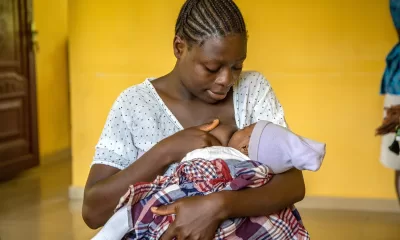
An estimated 36 million of a total population of 41 million children under the age of 18 in Ethiopia are multi-dimensionally poor, meaning they are deprived of basic goods and services in at least three dimensions, says a new report released on Friday by the Central Statistical Agency and UNICEF.

Titled “Multi-dimensional Child Deprivation in Ethiopia – First National Estimates,” the report studied child poverty in nine dimensions – development/stunting, nutrition, health, water, sanitation, and housing. Other dimensions included education, health related knowledge, and information and participation.

”We need to frequently measure the rates of child poverty as part of the general poverty measures and use different approaches for measuring poverty. This requires all stakeholders from government, international development partners and academic institutions to work together to measure, design policies and programmes to reduce child poverty in Ethiopia,’’ said Mr Biratu Yigezu, Director General of Central Statistical Agency.

The report adapted the global Multi-Dimensional Overlapping Deprivation Analysis (MODA) methodology and used information available from national data sets such as the Ethiopian Demographic and Health Surveys of 2011 and 2016. MODA has been widely used by 32 countries in Africa to analyze child well-being. The methodology defines multi-dimensional child poverty as non-fulfilment of basic rights contained in the UN Convention on the Rights of the Child and concludes that a child is poor if he or she is deprived in three to six age-specific dimensions. The report’s findings have been validated through an extensive consultative process involving the Ministry of Women, Children and Youth, National Planning Commission, the Ministry of Labour and Social Affairs together with the  Economic Policy Research Institute, among others.

“Children in Ethiopia are more likely to experience poverty than adults, with distressing and lifelong effects which cannot easily be reversed,” said Gillian Mellsop, UNICEF Representative in Ethiopia. “Ethiopia’s future economic prosperity and social development, and its aspirations for middle income status, depend heavily on continued investments in children’s physical, cognitive and social development.”

The study finds that 88 per cent of children in Ethiopia under the age of 18 (36 million) lack access to basic services in at least three basic dimensions of the nine studied, with lack of access to housing and sanitation being the most acute. The study reveals that there are large geographical inequalities: 94 per cent children in rural areas are multi-dimensionally deprived compared to 42 per cent of children in urban areas. Across Ethiopia’s regions, rates of child poverty range from 18 per cent in Addis Ababa to 91 per cent in Afar, Amhara, and SNNPR.  Poverty rates are equally high in Oromia and Somali (90 per cent each) and Benishangul-Gumuz (89 per cent).

Additional key findings from the report indicate:

  • High disparities across areas and regions of residence in terms of average number deprivations in basic rights or services. For example, the differences in deprivation intensity (average number of deprivations in basic rights and services that each child is experiencing) between rural and urban areas are significant; multi-dimensionally deprived children residing in rural areas experienced 4.5 deprivations in accessing basic rights and needs on average compared to 3.2 among their peers in urban areas;


  • Given their large population sizes, Oromia, Amhara, and SNNPR regions are the largest contributors to multi-dimensional child deprivation in Ethiopia. These three regions jointly account for 34 of the 36 million deprived children in Ethiopia, with Oromia having the highest number at 16.7 million, SNNPR at 8.8 million, and Amhara at 8.5 million. Regions with the lowest number of poor children are Harar at 90,000, Dire Dawa at 156,000, and Gambella at 170,000.


  • Although there has been progress in reducing child deprivation, much more remains to be done. The percentage of children deprived in three to six dimensions decreased from 90 per cent to 88 per cent between 2011 and 2016 and the average number of deprivations that each child is experiencing decreased from 4.7 to 4.5 dimensions during the same period.


  • Most children in Ethiopia face multiple and overlapping deprivations. Ninety-five per cent of children in Ethiopia are deprived of two to six basic needs and services, while only one per cent have access to all services. Deprivation overlaps between dimensions are very high in rural areas and among children in the poorest wealth quintiles.

The report makes the following recommendations:

  1. Speed up investments to reduce child poverty by four per cent each year for the next decade if Ethiopia is to achieve the Sustainable Development Goal on poverty reduction;
  2. Accelerate investments in social sectors prioritizing child-sensitive budgeting at the national and regional levels to enhance equality and equity; and
  3. Improve collaboration among different social sectors to ensure that the multiple needs of children are met.

Comments

News

Iran War Disrupts Oil Supply, Global Loss Hits $50bn

Published

on

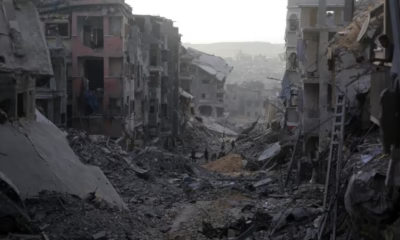
The global oil market has recorded losses exceeding $50bn following massive supply disruptions triggered by the ongoing Iran war, which has now stretched to nearly 50 days.

Data from energy analytics firm Kpler showed that more than 500 million barrels of crude oil and condensate have been wiped off the global market since the crisis began in late February, making it the largest energy supply disruption in modern history.

Iran’s Foreign Minister, Abbas Araqchi, on Friday said the Strait of Hormuz had been reopened after a ceasefire agreement reached in Lebanon.

However, tensions escalated again on Saturday as Tehran warned it could shut the strategic waterway if the United States sustains its blockade of Iranian ports.

Also, U.S. President Donald Trump expressed optimism that a deal to end the conflict could be reached “soon,” although he did not provide a definite timeline.

Analysts warned that the scale of disruption could have prolonged effects on global energy stability, with shocks expected to linger for months or even years.

Providing context, Principal Analyst at Wood Mackenzie, Iain Mowat, said the 500 million barrels lost is equivalent to grounding global aviation demand for 10 weeks, halting all road transport worldwide for 11 days, or shutting down the entire global oil supply for five days.

Further estimates showed that the lost volume is nearly equal to one month of oil demand in the United States or more than a month’s supply for Europe. It also represents about six years of fuel consumption by the U.S. military and could power global shipping activities for approximately four months.

The crisis has significantly affected oil-producing nations in the Gulf, with output losses reaching about eight million barrels per day in March—roughly equivalent to the combined production of two of the world’s largest oil companies.

Jet fuel exports from major producers, including Saudi Arabia, Qatar, the United Arab Emirates, Kuwait, Bahrain, and Oman, dropped sharply from 19.6 million barrels in February to just 4.1 million barrels recorded across March and April combined. Analysts said the shortfall could have powered about 20,000 round-trip international flights.

With crude prices averaging around $100 per barrel since the onset of the conflict, the lost volumes translate to an estimated $50bn in revenue. Experts noted that this figure is equivalent to about one per cent of Germany’s annual Gross Domestic Product, or roughly the size of the economies of smaller European countries.

Meanwhile, global onshore crude inventories have declined by about 45 million barrels in April alone, while total production outages have risen to approximately 12 million barrels per day since late March.

Industry experts cautioned that unless a lasting resolution is reached, the disruption could intensify volatility in global oil markets, worsen inflationary pressures, and further strain fragile economies worldwide.

Continue Reading

News

Oseni Secures Prestigious City People Political Award Nomination

Published

on

A member of the House of Representatives representing Ibarapa East/Ido Federal Constituency and Chairman of the House Committee on Federal Roads Maintenance Agency, Aderemi Oseni, has been nominated for a Special Award in Politics at the 2026 City People Political Awards.

The nomination was conveyed in a letter dated April 13, 2026, signed by the Publisher/Editor-in-Chief of City People Magazine, Seye Kehinde.

The development was disclosed in a statement issued by Oseni’s media aide, Idowu Ayodele, and made available to journalists in Ibadan on Thursday.

According to the statement, the lawmaker earned the nomination in recognition of his “outstanding contributions to politics in Oyo State, particularly in Ibarapa East/Ido Federal Constituency.”

The organisers noted that Oseni emerged as a nominee following a comprehensive review of performances across sectors by the award’s selection committee.

Part of the letter read, “Having performed creditably well in your sector last year, the Organising Committee presented you as a nominee in your sector.”

The award ceremony is scheduled to hold on Sunday, May 3, 2026, at Etal Hall, Kudirat Abiola Way, Oregun, Ikeja, Lagos, at 4pm.

The City People Awards is an annual event that recognises individuals who have distinguished themselves in governance, public service and other sectors of national development.

Continue Reading

News

Kaduna Electric to prosecute, expose attackers of staff

Published

on

The Kaduna Electricity Distribution Company has announced a crackdown on individuals who assault its staff, warning that offenders will face prosecution and public exposure.

In a statement issued on Thursday, the company expressed concern over what it described as a “disturbing surge” in attacks on its field workers and third-party partners.

It noted that the affected personnel were mainly engaged in meter installation, revenue collection and maintenance of electricity infrastructure.

According to the firm, the increasing cases of harassment, physical assault and unlawful detention of its workers pose a serious threat to employee safety and the stability of electricity service delivery across its franchise areas.

The Deputy Managing Director, Abubakar Mohammed, said the company would no longer tolerate any form of aggression against its workforce.

“Let this serve as a clear warning to anyone who engages in the assault of our staff. Kaduna Electric will pursue every case to its logical conclusion,” he said.

“We will work closely with security agencies to ensure offenders are brought to justice and face the full weight of the law,” Mohammed added.

He further disclosed that the company would publicly reveal the identities of individuals found culpable.

According to him, names, photographs and other details of offenders would be published on the company’s official platforms as well as in national and local media.

“This measure is intended to ensure accountability and serve as a strong deterrent. Anyone who chooses to attack our personnel should be prepared not only to face prosecution but also public exposure,” he added.

The company stressed that assaults on utility workers attract serious legal and financial consequences, noting that offenders risk criminal charges that may lead to fines or imprisonment.

It added that perpetrators could also face civil liabilities, including compensation for medical treatment, psychological trauma and loss of work hours.
While condemning the attacks, Kaduna Electric urged customers to adopt peaceful and lawful means of resolving disputes.

It advised aggrieved customers to channel complaints through its customer service units or appropriate regulatory bodies.

The management reaffirmed its commitment to protecting its workforce and partners, stressing that a safe working environment is essential for delivering reliable and efficient electricity services.

Although disputes between electricity providers and consumers are often linked to billing issues, metering challenges and service delivery concerns, the company maintained that such matters must be resolved through dialogue, insisting that violence against its staff will no longer be tolerated.

Continue Reading

Advertisement

Entertainment

Advertisement

MegaIcon Magazine Facebook Page

Advertisement

MEGAICON TV

Advertisement

Trending