Connect with us

Top Stories

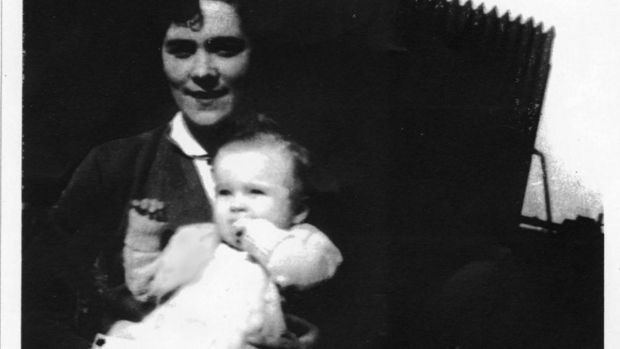
Raped by a priest, abused, incarcerated and no apology – Magdalene survivor narrates ordeal

Published

on

Seven years ago a small red exercise book was put on display in the Little Museum of Dublin. A sticker announces its purpose: “Laundry Lists Writing-In Book.”

The artefact was ignored by most visitors, which is hardly surprising. At first glance the contents are innocuous, for the copybook contains only a list of names: of families, companies, schools, clubs, religious orders and State institutions. They were clients of the largest Magdalene laundry in Ireland.
In the museum, small objects are used to tell a larger story – about Dublin, about Ireland and about the large, very odd family to which we all belong. But in trying to record our complex shared history, we also want to be inclusive. Some visitors are religious, others are not. Most people come to be entertained as much as educated.

“More than 10,000 women and girls spent time in the laundries, which operated with the blessing of an unholy trinity of family, church and State

For these reasons we struggled to find an appropriate way to talk about the ledger on guided tours of the museum. It is not something that can be referenced with a quip. It demands scrutiny. Because that copybook, in which neat red ticks denote the completion of a job, is not merely a list of clients.

It is also a damning indictment.
In the 1950s this country locked up 1 per cent of its population. We incarcerated more people per head of population than Stalin did in Russia. And the Catholic Church played a leading role. Until very recently, religious institutions ran orphanages, industrial schools, homes for single mothers and the now-notorious Magdalene laundries.
The laundries started before the foundation of the State, apparently as places of respite and training for women, prostitutes in particular. However after independence they soon became places of arbitrary detention: for orphans who had grown up in State care; for cruelly named “fallen women” who had given birth outside marriage (often as a result of rape); for girls who were simply outspoken or even high-spirited.

Moral code

Women who didn’t conform to the demands of a society with a strict moral code were locked away “for their own protection” – the medieval logic of the laundries – and forced to do backbreaking unpaid work in businesses run by religious orders. Mortality rates were shockingly high, and some victims were buried in communal graves, sometimes unmarked and unrecorded.

More than 10,000 women and girls spent time in the laundries, which operated with the blessing of an unholy trinity of family, church and State. Nobody knew what was going on behind those walls – and everyone knew. In fact, every Irish person over a certain age is implicated in this story, whether they like it or not. That includes me.

“She still has the scars on her body. She still wakes up crying in the middle of the night

I was 24 years old when the last Magdalene laundry closed in Dublin in 1996. Old enough, that is, to vote, to care about notions such as truth and justice and to feel outraged by human rights abuses in Rwanda and Bosnia. Yet here at home I ignored the shocking reality of life for some people – a reality that was hiding in plain sight. (As a nun once put it to The Irish Times,

“There are very serious problems in Dublin if we could only get our hands on them. Girls arriving up here from the country with no money and nowhere to go.”
Two decades later, Irish society was beginning to come to terms with the brutal reality of life in the laundries. Our ledger had come from High Park, a laundry in Drumcondra that was run by the Religious Sisters of Our Lady of Charity. In addition to the many ordinary families whose names are listed, there are also emblems of Official Ireland, such as the Department of Justice and Áras an Uachtaráin. This copybook could be used to tell a larger story. But how?
We knew that the power of one person’s story might be the best way to explore its meaning. However, many of the survivors were reluctant to talk in public, while others had escaped from Ireland for a new life overseas. Among the emigres was Mary Merritt, who was interviewed for the BBC Panorama programme in 2015. Born in a Dublin workhouse, Mary spent her childhood in Ballinasloe, in the care of the Sisters of Mercy.
At the age of 16 – “I was a bold child” – she was caught stealing a few apples from an orchard and was sent to High Park. Renamed Attracta by the nuns, she spent the next 14 years enduring horrific trauma and abuse. Escaping from the convent, she went to a priest and begged for help. Mary was raped by the priest and became pregnant with a baby she met only once before the girl was given up for adoption. She told her story to Miriam O’Callaghan on RTÉ radio in March 2018.

Memories

At the age of 83, Mary was brave enough to share her story with the BBC. Would she be willing to share her memories of High Park with our visitors? A couple of phone calls later I had her email address. Mary was living in Tunbridge Wells, and eager to talk: “I would like to take up your invitation and tell you my heartbreaking story. It is with me always.”

Over the next 12 months I spent many hours with Mary and her husband Bill. Married for more than 50 years, they are utterly devoted to each other, and today, at the age of 88, Mary remains as “bold” as ever. Chatty and warm, she has a loud, slightly wicked laugh and delights in spending some of her compensation money by staying in a posh hotel on her visits to Dublin.
Mary once met Paul McCartney and still raves about the experience; takes her neighbour’s dog for a walk every morning; sends thoughtful cards in the post. But her voice hardens when she recalls the misery of life in High Park. She still has the scars on her body; still wakes up crying in the middle of the night; still wants an apology from the church. When she talks about these things it is with the resolve of an extraordinarily strong woman who would not be silenced by malicious forces.
Last year, Mary was in Áras An Uachtaráin when President Michael D Higgins apologised to the Magdalene survivors on behalf of the State. Mary used to do the laundry for the Áras.
However, she admires our current President. “He is,” she says, “a lovely man.” Reflecting on this it is tempting to conclude that the story has played itself out, that we are now reconciled to the past and that wrongs have been addressed. But Mary Merritt is still waiting.
“I never received an apology from the church,” she told me recently. “And I am still angry. I want that apology before I die. And until then, I will continue to speak out.”
In Ireland, artists were once internal exiles.
These days they play a key role in commemorating the past, which Fintan O’Toole has memorably described as “an act of imaginative sympathy as it is of historical reconstruction.”
Inspired by the remarkable work of theatre-makers like Louise Lowe and Selina Cartmell, and encouraged to be fearless by Mary herself, we introduced her to the writer and director Gerry Stembridge, the designer Stephen Dodd and the actor Amy Kidd. Together we have created a new work that will receive its premiere at the Dublin Theatre Festival. Lasting 15 minutes, it can only be seen by one person at a time. At the end the audience is invited to inspect the High Park ledger.
You Can Leave at Any Time is not exactly a play, a memoir, an art installation or a museum exhibition, although it is indebted to each of these forms. We don’t care what people call it, though we do know that some will find it an uncomfortable experience. If my contemporaries feel a measure of shame, that is not inappropriate.
Younger visitors may be shocked to discover quite how recent it all was. We hope that people of all ages will be transported, horrified and ultimately inspired by the story of a woman who refused to allow her life to be ruined by powerful men and women who were almost unimaginably cruel.
Source: irishtimes

 

Comments

Politics

2027: APC Perfects Consensus Strategy for Oyo

Published

on


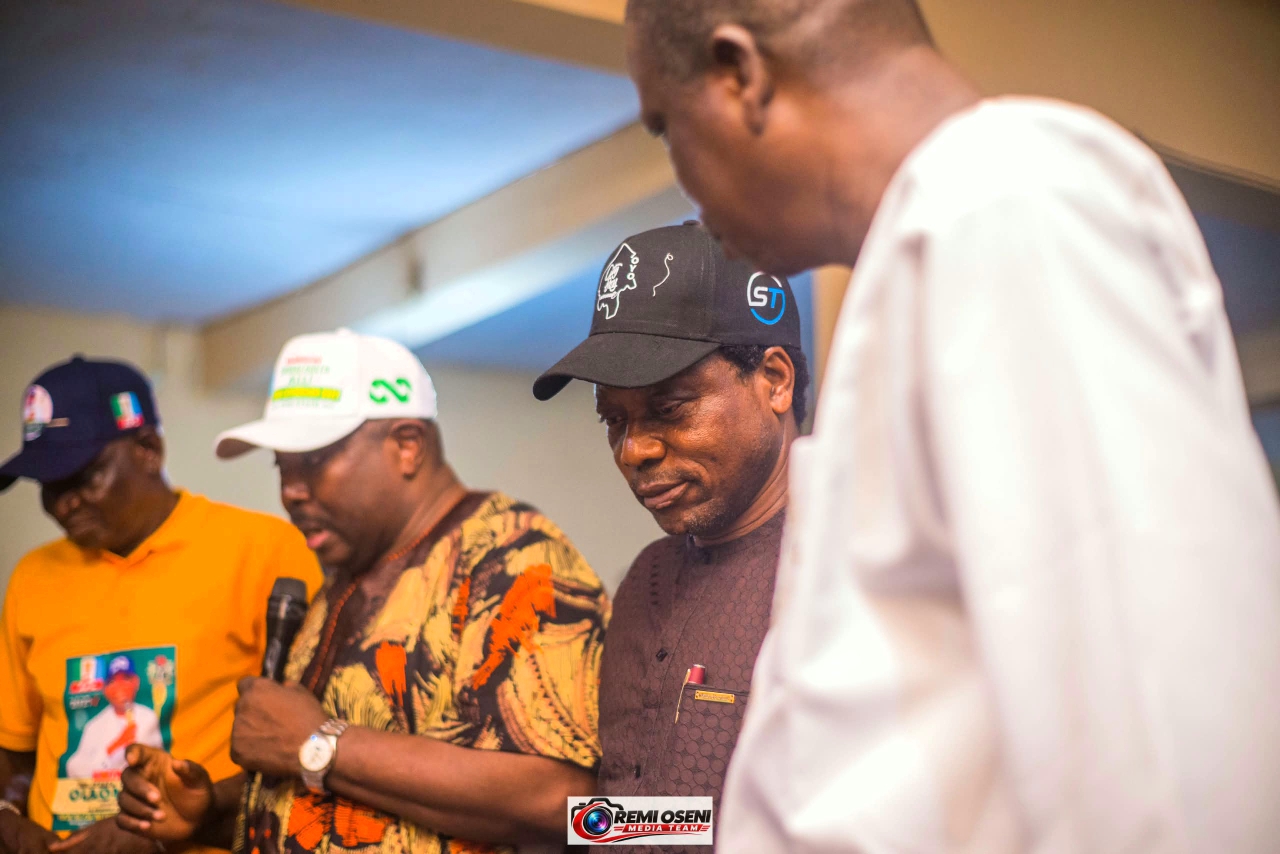
Ahead of the 2027 general elections, the national leadership of the All Progressives Congress (APC) on Tuesday held a high-level strategic meeting with the Oyo State chapter of the party as part of efforts to reposition the APC for victory and prevent internal crisis ahead of the polls.

The development was first scooped by OYOINSIGHT.COM which quoted multiple party sources familiar with the closed-door deliberations.

Sources disclosed that the meeting, held in Abuja, focused largely on a consensus arrangement being considered by stakeholders of the party in Oyo State, in line with political templates reportedly being adopted in Lagos and Ogun states ahead of the next electoral cycle.

Party insiders said the move was aimed at strengthening unity within the fold of the opposition party in the state, minimising rancour during the primaries and presenting a formidable front against rival parties in 2027.

It was further gathered that some members of the state executive committee may have been subtly informed about preferred consensus candidates being considered for elective positions across the state.

Though details of the deliberations were still sketchy as of press time, sources hinted that the national leadership stressed the need for cohesion, discipline and strategic alignment among stakeholders to improve the party’s electoral fortunes in Oyo.

Those at the meeting included the Oyo APC Chairman, Moses Alake Adeyemo; the state secretary, Fatai Adesina Adeniyi; the Publicity Secretary, Olawale Sadare; the Organising Secretary, Aderemi Adepoju; and the Legal Adviser, Sunday Aborisade.

Others were the Women Leader, Adekemi Opatunde; the Youth Leader, Olalekan Oladejo; Joshua Oyebamiji; Tunde Oloyede; Sunday Babalola; Joseph Omoniyi; and Mojeed Adebayo.

As of the time of filing this report, the party had yet to issue an official statement on the outcome of the meeting.

Continue Reading

Politics

2027: Oyo APC Set for Credible Direct Primaries, Says Alake Adeyemo

Published

on

The Chairman of the All Progressives Congress (APC) in Oyo State, Chief Moses Alake Adeyemo, on Monday assured aspirants and party members that the party would conduct transparent, peaceful and credible direct primaries ahead of the 2027 general elections.

Adeyemo declared that no aspirant would be victimised or denied a level playing field, stressing that the party leadership remained committed to internal democracy and progressive ideals.

The former deputy governor spoke while receiving members of the APC Screening and Appeal Committees deployed from the party’s National Secretariat in Abuja at the APC Secretariat in Oke-Ado, Ibadan.

He disclosed that although the party initially explored consensus arrangements across elective positions, prevailing realities indicated that direct primaries would be conducted in some areas, including the governorship contest.

Adeyemo said the party had already put necessary structures in place to ensure a hitch-free exercise capable of strengthening unity within the APC.

He said: “We set machineries in motion for us to achieve the aim of consensus across board but reports available to me indicate that we would have to go by the second option which is direct primary in certain cases including the governorship ticket.

“To this end, we shall work towards organising free, fair and credible exercise in all the affected areas even as we cannot rule out the possibility of some aspirants having a rethink and supporting the consensus arrangement as necessary.

“Where we have more than an aspirant, Abuja would send people to conduct primaries and we at the state level would provide the required support to make everything work out in the interest of our great party.”

The APC chairman explained that all registered party members would participate fully in the exercise at their respective wards on dates to be announced by the National Secretariat.

According to him, affirmation would be adopted in areas where consensus candidates emerge, while voting would be conducted wherever direct primaries become necessary.

“For consensus, members will lend their voices for affirmation while voting will be done in the cases of direct primary,” he added.

Speaking earlier, Chairman of the Screening Committee and former Speaker of the Ondo State House of Assembly, Rt. Hon. Taofiq AbdusSalam, assured party faithful that the committee would carry out a thorough, transparent and unbiased screening process.

He said only eligible aspirants would be cleared to participate in the primaries and eventually fly the APC flag in the forthcoming elections.

Other members of the Screening Committee are Kamal Sanusi (Secretary), Smart Oluwole, Tunde Kolade and Olabamiji Agunloye.

Members of the Screening Appeal Committee are Jibola Oduwole (Chairman), Abimbola Jack (Secretary) and Jelil Jimoh.

Continue Reading

Politics

NDC zones 2027 presidency to South, reserves 2031 for North

Published

on

The Nigeria Democratic Congress on Saturday zoned its 2027 presidential ticket to Southern Nigeria, declaring that the party’s candidate would serve a single four-year term if elected.

The decision was reached during the party’s national convention held in Abuja amid growing momentum within the opposition platform following a wave of high-profile defections from other political parties.

Announcing the development on its official social media handle, the party stated, “NDC presidential ticket is zoned to the South!!”

The party also resolved that its 2031 presidential ticket would be ceded to Northern Nigeria as part of efforts to maintain regional balance and internal equity.

The convention comes as key opposition figures, including former Labour Party presidential candidate, Peter Obi, and former New Nigeria People’s Party presidential candidate, Rabiu Kwankwaso, joined party leaders and delegates at the Abuja gathering.

Saturday’s convention is expected to ratify several recent decisions taken by the party’s National Executive Committee, including zoning arrangements, amendments to the party constitution, and the election of new national executives.

According to the convention agenda obtained by journalists, discussions centred on zoning, ratification of the amended constitution, and leadership restructuring ahead of the 2027 general elections.

The NDC has in recent weeks witnessed a surge in defections from rival opposition parties, particularly the African Democratic Congress and the Peoples Democratic Party.

On Tuesday, no fewer than 17 members of the House of Representatives defected from the ADC to the NDC.

Their defections were formally announced during plenary at the House of Representatives.

The lawmakers include Yusuf Datti, Uchenna Okonkwo, Adamu Wakili, Thaddeus Attah, George Ozodinobi, Lilian Orogbu, Oluwaseyi Sowunmi, Peter Aniekwe, Mukhtar Zakari, George Oluwande and Munachim Umezuruike.
Others are Emeka Idu, Jesse Onuakalusi, Ifeanyi Uzokwe, Afam Ogene, Murphy Omoruyi and Abdulhakeem Ado.
The defections came barely two days after Obi and Kwankwaso formally joined the NDC from the ADC.

The duo were presented with the party’s membership cards last Sunday shortly after a closed-door meeting with party leaders.

A former Governor of Bayelsa State and NDC national leader, Seriake Dickson, officially welcomed the opposition figures into the party.

Obi had attributed his exit from the ADC to worsening internal crises, external interference and what he described as increasing hostility within party structures.

The former Anambra State governor said Nigeria’s political environment had become increasingly toxic, marked by intimidation, insecurity and sustained scrutiny of opposition figures.

He also lamented that institutions meant to protect citizens were now often deployed against them, while individuals committed to genuine public service faced mounting pressure both publicly and privately.

Continue Reading

Advertisement

Entertainment

Advertisement

MegaIcon Magazine Facebook Page

Advertisement

MEGAICON TV

Advertisement

Trending