Connect with us

Crime & Court

Police not coping with serious violent crime, ISS laments

Published

on

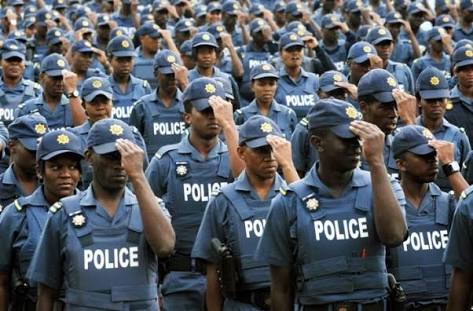
A steady rise in murder and armed robbery shows police are not getting a grip on serious violent crime in South Africa, despite a budget increased by almost 50% since 2011/12 to R87 billion.

This is largely due to inappropriate political interference in the police, the Institute for Security Studies (ISS) said in response to the latest SA Police Service (SAPS) crime statistics released on Tuesday in Parliament.

The National Development Plan called it a ‘crisis of top management’ in the SAPS. President Jacob Zuma’s presidency has resulted in a profound deterioration in policing and caused notable decline in public safety, the ISS said.

Murder

Police reported murder up 1.8% with 52 people now killed every day in South Africa on average. The murder rate has increased 13.3% in the past five years, following a 55% decrease in the first 18 years of South Africa’s democracy since 1994.

Armed robbery

In the latest SAPS figures, armed robbery increased by 8 429 cases to 140 956 (up 6.4%).

More than half of all reported armed robberies are street robberies with 79 878 recorded in the 12 months under review. Every day on average 219 cases of street robbery were reported. Street robberies increased by around 5% compared to the previous year and by 38.6% over five years.

Street robbery primarily affects the poor and working classes as it typically targets people who travel on foot and who need to use public transport to and from work, school or shops. It is one of the most feared crimes.

Armed attacks on people’s homes have increased by 1 523 reported incidents to 22 343 incidents (up 7.3%). There were 982 more armed attacks on businesses, up 5% to 20 680.

Hijacking

Hijacking of cars is up 77.5% in the past five years and up 14.5% in the year under review. There are now 46 cars hijacked a day in South Africa, more than half (52%) of them in Gauteng, where an average 24 cars are forcibly taken from drivers by armed gunmen daily.

SAPS leadership crisis

“Police reported murder up 1.8% with 52 people now killed every day in South Africa on average”

The ISS recognised the bold efforts of many competent and honest police in South Africa, but said the root of the crime and policing crises in South Africa was the failure of the president to appoint a highly experienced woman or man of integrity as SAPS National Commissioner. Ongoing political interference at all levels of the SAPS has severely weakened the organisation.

The political protection of Zuma loyalist, Crime Intelligence Head Lt-General Richard Mdluli, who has been suspended for six years with full pay and benefits despite facing criminal prosecution for murder and corruption, is one of many examples, said Gareth Newham, head of the ISS Justice and Violence Prevention Programme.

‘The protection of Mdluli has severely undermined and compromised police crime intelligence capability. This is why police cannot adequately tackle organised crime syndicates behind crimes such as hijackings and gang violence.’

The SAPS can only be professionalised when there ceases to be inappropriate political interference that favours some officers because of their political loyalties, irrespective of their conduct and ability.

If political interference is halted, then South Africans have good reason to expect better results from the police, said Newham.

‘The police have sufficient skilled operational commanders, resources and technology to effectively tackle violent criminal syndicates and gangs. But they need the right leadership for it to be effective.’

Change would need to start with the way the SAPS National Commissioner is appointed. The ISS and Corruption Watch are urging President Jacob Zuma to follow guidelines in the NDP, as adopted by the cabinet in 2012, and appoint South Africa’s top cop based on competence, experience and integrity – not political loyalty.

‘The same criminals commit many violent crimes from murder to hijacking and armed robbery,’ Newham said. ‘Failure by police to identify violent criminals and investigate their crimes just keeps them on the street as a continued public danger. Police could prevent hundreds of hijackings by stopping the activity of just one syndicate.’

Better investigation

The ISS said police urgently need to improve their capability to investigate crime, gather evidence and arrest the perpetrators. This requires police to earn the trust of communities and reverse a decline in trust levels, as indicated by the most recent Victims of Crime Survey (VoCS).

The annual SAPS crime statistics released on Tuesday cover the period April 2016 to March 2017 and are not a reflection of the past seven months in South Africa.

The ISS has noted that the VoCS found nearly five times more house robberies than those recorded by police, Newham said. ‘It may be that the police are under-recording such incidents or that there are other reasons for difference in numbers. But we need to get to the bottom of this as accurate information is critical if we are to develop effective strategies for reducing crime.’

The ISS encouraged police to work closely with Stats SA and civil society groups to ensure crime data is accurate, and that crime is tackled in a collaborative way.

The ISS points out that corruption is not a category included in the crime statistics, despite it being a criminal threat to South Africa’s economy and social cohesion.

‘Corruption undermines public safety as it weakens the economy, breaks down confidence in government and leads to community frustration.’ The public need to see that the police are proactively tackling this profound threat to our national security, the ISS said.

Comments

Crime & Court

Oyo school abduction: DSS to re-arraign five suspects Thursday

Published

on

The Department of State Services will on Thursday, September 17, re-arraign five men accused of abducting pupils and teachers in Oriire Local Government Area of Oyo State on May 15.

The suspects are also accused of complicity in the subsequent killing of two of the victims.

They will face a six-count amended charge filed by the Director of Public Prosecutions of the Federation, Rotimi Oyedepo, on behalf of the Federal Government.

The defendants are Mahmud Muhammad, also known as Abu Bara’a and Abbas Mukhtar; Abubakar Abbas, also known as Isah Adam and Mallam Mahmuda Al-Nigeri; Abdulrazak Umar, also known as Abu Khalifa and Abu Khalid; Yunusa Musa, also known as Abu Yunusa Bin Musa; and Shamsu Adamu Sani, also known as Abu Itisar.

The Federal Government alleges that the defendants belong to Jama’atu Ansarul Muslimina fi-Biladis Sudan, commonly known as Ansaru, a terrorist organisation.

The re-arraignment was initially scheduled for Wednesday, September 16, but could not proceed after the first defendant, Muhammad, objected to the lawyers assigned to represent the group.

A Deputy Director of the Legal Aid Council, Akilaluyel Shettima, had announced his appearance for all five defendants before the court.

Muhammad, speaking on behalf of the others, told the trial judge, Justice Salim Ibrahim, that they had previously been represented by a lawyer, Bala Dakum, and wanted him to continue handling their defence.

The objection triggered a dispute over the defendants’ constitutional right to choose their counsel.

Oyedepo urged the court to respect that right, stressing that the DSS was a law-abiding institution committed to justice rather than the persecution of the accused.

Justice Ibrahim subsequently adjourned the re-arraignment until Thursday, September 17.

The judge directed the defendants to contact their preferred lawyer and ensure his appearance in court.

He also ordered the DSS to grant the defendants access to the lawyer to allow them to prepare adequately for their defence.

The five men remain defendants in the case, and the allegations against them have not been proved in court.

Continue Reading

Crime & Court

Ondo methanol deaths: Police arrest suspected producer, 14 others

Published

on

Some of the suspects arrested by the police

The Ondo State Police Command has arrested a suspected producer of substances believed to contain methanol following the sudden deaths of about 30 residents of Araromi-Obu and other communities in Odigbo Local Government Area of the state.

The suspect, whose identity was not disclosed, was arrested after the police commenced an investigation into the deaths reportedly linked to the consumption of suspected contaminated alcoholic drinks and concoctions.

The state Police Public Relations Officer, DSP Abayomi Jimoh, disclosed this in a statement made available to journalists on Sunday evening.

Jimoh said the suspect was assisting the police with the investigation, adding that substances suspected to contain methanol had also been recovered.

He said the recovered substances had been subjected to further investigation and forensic examination to determine their exact composition and establish whether they were linked to the reported deaths.

The police spokesperson added that the bodies of the deceased were also undergoing medical and forensic procedures to establish the actual cause of death.

He said, “The outcome of these examinations is expected to provide further medical evidence regarding the actual cause of the deaths.”

Jimoh further disclosed that operatives of the state Criminal Investigation Department had arrested 14 other suspects comprising alleged sellers and consumers of the drinks and concoctions at different locations in the affected communities.

The development came days after the Ondo State Government confirmed that 29 people had died following the suspected consumption of contaminated alcoholic beverages in Araromi-Obu and other communities in Odigbo LGA.

The state Commissioner for Health, Banji Awolowo-Ajaka, who disclosed this on Friday, said 60 cases had so far been recorded.

According to him, three of the affected persons were receiving treatment in hospitals, while 27 others were under medical observation.

The commissioner said about 95 per cent of those affected were males aged between 16 and 55.

He listed the affected communities as Orita Odigbo, Araromi-Obu, Newtown, Odole, Okele and Oniparaga.

Awolowo-Ajaka said the victims presented symptoms including headache, body pain, general weakness, visual impairment, difficulty in breathing and altered consciousness.

He added that some of the patients deteriorated rapidly and died within a few hours.

Following the development, the Commissioner of Police, Felix Ohagwu, directed sustained enforcement against the production, distribution and sale of unapproved, adulterated or otherwise dangerous alcoholic substances across the state.

The police said the investigation was ongoing, while the forensic examination of the recovered substances and the remains of the deceased would help determine the exact cause of the deaths.

Continue Reading

Crime & Court

FCMB staff, ex-worker remanded over alleged $25,000 cyber fraud

Published

on

A Federal High Court in Lagos has ordered the remand of a Service Administrator with First City Monument Bank Plc, Gideon Bakpa Aghogho, and a former employee of the bank, Oscar Ebere Chukwuebuka, over an alleged $25,000 cyber fraud.

Justice Friday Ogazi gave the order on Wednesday following the arraignment of the two men by the Economic and Financial Crimes Commission on charges bordering on conspiracy, cybercrime and fraud.

The EFCC alleged that Aghogho, Chukwuebuka and a man identified as Scott, who is still at large, conspired between July 24 and 26, 2026, to gain unauthorised access to the bank’s server and siphon $25,000.

The prosecution counsel, Bilikisu Buhari-Bala, told the court that Aghogho allegedly released his access code to Chukwuebuka, who was said to have approached him to facilitate access to the bank’s system.

According to the prosecutor, the access code, which was linked to the bank’s local Administrative Credential, known as ITSD, was allegedly used to gain access to the FCMB Virtual Centre Platform.
Buhari-Bala further alleged that after the money was siphoned, Aghogho received $2,000, while Chukwuebuka allegedly received $400.

The prosecutor said the alleged offences violated provisions of the Cybercrimes (Prohibition, Prevention, Etc) Act, 2015, as amended in 2024, and the Money Laundering (Prevention and Prohibition) Act, 2022.

When the charges were read to them, Aghogho pleaded not guilty, while Chukwuebuka pleaded guilty.
Following their pleas, Justice Ogazi adjourned the case until August 27, 2026, for a review of the facts relating to the charges against Chukwuebuka.

The judge also ordered that the two defendants be remanded in the custody of the Nigerian Correctional Service pending the next hearing.

Before the arraignment, counsel to the defendants, N. Egah and Livingstone Madu, told the court that their clients were willing to enter into a plea bargain agreement.

The prosecutor, however, said the EFCC was not aware of any plea bargain arrangement involving the defendants.
One of the counts alleged that Aghogho, Chukwuebuka and Scott conspired to provide and use Aghogho’s access code to the FCMB system, thereby enabling unauthorised access to the bank’s Virtual Centre Platform.

Another count accused Aghogho of unlawfully disclosing access credentials, including the bank’s server IP and domain credentials, which allegedly facilitated access to the bank’s database.

The EFCC also alleged that Aghogho retained $2,000 on July 26, 2026, while Chukwuebuka retained $400, knowing or having reasonable grounds to believe that the sums were proceeds of an unlawful act.

The defendants have not been convicted of the allegations.

The case was adjourned until August 27 for further proceedings.

Continue Reading

Trending