Politics
Osun 2026: Adeleke, Oyebamiji, Salaam Lock Horns as Three-Way Guber Battle Takes Shape

Incumbency, structure and disruption redefine Osun’s next political test
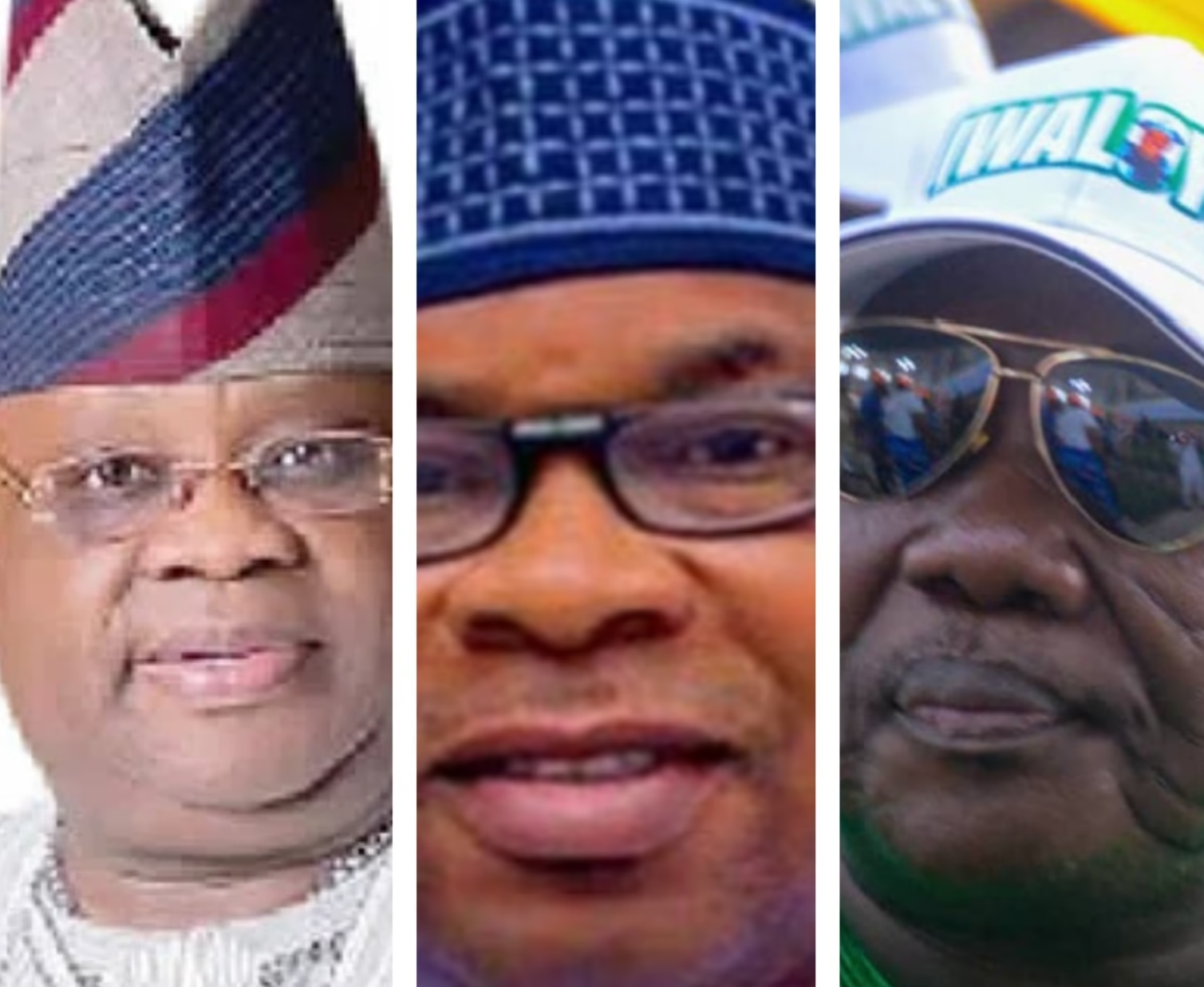
Osun State is gradually slipping into full electioneering mode as the 2026 governorship contest assumes clearer shape, with Governor Ademola Adeleke of the Accord Party (AP), former Finance Commissioner Bola Oyebamiji of the All Progressives Congress (APC) and ex-Speaker of the Osun State House of Assembly, Rt. Hon. Najeem Salaam of the African Democratic Congress (ADC), emerging as the central figures in a high-stakes three-way race.
Behind the relative calm in the polity, political calculations, regional permutations and strategic mobilisation are intensifying, with analysts describing the contest as one of the most consequential in the state’s recent political history.
Governor Adeleke’s decision to seek re-election on the platform of the Accord Party has continued to reshape the political landscape. Controversies surrounding the party’s governorship primary have, however, worked in his favour. Attempts by his perceived political opponents to derail his emergence failed after the Independent National Electoral Commission (INEC) distanced itself from a parallel primary allegedly conducted by a faction of the party.
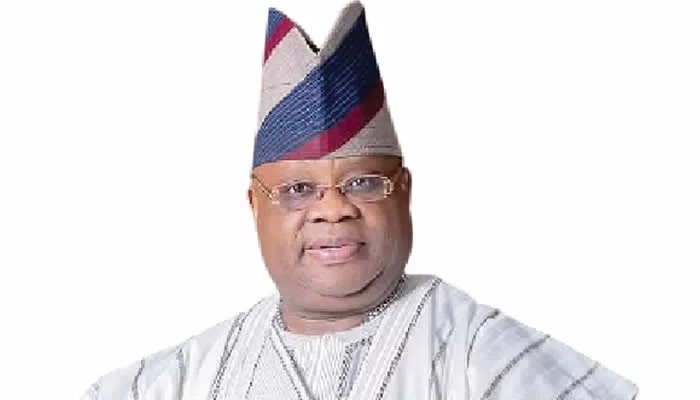
Governor Ademola Adeleke
INEC maintained that it only monitored the exercise that produced Adeleke as the valid candidate, a position that party leaders say effectively neutralised internal dissent. Political observers argue that the episode consolidated Adeleke’s grip on the party and reinforced his authority ahead of the August 8, 2026 governorship election.
Hailing from Ede in Ede North Local Government Area of Osun West Senatorial District, Adeleke is leaning heavily on incumbency, public visibility and the enduring influence of the Adeleke political brand. His strongest electoral base remains Osun West, where loyalty to the Adeleke dynasty runs deep across Ede North, Ede South, Ejigbo,
Irewole and Ayedade local governments.
The governor’s camp is optimistic that his administration’s emphasis on workers’ welfare, regular payment of salaries and pensions, road rehabilitation and revived public health facilities will resonate beyond his traditional base, particularly in Osun Central and parts of Osun East where swing voters often decide electoral outcomes.
Yet, Adeleke’s departure from a major party structure has exposed vulnerabilities. While his personal popularity is not in doubt, the Accord Party lacks the entrenched statewide machinery of the older parties. Analysts note that low voter education in some rural areas and the absence of long-established structures could pose challenges. As a result, Adeleke’s re-election strategy rests on converting personal appeal into a cross-party movement capable of neutralising structural disadvantages, especially in APC-leaning local governments such as Osogbo, Olorunda, Boripe and Ifelodun.
Determined to reclaim the state after its 2022 loss, the APC has moved swiftly to consolidate its ranks. The emergence of Bola Oyebamiji as the party’s consensus candidate reflects a conscious effort to avoid the internal divisions that undermined its previous campaign.
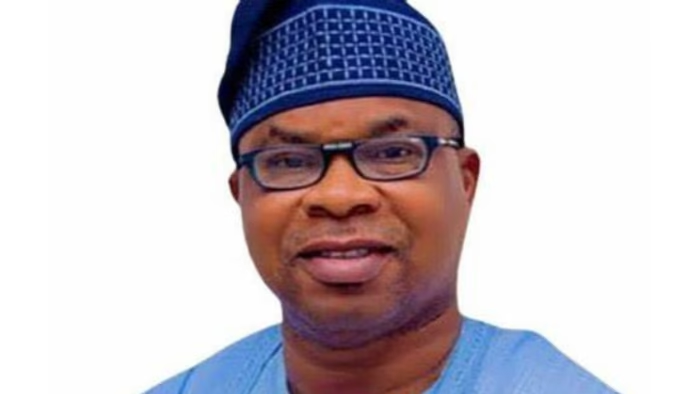
APC’,s Guber Nominee, Bola Oyebamiji
Oyebamiji, a former Commissioner for Finance in Osun State and immediate past Managing Director of the National Inland Waterways Authority, is from Ikire in Irewole Local Government Area of Osun West.
Within APC calculations, Oyebamiji’s technocratic profile and administrative experience are expected to appeal to civil servants, professionals and party loyalists who prioritise structure, competence and policy coherence. The party retains strong support across Osun Central and parts of Osun East, including Ife North, Ife Central, Oriade and Atakunmosa West, where progressive politics enjoys deep historical roots.
The APC is also leveraging its alignment with the Federal Government while intensifying grassroots mobilisation aimed at cutting into Adeleke’s Osun West stronghold.
Adding a disruptive layer to the contest is the African Democratic Congress (ADC), which has formally joined the race with the emergence of former Speaker Najeem Salaam as its governorship candidate. Salaam, who represented Ejigbo State Constituency and served as Speaker between 2011 and 2015, clinched the ADC ticket at the party’s governorship primary, elevating the party from a fringe option to a serious contender.
Salaam’s candidacy has complicated the Osun West equation, as all three major contenders hail from the same senatorial district. Political analysts say this intra-zonal convergence could significantly fragment votes in the state’s most populous bloc. With his legislative experience, grassroots connections and long-standing political network, Salaam is positioning the ADC as a credible alternative for voters disenchanted with both incumbency and the APC’s comeback push.
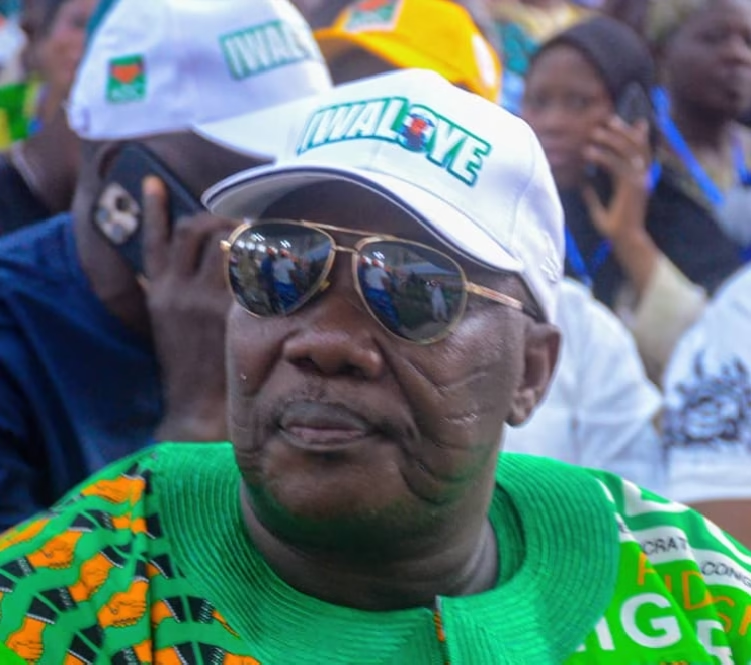
ADC’s governorship candidate, former Speaker Najeem Salaam
The ADC’s reformist message, combined with growing national relevance, is expected to gain traction in urban centres such as Osogbo, Ile-Ife and Ilesa, while Salaam’s roots in Ejigbo could help the party penetrate Adeleke’s traditional base.
As always, geography and voter distribution will be decisive. Osun West remains the central battleground due to its population advantage, Osun Central is emerging as the APC’s primary recovery theatre, while Osun East is likely to function as the ultimate swing zone where narrow margins could determine the outcome.
Beyond party labels and personalities, voter sentiment is shifting. Economic pressures, youth unemployment, infrastructure quality and access to basic services are shaping political conversations across the state. Many voters appear increasingly focused on performance and credibility rather than party rhetoric.
With campaigns gradually gathering momentum, Osun’s political class recognises that the 2026 governorship election will be anything but routine. Framed by continuity, comeback and disruption, the three-way battle between Adeleke, Oyebamiji and Salaam is set to test not just party strength, but the electorate’s evolving expectations in a state long known for electoral surprises.







Oyo South: Oseni restates commitment to people-centred legislation

Oyo: Alli condemns attacks on wife, APC candidates, alleges APM involvement

Alli hails Tinubu, Uzodimma over rescue of 20 Oyo corps members



-
 Politics2 weeks ago
APM Rally: APC Tackles Makinde Over Use of ‘CAF-Rejected’ ₦5.5bn Stadium
-
News4 weeks ago
Oyo South: Oseni Approves N100m for Ibadan Community Road Rehabilitation
-
Politics4 weeks ago
Oyo 2027: Alli appoints Oladele, Olaosebikan, Tunji media directors
-
Politics4 weeks ago
Oyo South: Ibadan security groups back Oseni’s senatorial bid