News
Kopek vows not to compromise quality, as Moniya-Iseyin road project reaches 40% completion

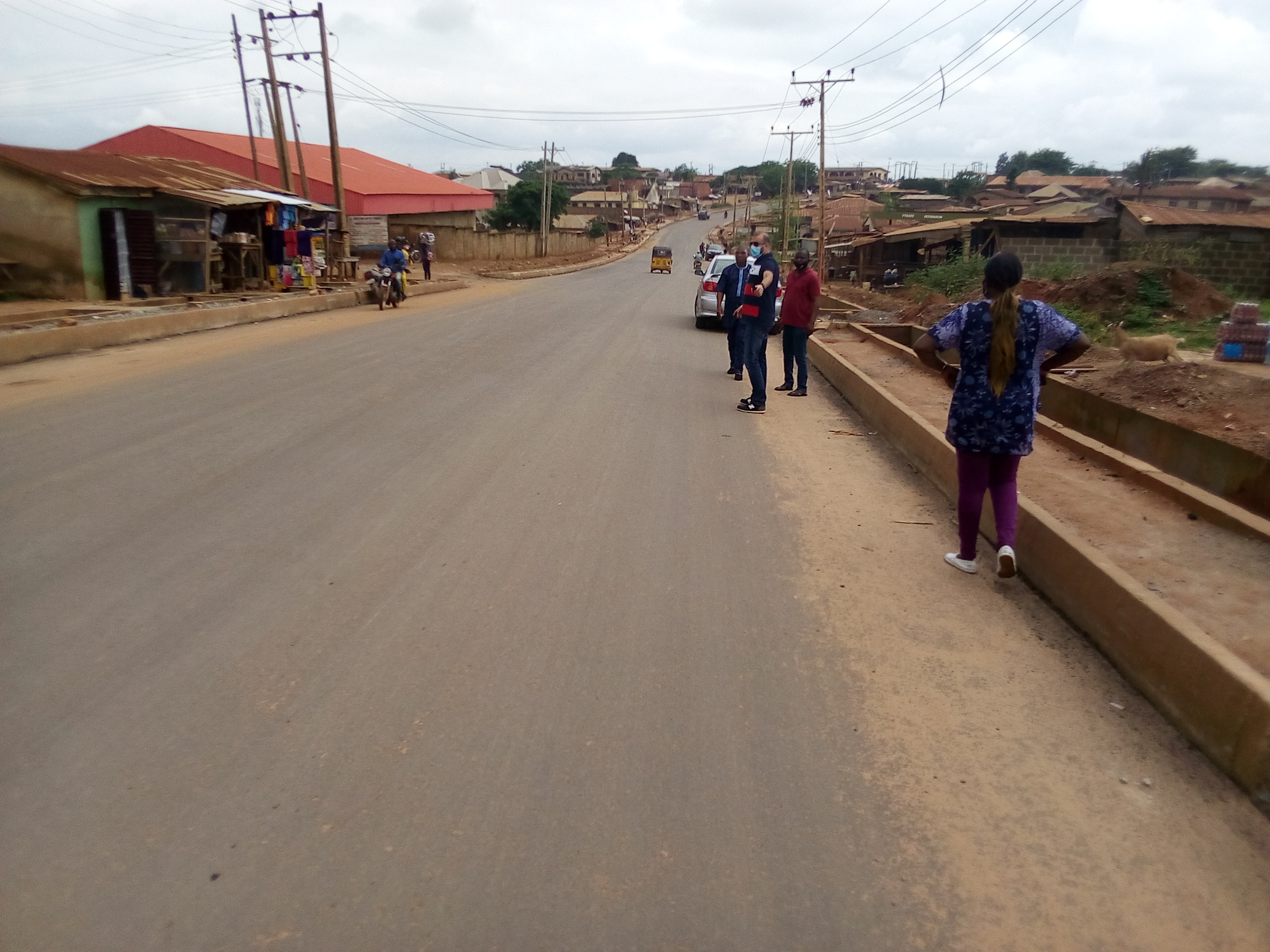
Kopek Construction Company, handling the reconstruction of Moniya-Iseyin road, on Wednesday reassured that it will not compromise quality and standard to get the job done.
Kopek, also confirmed that work on the 65-kilometre Moniya/Ijaiye/Iseyin road in Oyo state, has reached 40 per cent completion.
It will be recalled that the immediate past government of Senator Abiola Ajimobi had in February 2018 awarded the contract for the rehabilitation of the road at the cost of N7 billion, out of which N2 billion was paid to the contractor who could not deliver on the terms.
Governor Seyi Makinde had to revoke the contract after lamenting the slow pace of work and shoddy job being done.
According to the state government, through its Commissioner for Works and Transport, Prof. Raphael Afonja, the reviewed road reconstruction work would cost N9.9 billion, noting that several key components in the road project had been upgraded for it to be qualitative, long-lasting and fitted to serve the state better.

Addressing journalists during an inspection tour of the road project on Wednesday, the Project Manager, Engr. Paul Chamoun assured that despite COVID-19 impacts and the unfavorable weather due to rains, work is progressing at the project site. He maintained that the project which was awarded in January, 2020 is billed for completion in twelve months without compromising its quality.
Reacting to the impacts of COVID-19 on the ongoing road project, Chamoun lamented, “‘truly, COVID-19 deadly pandemic has disturbed our planning for sure just like everybody in all the world. 4-5 weeks that we stopped, the problem was that it was in the dry season, so if you want to count it per day (5weeks), we say its only like 40 days. But, 40 days or 30 days in dry season, its not like the 40 days in the rainy season; because what we can achieve in 40 days that we stopped, you can consider it as 2 months during the rainy season.
“You know we cannot work everyday with the same pace of work that will be achieved on a daily basis as planned because of the rain. And, as everybody knows, we are concern with the quality, we are not going to compromise with the quality. So, if there is rain and there are some jobs or activities that cannot be done because it will affect the quality, we will not do it.

“Before COVID-19, my target was to finish as planned, based on that, we have mobilised. With this our plan, we will finish in twelve months. You know that the job is 65km, it is not a small job at all. COVID-19 came, it was unplanned and unexpected, we have lost more than one month and after that, the rainy season, who knows later on what will happen? Now, I have doubled my efforts to compensate the days that were lost”.
He continued, “you know the percentage can be varied. If you want to take it as money or you want to take it as completion of works because there are some items that will take too much time like the concretes. It is less in money than the asphalt.
“The asphalt is very fast and the money is more. We are working on items that will take time and the other one will be more easy for us. Now, we are at 38% of completion of works and by God’s grace, we will reach 40% next week (July Ending)”.

The Project Manager, however informed that Kopek will be responsible for the maintenance of the road, at least for twelve months, after commissioning.

“God forbid, if something happens, it will show on the road, during this one year of maintenance, and we will fix it. Almost 6 months of rainy season, 6 months of dry season, all the possible cars and transport will pass on this road. As everybody knows, Kopek will not compromise with the quality. At the end of the day, we are taking care of the maintenance for one year, so its not nice to compromise now and repeat the job again”, he explained.





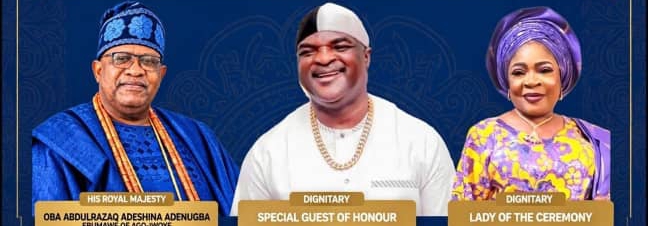
Traditional rites, medical outreach, sporting events and youth competitions feature in weeklong celebration
AGO-IWOYE came alive with cultural displays, sporting activities and community development initiatives as indigenes and residents gathered for the 2026 Ago-Iwoye Day celebration.
The weeklong programme, which began on Monday, October 5, brought together indigenes from across Nigeria and the diaspora to celebrate the town’s cultural heritage and promote unity and grassroots development.
The celebration opened with the traditional Woro Plucking Programme at Ojuade Olooto at 7am on Monday. This was followed by intellectual and strategy games at the Ebumawe Palace, where participants competed in chess, draughts, Scrabble and Ayo Olopon.
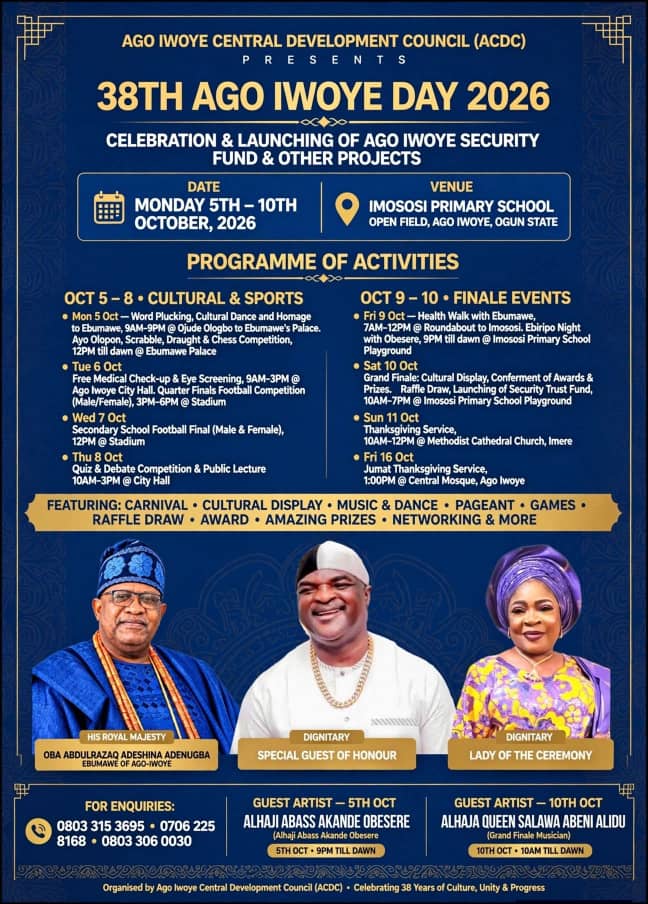
Health and sports featured prominently on Tuesday, October 6, as residents took part in a medical check-up and eye screening exercise at the Ago-Iwoye City Hall.
At the Ago-Iwoye Stadium, sports enthusiasts watched the table tennis finals and the final of the Quarters Football Competition.
The activities continued on Wednesday, October 7, with the finals of the secondary school football competition for male and female categories at the stadium.
Students returned to the spotlight on Thursday, October 8, for a quiz and debate competition at the City Hall. The academic activities were complemented by a public lecture on sustainable community development and youth empowerment.
On Friday, October 9, the Ebumawe of Ago-Iwoye led a health walk from the Omoedumare Roundabout at 7am, drawing residents into another activity designed to promote healthy living and community participation.
The day ended with Ebiripo Night at the Imososi Primary School Field, where music, dance and folklore accompanied celebrations around the town’s popular local delicacy.
The grand finale is scheduled for today, Saturday, October 10, at the Imososi Primary School Field, with traditional performances, civic honours and fundraising activities on the programme.
A thanksgiving service at the Methodist Cathedral, Imere, Ago-Iwoye, is expected to bring the celebration to a close on Sunday, October 11.
Speaking on the significance of the event, the Secretary of the Planning Committee, Dr Samuel O. Awobona, said the turnout demonstrated the commitment of indigenes and residents to preserving the town’s identity and advancing its development.
He said, “This weeklong celebration underscores our collective resolve to preserve our identity while driving grassroots development. The massive turnout across all generations reflects the enduring spirit of Ago-Iwoye.”
The annual celebration provides an opportunity for the community to showcase its traditions while bringing residents, young people and indigenes in the diaspora together around shared cultural and developmental goals.

2027: Oseni Support Islamic Group’s Building Project With N10m, Urges Voters to Prioritise Competence Over Religion

Oyo 2027: Alli’s campaign accuses Adekanmbi’s APM supporters of vandalising APC billboards

DIPHTHERIA OUTBREAK: ALLI QUERIES ₦9.9BN IMPACT FUNDS AS OYO LAGS IN CHILD VACCINATION



-
 Politics3 weeks ago
APM Rally: APC Tackles Makinde Over Use of ‘CAF-Rejected’ ₦5.5bn Stadium
-
Politics4 weeks ago
Sunday Bandit Attack: Oyo APC Queries Makinde Over N7.8bn Surveillance Aircraft
-
Opinion4 weeks ago
Seven Factors That Keep Sharafadeen Alli Ahead in 2027 Oyo Governorship Race
-
News4 weeks ago
OYO 2027: ‘Fact-Check Always’ – Oseni’s Aide Replies Ex-AGF , Ojo Over Alli’s Campaign Billboard Claims