Connect with us

News

Iraq Undertakes Historic Census After 40-Year Gap

Published

on

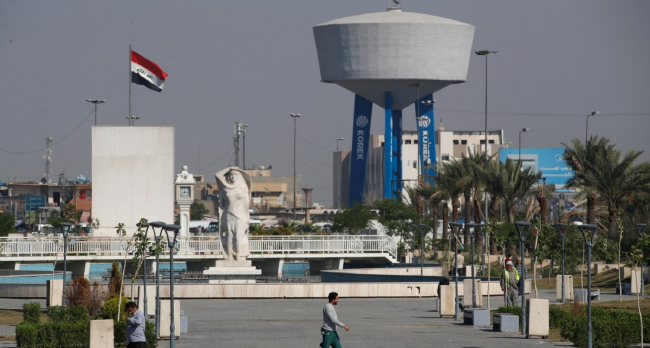
Iraqis walk through Baghdad’s Tahrir Square on November 19, 2024. For the first time in nearly 40 years Iraq this week will conduct a nationwide census, undertaking a tally long delayed by repeated outbreaks of war and unrest. (Photo by AHMAD AL-RUBAYE / AFP)

Iraq is holding its first nationwide census in nearly four decades this week, a long-awaited count in a nation that has been blighted by sectarian and ethnic divisions.

The census is scheduled for Wednesday and Thursday, and will provide sorely needed up-to-date demographic data for the country which has an estimated population of around 44 million.

It will be the first census to cover all 18 governorates since 1987, when dictator Saddam Hussein was in power, following repeated delays caused by years of war and political tensions between factions.

“More generally across the country, parliamentary representation will change,” said Hamzeh Hadad, a visiting fellow at the European Council on Foreign Relations (ECFR).

With one member of parliament allocated by the constitution per 100,000 Iraqis, “having an official census will mean the numbers will have to be adjusted” based on the new demographic breakdown, he said.

A count conducted in 1997 excluded the three northern provinces that make up the autonomous Kurdistan region.

The upcoming census has reignited tensions between Baghdad and Kurdistan over disputed territories in the north.

The census includes religion but does not differentiate between sects, such as Sunni and Shiite Muslims, and, unlike previous counts, it excludes ethnicity.

“There are some crucial details in this census that might be missing to appease all sides to finally allow it to take place,” Hadad added.

Iraq has been keen to conduct the census for budgetary reasons.

Prime Minister Mohammed Shia al-Sudani said the census was important for “development and planning steps in all sectors that contribute to the advancement and progress of Iraq”, where electricity is scarce and infrastructure largely in disrepair.

– Two-day curfew –

During the census a two-day curfew will operate, with families having to stay at home so 120,000 researchers can collect data directly from households.

A questionnaire seen by AFP records the number of people per household, health status, education level, employment status, number of cars and even an inventory of household appliances, so standards of living can be assessed.

Iraq has spent much of the past few decades devastated by conflict and sanctions, including a sectarian struggle after the US-led invasion 2003 toppled Saddam and the emergence of the Islamic State group in 2014.

Demographics are likely to have shifted with the exile of hundreds of thousands of Christians, and also of tens of thousands of Yazidi families who were displaced from Sinjar by atrocities committed by IS extremists.

Iraq has regained some semblance of stability in recent years, despite sporadic violence and political turmoil.

To organise the count, authorities partnered with the United Nations Population Fund (UNFPA), in an effort to generate “accurate demographic information, facilitating effective policymaking and promoting inclusive growth”.

After years of uncertainty, the census will reveal “the reality of Iraq in its smallest details”, said planning ministry spokesman Abdel-Zahra al-Hindawi.

“We will be able to diagnose all the problems that paralyse development in the areas of health, education, housing,” he added.

– Demographic shift –

Previous censuses were cancelled mainly because of tensions over disputed territories between the Kurdish, Arab, and Turkoman communities in the northern governorates of Kirkuk and Nineveh.

There is still “a lot of sensitivity over disputed territories”, said the ECFR’s Hadad.

“It’s not just the Arabisation policy under Saddam Hussein. But the reversal of it and Kurdification of disputed territories post-2003. So it’s not one-sided.”

Fahmi Burhane, a Kurdistan region official focused on the disputed territories, voiced long-standing fears among Kurds about a demographic shift in Kirkuk and other areas claimed by both Baghdad and Arbil.

“If we look at past censuses, the number of Kurds has gradually decreased in the Kurdish regions outside autonomous Kurdistan,” he said, referring to the movement of Arabs into areas such as Kirkuk under Saddam.

“Arab neighbourhoods have been built in recent years, which absolutely do not correspond to normal population growth,” he said.

In the census, Baghdad has agreed to register only the descendants of families who were present in the disputed territories during the 1957 count, in order to prevent subsequent waves of migration from disrupting the demographic balance. Newcomers will be counted in their province of origin.

Burhane said the Iraqi government has been able to “alleviate certain concerns” over the poll.

 

Comments

News

Oseni mourns ex-Oyo lawmaker Akeem ‘Able’, says Oyo APC has lost loyal progressive

Published

on

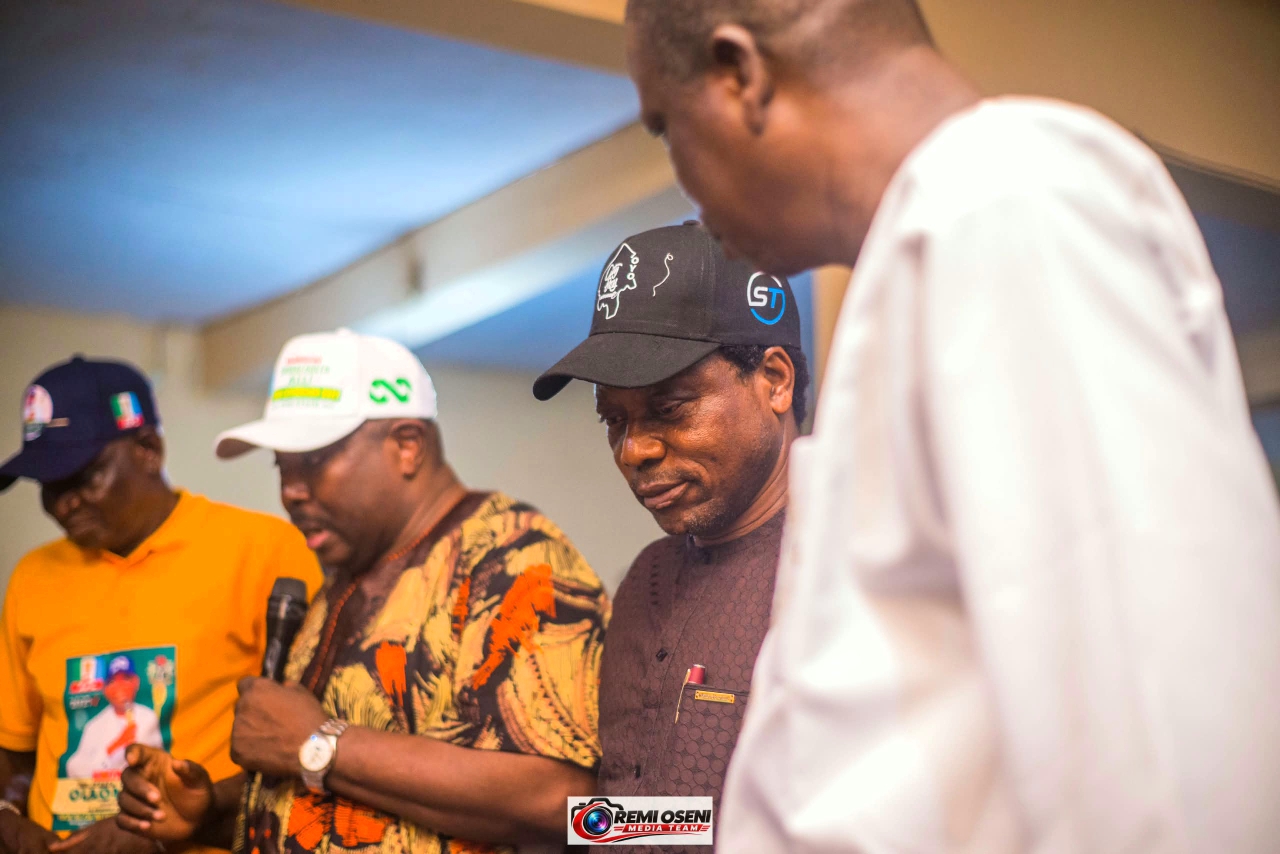
The lawmaker representing Ibarapa East/Ido Federal Constituency in the House of Representatives, Engr. Aderemi Oseni, has mourned the death of a chieftain of the All Progressives Congress (APC) in Oyo State and former member of the Oyo State House of Assembly, Hon. Akeem Abimbola Oladipupo, popularly known as Able, describing his demise as a painful loss to the progressive family.

Oladipupo, who represented Ibadan North-West Constituency in the Oyo State House of Assembly, was widely regarded as a grassroots politician and committed party loyalist until his passing.

Oseni, who is also the Chairman, House Committee on Federal Roads Maintenance Agency and the APC candidate for Oyo South Senatorial District, said the late politician’s death had created a vacuum within the party and among those who benefitted from his unwavering commitment to public service.

In a condolence statement issued on Monday by his Media Aide, Idowu Ayodele, and made available to journalists in Ibadan, the Oyo State capital, the federal lawmaker described the late Oladipupo as a dependable progressive, humble political actor and loyal party stalwart whose impact would remain indelible.

He said the deceased dedicated his life to serving humanity, strengthening the progressive movement and supporting the aspirations of many at the grassroots.

Oseni said, “The death of Hon. Akeem Abimbola Oladipupo (Able) came to me as a rude shock. Oyo State and the progressive family have indeed lost a committed, loyal and selfless leader whose passion for service, humility and dedication to the people stood him out.

“He was not just a politician but a bridge-builder, a dependable ally and a grassroots mobiliser who believed strongly in the ideals of our great party. His contributions to the growth of the APC in Oyo State and his service to humanity will remain unforgettable.”

The APC senatorial candidate noted that the late former lawmaker remained steadfast in promoting peace, unity and political development, adding that his simplicity and accessibility endeared him to many across political divides.

According to Oseni, the late politician’s legacy of service and sacrifice would continue to inspire younger politicians and party faithful.

He, however, urged members of the APC, associates and family members of the deceased to take solace in the remarkable life he lived and the positive impact he made during his lifetime.

Oseni also prayed for the repose of the deceased’s soul and for God to grant his family the fortitude to bear the painful loss.

Continue Reading

News

Governors Push N100,000 Minimum Wage to Ease Workers’ Economic Burden

Published

on

State governors have proposed a new national minimum wage of N100,000 for Nigerian workers as part of efforts to cushion them from the biting effects of inflation and the rising cost of living.

Governor AbdulRahman AbdulRazaq of Kwara State, who is also the Chairman of the Nigeria Governors’ Forum (NGF), disclosed the proposal on Saturday in a post by the state government’s official Facebook page. He said the move aims to improve workers’ welfare while ensuring that government finances remain sustainable.

“State governments recognise the urgent need to improve workers’ welfare in response to the current economic realities facing Nigerians,” AbdulRazaq said.

“We are actively engaging with the Federal Government and organised labour to arrive at a wage structure that is fair to workers and sustainable for government finances.”

The NGF chairman explained that ongoing discussions are focused on balancing the need to boost workers’ purchasing power with the capacity of governments to deliver essential public services and development projects.

“The goal is to improve the living conditions of workers while ensuring that states can continue to meet their obligations and sustain projects that directly impact citizens,” he added.

The proposed N100,000 minimum wage is expected to intensify national debates on salaries, inflation, and broader economic reforms as Nigerians continue to contend with rising food prices, transportation costs, and other living expenses.

Currently, Nigeria’s statutory minimum wage stands at N70,000 per month. Some states, including Lagos, Rivers, and Imo, are already paying above the national benchmark to support workers amid the country’s economic challenges.

Meanwhile, the Nigeria Labour Congress (NLC) has continued to call for a comprehensive review of salaries, insisting that workers deserve a living wage that reflects present-day economic realities rather than merely guaranteeing survival.

Continue Reading

News

Petrol hits N1,533/litre as cooking gas prices jump nationwide

Published

on

The average retail price paid by consumers for Premium Motor Spirit, popularly known as petrol, rose to N1,532.93 per litre in April 2026, representing a 23.69 per cent increase compared to the N1,239.33 recorded in the corresponding period of 2025, findings by the National Bureau of Statistics (NBS) have shown.

The sharp rise in petrol prices came amid mounting inflationary pressure and worsening living costs, with Nigerians grappling with soaring transportation and food expenses that have continued to shrink household purchasing power.

The NBS disclosed this in its Premium Motor Spirit (Petrol) Price Watch for April 2026, released on Friday.

The report further showed that on a month-on-month basis, petrol prices rose by 18.97 per cent from N1,288.54 recorded in March 2026, underscoring persistent volatility in the downstream petroleum market.

A breakdown of prices across states revealed that Yobe recorded the highest average retail price for petrol at N1,599.05 per litre during the review period.

Edo and Bauchi followed closely with average prices of N1,595.74 and N1,589.07, respectively.

However, Niger residents paid the least for petrol at an average of N1,403.89 per litre, while Sokoto and Katsina recorded N1,404.16 and N1,406.28 respectively.

At the zonal level, the South-South recorded the highest average retail price at N1,566.76 per litre, while the North-West posted the lowest at N1,508.81.

The latest petrol price increase comes as millions of Nigerians continue to battle the ripple effects of rising inflation, with higher energy costs worsening transportation fares and the prices of essential commodities.

Similarly, the NBS said the average retail price for refilling a 5kg cylinder of Liquefied Petroleum Gas, also known as cooking gas, rose by 13.73 per cent month-on-month to N8,706.93 in April 2026 from N7,655.73 recorded in March.
On a year-on-year basis, the price increased by 10.42 per cent from N7,885.60 recorded in April 2025.

Lagos recorded the highest average price for refilling a 5kg cylinder at N9,745.10, followed by Nasarawa at N9,451.70 and Bayelsa at N9,422.74.

In contrast, Anambra recorded the lowest average price at N7,204.76, while Ondo and Ogun followed with N7,239.49 and N7,825.75, respectively.

At the regional level, the North-West recorded the highest average retail price for refilling a 5kg cylinder at N9,025.07, followed by the North-East at N8,847.16, while the South-East posted the lowest average price at N8,224.37.

Also, the average retail price for refilling a 12.5kg cylinder of cooking gas increased by 13.89 per cent month-on-month to N22,382.20 in April 2026 from N19,652.83 in March.

Compared to April 2025, the price rose by 10.43 per cent from N20,268.06.

According to the NBS LPG Price Watch for April, Katsina recorded the highest average retail price for refilling a 12.5kg cylinder at N25,596.71, followed by Kogi at N24,558.25 and Gombe at N24,438.97.

Ogun recorded the lowest average price at N19,564.36, while Bauchi and Anambra followed at N20,178.87 and N20,511.90 respectively.

The North-West recorded the highest zonal average retail price for refilling a 12.5kg cylinder at N23,276.95, followed by the North-Central at N22,865.29, while the South-East posted the lowest average at N21,060.92.

The latest figures signal growing pressure on household energy costs, raising concerns over the implications for inflation and the cost of living in the coming months.

Continue Reading

Advertisement

Entertainment

Advertisement

MegaIcon Magazine Facebook Page

Advertisement

MEGAICON TV

Advertisement

Trending