Connect with us

News

Gabon Coup Leader To Be Sworn In As ‘Transitional President’

Published

on

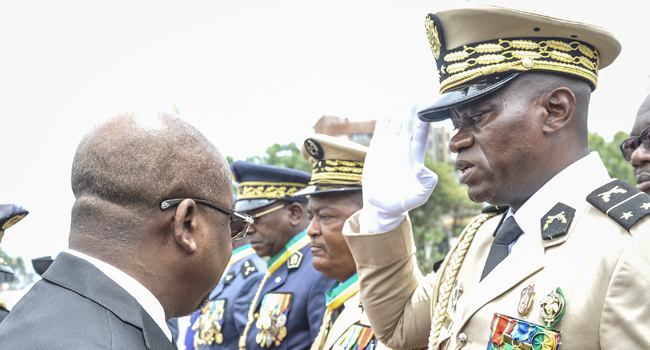
Head of Gabon’s elite Republican Guard, General Brice Oligui Nguema (R), is decorated by Gabon Prime Minister Alain Claude Bilie Bie Nze (L) in Libreville on August 16, 2023 during celebrations ahead of Gabon Independence day celebrated on August 17, 2023. (Photo by AFP)

The general who came to power in Gabon’s coup last week is to be sworn in as “transitional president” on Monday, taking control for an unspecified period after overthrowing the country’s 55-year Bongo dynasty.

General Brice Oligui Nguema, the head of the elite Republican Guard, led officers in a military coup on Wednesday against President Ali Bongo Ondimba, scion of a family that had ruled for more than five decades.

The ousting came just moments after Bongo, 64, was proclaimed victor in last month’s presidential election — a result branded a fraud by the opposition.

The putsch was “bloodless”, according to Oligui, with no reports of deaths or injuries.

Elections Promised 

The coup leaders said they had dissolved the nation’s institutions, cancelled the election results, and closed the borders, later adding they had decided to reopen them.

Other countries have not acknowledged Oligui as Gabon’s legitimate leader and he faces pressure to spell out his plans for restoring civilian rule.

Oligui was lifted up triumphantly by his troops following the announcement of the coup, and in the days since has been seen flanked by generals and colonels.

He has repeated his promise to organise “free, transparent, credible and peaceful elections”, without specifying when they would take place but saying that a new constitution must first be adopted by referendum.

On Friday, he vowed to create more democratic institutions that respect human rights, but said he would proceed “without haste”.

A fringe of the former opposition is urging Oligui to hand over power, but many people in Gabon seem happy about the overthrow of the Bongo dynasty, with celebrations in the streets of the capital Libreville and the economic hub of Port-Gentil.

Several Western countries and organisations have condemned the coup while acknowledging that it is different to others on the continent due to concerns over the credibility of the vote itself.

“Naturally, military coups are not the solution, but we must not forget that in Gabon there had been elections full of irregularities,” said the European Union’s foreign policy chief Josep Borrell.

Since the overthrow, Oligui has held hours of high-profile discussions with business and religious leaders, unions, political parties, NGOs, diplomats, and journalists, and has been taking notes and responding at length to questions and grievances.

 ‘Make Noise’ 

Former president Bongo had been seeking his third term in office after coming to power in 2009 following the death of his father Omar, who ruled Gabon with an iron fist for over 40 years.

The coup leaders said Wednesday they had put him under house arrest and placed him “in retirement”.

But Bongo managed to distribute a video on social media where he said his son and wife Sylvia had been detained, appealing to “all friends that we have all over the world… to make noise” on his behalf.

National TV on Friday showed rolling images of the deposed president’s son Noureddin Bongo Valentin and other arrested officials in front of suitcases filled with cash allegedly seized from their homes.

The military has accused them of treason, embezzlement, corruption and falsifying the president’s signature, among other allegations.

Five other countries in Africa — Mali, Guinea, Sudan, Burkina Faso and Niger — have undergone coups in the last three years. Their new rulers have resisted demands for a short timetable for returning to barracks.


Comments

News

Iran War Disrupts Oil Supply, Global Loss Hits $50bn

Published

on

The global oil market has recorded losses exceeding $50bn following massive supply disruptions triggered by the ongoing Iran war, which has now stretched to nearly 50 days.

Data from energy analytics firm Kpler showed that more than 500 million barrels of crude oil and condensate have been wiped off the global market since the crisis began in late February, making it the largest energy supply disruption in modern history.

Iran’s Foreign Minister, Abbas Araqchi, on Friday said the Strait of Hormuz had been reopened after a ceasefire agreement reached in Lebanon.

However, tensions escalated again on Saturday as Tehran warned it could shut the strategic waterway if the United States sustains its blockade of Iranian ports.

Also, U.S. President Donald Trump expressed optimism that a deal to end the conflict could be reached “soon,” although he did not provide a definite timeline.

Analysts warned that the scale of disruption could have prolonged effects on global energy stability, with shocks expected to linger for months or even years.

Providing context, Principal Analyst at Wood Mackenzie, Iain Mowat, said the 500 million barrels lost is equivalent to grounding global aviation demand for 10 weeks, halting all road transport worldwide for 11 days, or shutting down the entire global oil supply for five days.

Further estimates showed that the lost volume is nearly equal to one month of oil demand in the United States or more than a month’s supply for Europe. It also represents about six years of fuel consumption by the U.S. military and could power global shipping activities for approximately four months.

The crisis has significantly affected oil-producing nations in the Gulf, with output losses reaching about eight million barrels per day in March—roughly equivalent to the combined production of two of the world’s largest oil companies.

Jet fuel exports from major producers, including Saudi Arabia, Qatar, the United Arab Emirates, Kuwait, Bahrain, and Oman, dropped sharply from 19.6 million barrels in February to just 4.1 million barrels recorded across March and April combined. Analysts said the shortfall could have powered about 20,000 round-trip international flights.

With crude prices averaging around $100 per barrel since the onset of the conflict, the lost volumes translate to an estimated $50bn in revenue. Experts noted that this figure is equivalent to about one per cent of Germany’s annual Gross Domestic Product, or roughly the size of the economies of smaller European countries.

Meanwhile, global onshore crude inventories have declined by about 45 million barrels in April alone, while total production outages have risen to approximately 12 million barrels per day since late March.

Industry experts cautioned that unless a lasting resolution is reached, the disruption could intensify volatility in global oil markets, worsen inflationary pressures, and further strain fragile economies worldwide.

Continue Reading

News

Oseni Secures Prestigious City People Political Award Nomination

Published

on

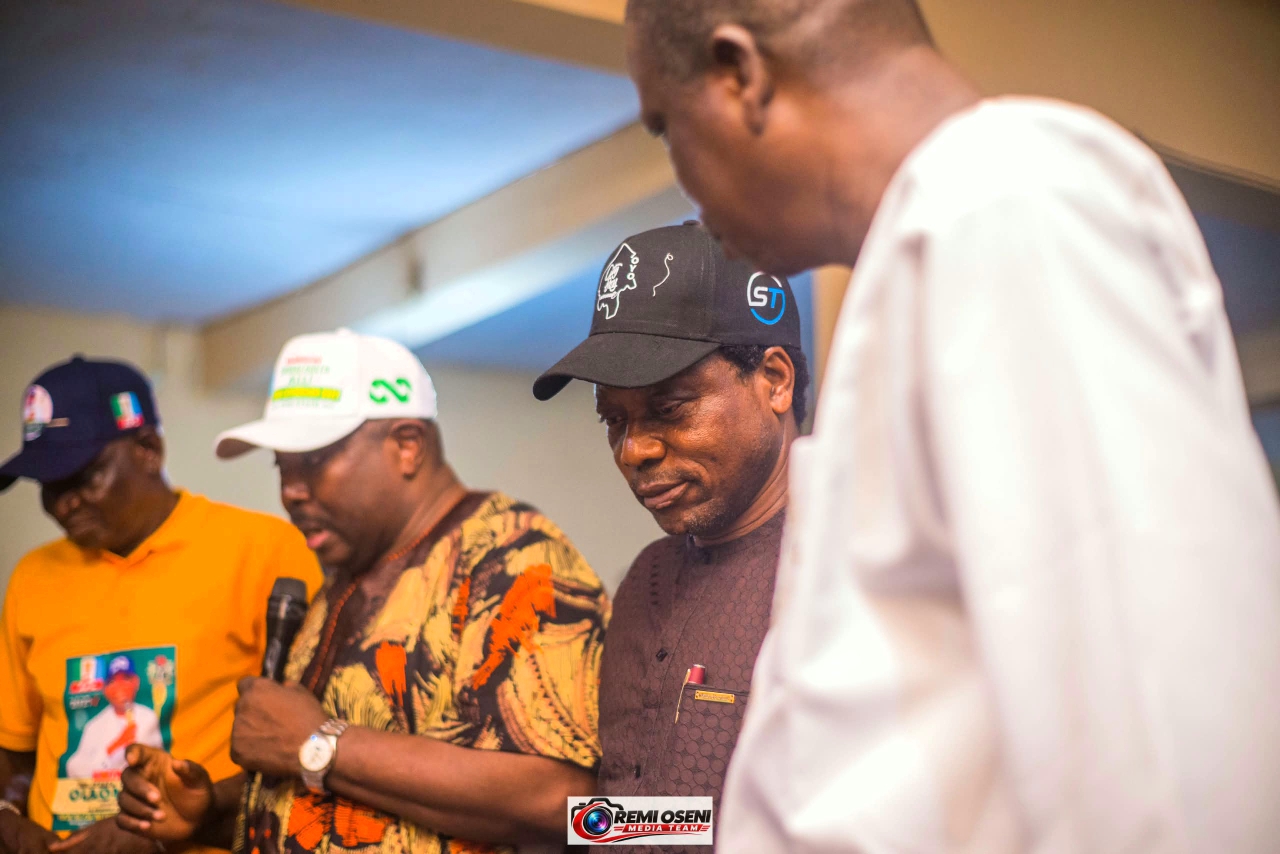
A member of the House of Representatives representing Ibarapa East/Ido Federal Constituency and Chairman of the House Committee on Federal Roads Maintenance Agency, Aderemi Oseni, has been nominated for a Special Award in Politics at the 2026 City People Political Awards.

The nomination was conveyed in a letter dated April 13, 2026, signed by the Publisher/Editor-in-Chief of City People Magazine, Seye Kehinde.

The development was disclosed in a statement issued by Oseni’s media aide, Idowu Ayodele, and made available to journalists in Ibadan on Thursday.

According to the statement, the lawmaker earned the nomination in recognition of his “outstanding contributions to politics in Oyo State, particularly in Ibarapa East/Ido Federal Constituency.”

The organisers noted that Oseni emerged as a nominee following a comprehensive review of performances across sectors by the award’s selection committee.

Part of the letter read, “Having performed creditably well in your sector last year, the Organising Committee presented you as a nominee in your sector.”

The award ceremony is scheduled to hold on Sunday, May 3, 2026, at Etal Hall, Kudirat Abiola Way, Oregun, Ikeja, Lagos, at 4pm.

The City People Awards is an annual event that recognises individuals who have distinguished themselves in governance, public service and other sectors of national development.

Continue Reading

News

Kaduna Electric to prosecute, expose attackers of staff

Published

on

The Kaduna Electricity Distribution Company has announced a crackdown on individuals who assault its staff, warning that offenders will face prosecution and public exposure.

In a statement issued on Thursday, the company expressed concern over what it described as a “disturbing surge” in attacks on its field workers and third-party partners.

It noted that the affected personnel were mainly engaged in meter installation, revenue collection and maintenance of electricity infrastructure.

According to the firm, the increasing cases of harassment, physical assault and unlawful detention of its workers pose a serious threat to employee safety and the stability of electricity service delivery across its franchise areas.

The Deputy Managing Director, Abubakar Mohammed, said the company would no longer tolerate any form of aggression against its workforce.

“Let this serve as a clear warning to anyone who engages in the assault of our staff. Kaduna Electric will pursue every case to its logical conclusion,” he said.

“We will work closely with security agencies to ensure offenders are brought to justice and face the full weight of the law,” Mohammed added.

He further disclosed that the company would publicly reveal the identities of individuals found culpable.

According to him, names, photographs and other details of offenders would be published on the company’s official platforms as well as in national and local media.

“This measure is intended to ensure accountability and serve as a strong deterrent. Anyone who chooses to attack our personnel should be prepared not only to face prosecution but also public exposure,” he added.

The company stressed that assaults on utility workers attract serious legal and financial consequences, noting that offenders risk criminal charges that may lead to fines or imprisonment.

It added that perpetrators could also face civil liabilities, including compensation for medical treatment, psychological trauma and loss of work hours.
While condemning the attacks, Kaduna Electric urged customers to adopt peaceful and lawful means of resolving disputes.

It advised aggrieved customers to channel complaints through its customer service units or appropriate regulatory bodies.

The management reaffirmed its commitment to protecting its workforce and partners, stressing that a safe working environment is essential for delivering reliable and efficient electricity services.

Although disputes between electricity providers and consumers are often linked to billing issues, metering challenges and service delivery concerns, the company maintained that such matters must be resolved through dialogue, insisting that violence against its staff will no longer be tolerated.

Continue Reading

Advertisement

Entertainment

Advertisement

MegaIcon Magazine Facebook Page

Advertisement

MEGAICON TV

Advertisement

Trending