Connect with us

Top Stories

DETAILS: How to become a space tourist

Published

on

Thrill-seekers might soon be able to get their adrenaline kicks — and envy-inducing Instagram snaps — from the final frontier, as space tourism finally lifts off.

All you’ll need is a bit of patience. And a lot of money.

Here’s a rundown of where things stand.

Who’s offering spaceflights?

Two companies are offering short “suborbital” hops of a few minutes: Jeff Bezos’ Blue Origin and Virgin Galactic, founded by Richard Branson.

Blue Origin’s New Shepard rocket takes off vertically and the crew capsule detaches and crosses the Karman line (62 miles, or 100 kilometers, in altitude), before falling back to Earth with three parachutes.

Virgin Galactic uses a massive carrier plane, which takes off from a horizontal runway then drops a rocket-powered spaceplane. This in turn soars to over 50 miles altitude before gliding back.

In both cases, up to six passengers are able to unbuckle from their seats to experience a few minutes of weightlessness and take in the view of Earth from space.

When can you go?

Virgin Galactic has said regular commercial flights will begin from 2022, following two more test flights. Their waiting list is already long, with 600 tickets so far sold.

But the company predicts it will eventually run up to 400 flights per year. Two seats on one of the first flights are up for grabs in a prize draw: registrations are open until September 1.

As for Blue Origin, no detailed calendar has been announced.

“We’re planning for two more flights this year, then targeting many more in 2022,” a spokesperson told AFP.

Another way to get to space is via reality television. Space Hero, an upcoming show, says it plans to send the winner of a competition to the International Space Station (ISS) in 2023.

How much will it cost?

The first tickets sold by Virgin Galactic went for between $200,000 and $250,000 each, but the company has warned that the cost for future sales will go up.

Blue Origin hasn’t announced prices. The anonymous winner of a public auction for a seat on the first crewed flight paid $28 million, but decided to defer their trip.

It’s not known what amount was bid for the seat secured by Dutch teen Oliver Daemen, who will fly in the auction winner’s place.

The more “budget conscious” might consider spending $125,000 for a seat on Space Neptune: a capsule that offers 360 degree windows and is lifted to the upper atmosphere by a balloon the size of a football stadium.

Despite the promise of spectacular views, the balloon ascends only 19 miles — far from the boundary of space, and weightlessness.

The 300 seats for 2024 have all been sold, but reservations are open for 2025.

Are the physical requirements tough?

No — you’re only expected to be in reasonable shape. Virgin Galactic’s training lasts just five days.

Blue Origin promises to teach you everything you need to know “the day before you launch,” and its first crewed flight includes pioneering aviator Wally Funk, who at 82 will become the oldest astronaut.

The company’s requirements include being able to climb seven flights of stairs in under 90 seconds (the height of the launch tower) and being between 5’0″ and 110 pounds (152 centimeters and 50 kilograms) and 6’4″ and 223 pounds (193 cm and 100 kg).

What about SpaceX?

Elon Musk’s company is also getting into the space tourism game, but its plans involve journeys that are far longer. The costs are also predicted to be astronomical — tens of millions of dollars.

In September, American billionaire Jared Isaacman has chartered a mission called Inspiration4 to take him and three other passengers into orbit around the Earth on a SpaceX Crew Dragon, launched into space by a Falcon 9 rocket.

Then in January 2022, three businessmen will travel to the ISS with an experienced astronaut. The mission, named Ax-1, is being organized by the company Axiom Space, which has signed up for three other future flights with SpaceX.

Elon Musk’s company is also planning a trip to orbit for four people, organized by intermediary Space Adventures — the same company in charge of the flight of the Japanese billionaire Yusaku Maezawa to the ISS in December, aboard a Russian Soyuz rocket.

Maezawa is also supposed to take a trip around the Moon in 2023, this time aboard a rocket that is still under development by SpaceX, called Starship.

He invited eight members of the public to join him — but applications are now closed.

Comments

Opinion

Nigeria’s Insecurity: Why the System Rewards Reaction, Not Prevention

Published

on

The most foolish person in a burning house is not the one who cannot find the exit. It is the one who knew the house would burn, watched it happen, and only ran when the ceiling collapsed. That is Nigeria’s governance posture toward insecurity—a pattern so consistent that it has become normalized.

“Ikú tó pa ojúgbà ẹni, òwe ló fi pa. (The death that kills your neighbour is a proverb directed at you).

The bandits did not simply arrive. They sent warnings ahead of them through a trail of violence that crossed state lines and appeared in every massacre headline we filed away as someone else’s problem.

When Insecurity Was Still “Someone Else’s Problem”

When the North was burning and the Middle Belt bleeding, the South West treated it as distant noise. Kwara became the first warning sign—the bridge between North and South—slowly slipping under the shadow of insurgency. The question every serious observer should have asked was simple: what happens when it crosses the border?

South West governors issued statements—careful, brief, and reactive. None moved with the urgency the threat demanded. Before long, violence arrived at our doorstep: herder brutality in Oke-Ogun, attacks in Oyo and Ekiti, kidnappings along the Ibadan–Ijebu-Ode expressway, and forest camps emerging in Ondo.

The warning signs had matured into reality, yet we were still searching for an exit strategy that should have been built years earlier.

The Problem: We Only Count the Dead

In safety performance management, there is a critical distinction between lagging indicators—outcomes after failure (deaths, destruction, losses)—and leading indicators, which measure prevention before failure occurs.

Aviation, oil and gas, and other high-risk industries understand this clearly: a system that obsesses over lagging indicators will always arrive after the accident.

Nigeria’s security governance is built almost entirely on lagging indicators. We count attacks after they happen. We rebuild after a collapse. We mourn after preventable deaths.

We rarely ask:

How many attacks were prevented this quarter?

How many threats were neutralized before execution?

How many cells were dismantled at the planning stage?

We do not know the answers—because we are not measuring them. The system was never designed to prevent. It was designed to respond: loudly, visibly, expensively, and always too late.

Another Base. The Same Question Nobody Asks

The presidency is reportedly considering a military base in Oriire Local Government Area of Oyo state. It is a familiar pattern: a major security incident, public outrage, and an institutional response designed to signal seriousness.

But the critical question remains unanswered: what has been the leading-indicator performance of existing bases?

How have long-standing military formations in places like Jos, Benue, and Zamfara—some active for over two decades—actually shifted the security outcome?

A military base without actionable intelligence is a stationary slaughter ground for soldiers. It does not prevent attacks; it often becomes a reactive outpost in a repeating cycle: attack, deployment, statement, investigation, and then silence—while underlying threat networks remain intact.

The Incentive Structure Behind the Chaos

The deeper issue is not the capability of security forces. It is the incentive structure of the system.

When leadership is judged only by incidents that have already occurred, governance shifts from prevention to performance management of failure. The objective becomes managing optics, not reducing probability.

Nigeria’s security budget has grown significantly over the past decade, yet insecurity has worsened. Kidnappings have become more brazen. Why? Because funding is justified by the persistence of the crisis, not its resolution.

If the problem is solved, what justifies the next budget cycle?

For years, decentralization has been proposed as the structural reform that could change the system—but it remains trapped in political rhetoric. Why? Because decentralization disperses power, and power in Nigeria’s political economy is not dispersed. It is concentrated.

Sixteen Days. Full Stop.

Forty-six children and teachers were kidnapped in Oriire. It reportedly took sixteen days for the presidency to authorize a specialized rescue framework.

Sixteen days before the Commander-in-Chief treated the abduction of forty-six human beings as a crisis requiring formal executive activation.
But responsibility in moments like this is not singular.

The Oyo State Governor, by constitutional convention regarded as the Chief Security Officer of the state and a recipient of security votes, also occupies a central coordinating role in the security architecture of the state. Within a crisis of this scale, expectations of rapid intergovernmental coordination, visible command urgency, and sustained pressure on federal response mechanisms are not optional, hey are inherent to the office.

Yet, the response cycle, from abduction to high-level coordinated action and physical engagement with affected communities, unfolded at a pace that raised legitimate public concern about the speed and intensity of institutional reaction.

By the time visible field visits and coordinated engagements occurred, the delay had already become part of the public record of the crisis itself—shaping perception as much as the incident shaped fear on the ground.

In a functional security system, crisis response is measured in hours, not days. Not for symbolism, but because time directly affects outcomes: every passing hour in an active kidnapping reduces the probability of safe recovery and increases the leverage of perpetrators.

Sixteen days, therefore, is not merely a lapse in timing. It reflects a deeper structural problem—where urgency is often declared after pressure builds, rather than operationalized when intelligence first breaks.

And in that gap between incident and action, citizens are left to absorb the consequences of delayed coordination across all tiers of authority.

The Verdict

Nigeria does not primarily need more military bases. It needs a new security measurement architecture—one that prioritizes intelligence conversion rates, early-warning response times, and pre-emptive disruption metrics over post-incident operations.

Every threat must be treated as time-sensitive, where minutes and hours determine outcomes—not weeks and statements.

Most importantly, citizens must shift the accountability question:

Not only “why did the attack happen?”

But “why was it not prevented?”

Nigeria’s security challenge is ultimately a leadership and systems failure—an institutional preference for reaction over prevention, because prevention is politically invisible.

You cannot hold a press conference about the attack that never happened.

Until this reality is named and confronted with precision, the cycle will continue.

Continue Reading

News

Oseni supports Ibadan mosque solar project with ₦5m

Published

on

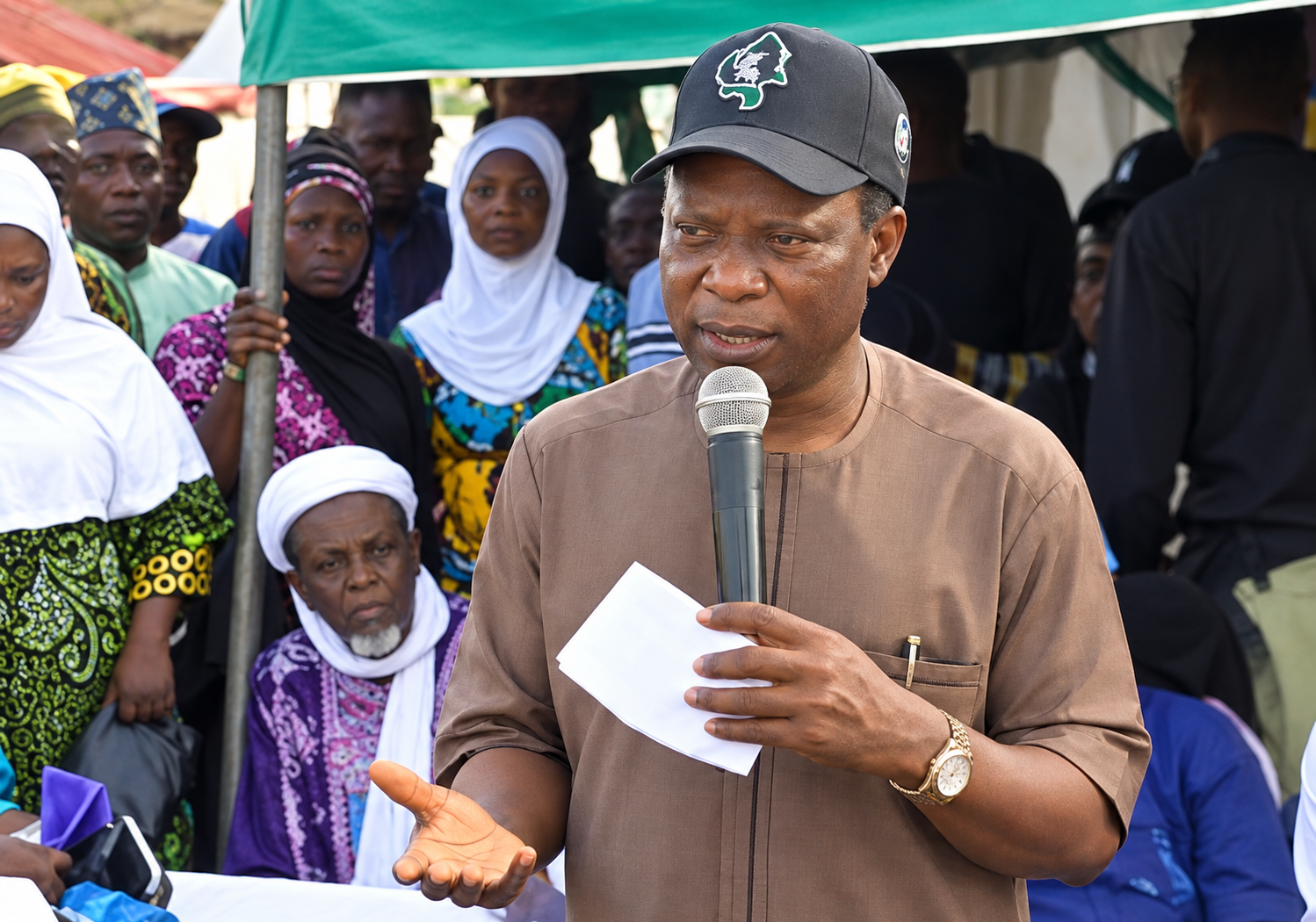
Engr. Aderemi Oseni discussing with the leaders of the Anfaani Muslim Community Central Mosque during his visit on Friday

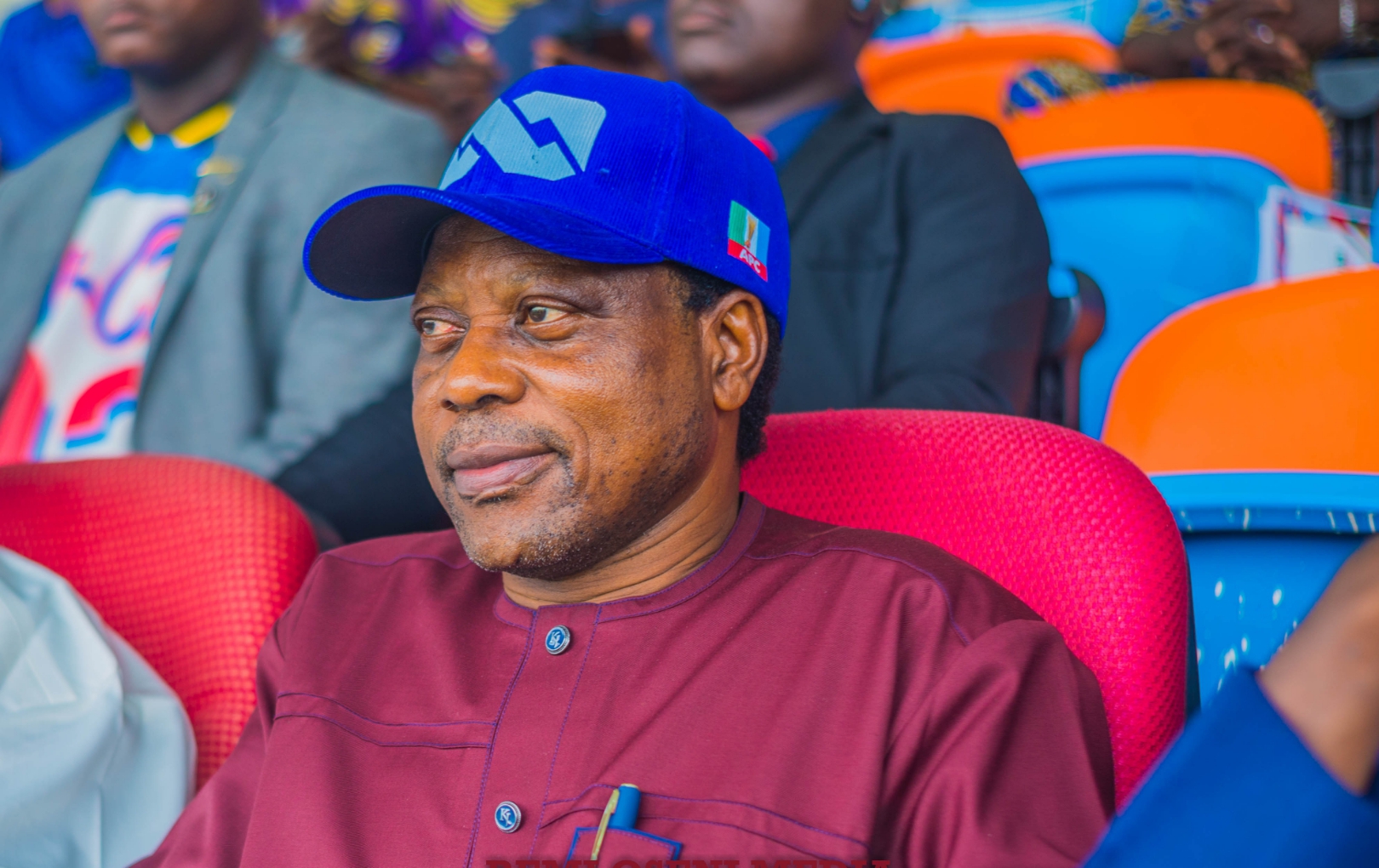
Member of the House of Representatives representing Ibarapa East/Ido Federal Constituency, Engr. Aderemi Oseni, has donated ₦5 million to the Anfaani Muslim Community Central Mosque in Ibadan South-West Local Government Area for its solar power project.

‎Oseni, who also chairs the House Committee on Federal Roads Maintenance Agency, (FERMA), made the donation on Friday, according to a statement issued  by his media aide, Idowu Ayodele.

‎The lawmaker, who is the All Progressives Congress, (APC), Senatorial Candidate for Oyo South Senatorial District in the 2027 general elections, described the gesture as a reflection of his commitment to service, faith, and community development.

‎He said supporting faith-based institutions remained a privilege that should be embraced with humility.

‎“I had the honour and privilege of supporting the Anfani Muslim Community Central Mosque with the sum of ₦5 million towards the execution of its solar power project,” Oseni said in the statement.

‎The APC senatorial candidate for Oyo South stressed that service to humanity and support for religious institutions were responsibilities that come with divine trust.

‎He added that every opportunity to contribute meaningfully to society should be valued.

‎“It is always a blessing and a profound responsibility to contribute to the work of God and support initiatives that strengthen our faith communities,” he said.

“Whenever we are presented with the opportunity to uplift institutions devoted to worship and communal development, we must embrace it with sincerity and gratitude”, the statement added.

‎Oseni noted that acts of service should not be neglected, adding that God could raise others to fulfil His purpose if one failed to act.

‎He prayed for continued peace, progress, and prosperity across communities, expressing optimism that religious institutions would remain pillars of moral and social development.

“May Almighty God continue to strengthen His church and mosque, bless our communities with peace, and prosper every effort geared towards the advancement of faith and humanity,” he prayed.

‎Speaking during the visit, the Chief Imam of the Central Mosque, Alhaji Saheed Gbadamosi, appreciated the lawmaker for the support and for personally visiting the mosque, describing the gesture as a mark of respect for the Muslim community.

He offered prayers for the lawmaker, seeking divine guidance, protection and greater accomplishments in his public service.

Continue Reading

Metro

Family Feud Turns Fatal in Akure as Son Allegedly Kills Father

Published

on

Tragedy struck Oda Community in Akure South Local Government Area of Ondo State after a 38-year-old man was arrested by the police for allegedly killing his biological father during a violent domestic dispute.

The Ondo State Police Command confirmed the arrest in a statement issued on Thursday by its spokesperson, DSP Abayomi Jimoh.

According to the police, the incident began as a heated disagreement between the father and son before it escalated into a physical confrontation that turned deadly.

“During the confrontation, the deceased reportedly sustained severe injuries, particularly to the head. He was immediately rushed to a medical facility for urgent attention,” Jimoh said.

Despite efforts by medical personnel to save his life, the father was confirmed dead by the attending doctor while receiving treatment.

The police spokesperson disclosed that the matter was formally reported to the police by another son of the deceased, identified as Daniel Moses, who is also a brother to the suspect.

“Following a formal complaint lodged at the police station by one Daniel Moses, a son of the deceased and brother to the suspect, detectives promptly commenced investigation into the matter. Acting swiftly on the report, police operatives apprehended the suspect and took him into custody for questioning,” the statement added.

Jimoh further confirmed that the remains of the deceased had been deposited in the mortuary, while the case has been transferred to the State Criminal Investigation Department (SCID) for discreet investigation.

He added that the suspect remains in custody and will be charged to court upon conclusion of investigations.

Continue Reading

Advertisement

Entertainment

Advertisement

MegaIcon Magazine Facebook Page

Advertisement

MEGAICON TV

Advertisement

Trending