Connect with us

News

Bin Laden’s deputy, Al-Zawahiri killed in US drone strike

Published

on

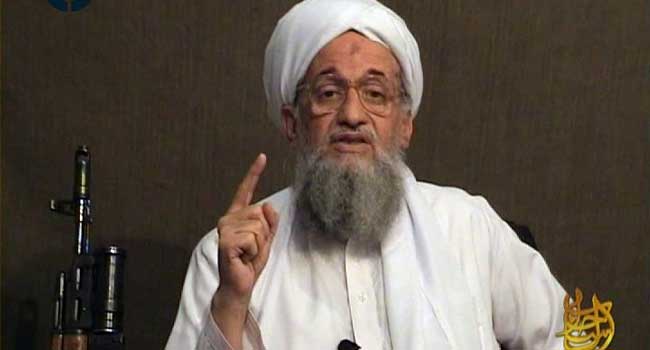
A still file image from a video released by Al-Qaeda’s media arm as-Sahab and obtained on June 8, 2011 courtesy of the Site Intelligence Group shows Ayman al-Zawahiri as he gives a eulogy for slain al-Qaeda leader Osama bin Laden in a video released on jihadist forums.

A United States drone strike killed Al-Qaeda chief Ayman al-Zawahiri at a hideout in Kabul, President Joe Biden said Monday, declaring that “justice had been delivered” to the families of the 9/11 attacks.

Zawahiri’s assassination is the biggest blow to Al-Qaeda since US special forces killed Osama bin Laden in 2011 and calls into question the Taliban’s promise not to harbour militant groups.

It was the first known over-the-horizon strike by the US on a target in Afghanistan since Washington withdrew its forces from the country on August 31 last year, days after the Taliban swept back to power.

“Justice has been delivered and this terrorist leader is no more,” Biden said in a sombre televised address, adding he hoped Zawahiri’s death would bring “closure” to families of the 3,000 people killed in the US on September 11, 2001.

Zawahiri was believed to be the mastermind who steered Al-Qaeda’s operations — including the 9/11 attacks — as well as bin Laden’s personal doctor.

A senior administration official said the 71-year-old Egyptian was on the balcony of a three-storey house in the Afghan capital when targeted with two Hellfire missiles after dawn Sunday.

“We identified Zawahiri on multiple occasions for sustained periods of time on the balcony where he was ultimately struck,” the official said.

The house is in Sherpur, one of Kabul’s most affluent neighbourhoods, with several villas occupied by high-ranking Taliban officials and commanders.

The interior ministry previously denied reports of a drone strike circulating on social media, telling AFP a rocket struck “an empty house” in Kabul, causing no casualties.

Early Tuesday, however, Taliban spokesman Zabihullah Mujahid tweeted that an “aerial attack” was carried out.

“The nature of the incident was not revealed at first,” he said.

“The security and intelligence agencies of the Islamic Emirate investigated the incident and found in their preliminary investigations that the attack was carried out by American drones.”

 ‘Grossly violated’

Although Biden did not mention the Taliban in his televised address, Secretary of State Antony Blinken said “by hosting and sheltering” Zawahiri, the Islamist group had “grossly violated the Doha Agreement” which paved the way for America’s withdrawal.

Zabihullah, in turn, accused Washington of breaking the 2020 deal.

“Such actions are a repetition of the failed experiences of the past 20 years and are against the interests of the United States of America, Afghanistan, and the region,” he said.

Zawahiri, who grew up in a comfortable Cairo household before turning to violent radicalism, had been on the run since the 9/11 attacks.

He took over Al-Qaeda after bin Laden was killed, and had a $25 million US bounty on his head.

News of his death comes a month before the first anniversary of the final withdrawal of US troops from Afghanistan, leaving the country in the hands of the Taliban insurgency that fought Western forces for two decades.

Under the Doha deal, the Taliban promised not to allow Afghanistan to be used again as a launchpad for international jihadism, but experts believe the group never broke ties with Al-Qaeda.

“What we know is that the senior Haqqani Taliban were aware of his presence in Kabul,” the senior US official said.

Afghan Interior Minister Sirajuddin Haqqani also heads the feared Haqqani Network, a brutal subset of the Taliban blamed for some of the worst violence of the past 20 years and which has been described by US officials as a “veritable arm” of Pakistani intelligence.

In Sherpur, locals told AFP they long thought the targeted house  — surrounded by high walls and barbed wire, with green tarpaulin covering the balcony where Zawahiri was believed to have been killed — was empty.

“We have not seen anybody living there for almost a year,” said an employee of a nearby office.

“It has always been in dark, with not a single bulb lit.”

Doctor turned jihadist

Zawahiri lacked the potent charisma that helped bin Laden rally jihadists around the world but willingly channelled his analytical skills into the Al-Qaeda cause.

Still, the group is believed to have been degraded since the US invasion of Afghanistan, and the White House official said Zawahiri was “one of the last remaining figures who carried this kind of significance”.

The organisation is “at a crossroads”, said Soufan Center researcher Colin Clarke.

“Despite Zawahiri’s leadership, which minimised AQ’s losses while rebuilding, the group still faces serious challenges going forward. For one, there’s the question of who will lead Al-Qaeda after Zawahiri’s gone.”

Zawahiri’s father was a renowned physician and his grandfather a prayer leader at Cairo’s Al-Azhar institute, the highest authority for Sunni Muslims.

He became involved with Egypt’s radical Islamist community at a young age and published several books which came for many to symbolise the movement.

He left Egypt in the mid-1980s, heading for Pakistan’s northwestern city of Peshawar where the resistance to the Soviet occupation of Afghanistan was based.

Thousands of Islamist fighters were flooding into Afghanistan at the time, setting the stage for Zawahiri’s first meeting with bin Laden.

In 1998 he became one of five signatories to bin Laden’s “fatwa” calling for attacks against Americans.

Jihadist monitor SITE said some militants were questioning the veracity of the report he had been killed, while others believed Zawahiri had achieved his desire of “martyrdom.”


Comments

News

Tegbe clarifies: No 3-month promise on power grid, outlines realistic reform timeline

Published

on

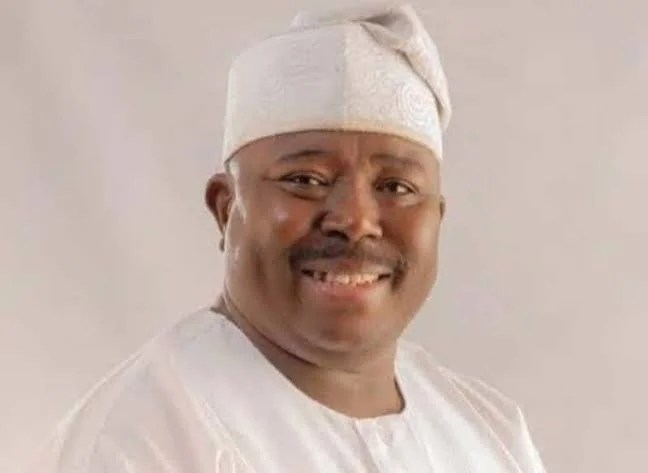
The Minister-designate for Power, Joseph Olasunkanmi Tegbe, has firmly clarified that he never promised to fix Nigeria’s national electricity grid within three months, describing such claims circulating in sections of the media as a misrepresentation of his Senate screening remarks.

A statement issued  after his appearance before the Senate stressed that Tegbe was deliberate and cautious in his presentation, avoiding unrealistic timelines while outlining a structured reform pathway for the power sector.

According to the clarification, Tegbe explained that while Nigerians can expect early signs of progress, particularly in grid stabilisation within his first 100 days in office, comprehensive reforms will be guided strictly by technical assessments, stakeholder consultations, and sector realities.

He noted that critical challenges such as gas supply constraints, metering gaps, infrastructure decay, and commercial inefficiencies require coordinated interventions that cannot be resolved through arbitrary timelines.

“My commitment to this distinguished chamber and to Nigerians is clear: we will deliver visible and measurable improvement in the power sector,” Tegbe stated during the screening.
He assured that his focus would include stabilising the national grid, modernising transmission and distribution infrastructure, strengthening commercial frameworks, and enforcing accountability across the electricity value chain.

On tariff policy, the minister-designate reaffirmed that reforms would be carefully designed to balance sustainability with social protection, ensuring that vulnerable households are shielded while also restoring investor confidence in the sector.

The statement further emphasised that Tegbe’s approach reflects discipline, technical understanding, and a reform-minded agenda aimed at delivering lasting solutions rather than short-term political promises.

It added that he remains open to responsible media engagement and constructive clarification where necessary, noting that accurate reporting is essential to public understanding of ongoing efforts to reposition Nigeria’s power sector.

Tegbe reaffirmed his readiness to lead a transparent, results-driven reform process anchored on accountability, realism, and measurable progress.

Continue Reading

News

Yoruba Heritage Festival Honouring Ogedengbe Begins July 29

Published

on

A grand cultural renaissance celebrating the enduring legacy of legendary Yoruba war hero and statesman, Ogedengbe Agbogungboro, will take centre stage as the 2026 edition of Ogedengbe Fiesta holds from July 29 to 31 across Osun State and Ekiti State.

The three-day heritage festival, unveiled by organisers on Wednesday, is themed, “Ogedengbe Agbogungboro Legacy: Leadership, Security, and Statecraft for Modern Governance in Nigeria.”

The event is designed to preserve Yoruba cultural heritage, deepen historical consciousness, promote tourism and stimulate national conversations on leadership, peacebuilding and governance.

According to the organisers, the fiesta will commence with traditional homage at Atorin and heritage excursions to notable Kiriji War historical sites in Imesi-Ile, where participants will relive significant moments in Yoruba military and political history.

The programme will also feature guided visits to the historic Ogedengbe Cave, Ibu Latoosa Site and the Yoruba Peace Treaty Grove, all regarded as symbolic monuments of Yoruba resilience, diplomacy and unity.

As part of activities lined up for the celebration, participants will tour the gardens of renowned legal icon and elder statesman, Afe Babalola, in Okemesi-Ekiti.

The organisers further disclosed that a Legacy Awards and Hall of Fame Investiture ceremony would hold in Ilesa to honour individuals who have contributed immensely to the promotion of Yoruba culture, leadership and community development.

A distinguished personality lecture in honour of Aare Afe Babalola, SAN, OFR, CON, and Arole Fabunmi of Okemesi-Ekiti is also expected to headline the event, with scholars, traditional rulers, cultural enthusiasts and public intellectuals billed to discuss pathways to strengthening governance and security through indigenous values and historical lessons.

The organisers noted that all activities would commence daily by 11am, adding that the festival would serve as a rallying point for lovers of Yoruba culture, history and tourism across Nigeria and beyond.

They described the fiesta as not only a celebration of the heroic exploits of Ogedengbe Agbogungboro, but also a strategic platform to inspire a new generation of leaders through the ideals of courage, unity, patriotism and visionary leadership.

Continue Reading

News

No Return to Fuel Subsidy, FG Insists Amid Rising Hardship

Published

on

Minister of Finance and Coordinating Minister of the Economy, Taiwo Oyedele

The Federal Government on Tuesday ruled out any plan to reinstate fuel subsidy despite worsening economic hardship and mounting public pressure.

The Minister of Finance and Coordinating Minister of the Economy, Taiwo Oyedele, stated this in Paris, France, during a meeting with global investors alongside President Bola Tinubu.

Oyedele said the government would also not introduce price controls, stressing that market forces remain the preferred mechanism for determining petrol prices.

“We will not bring back fuel subsidy because it creates distortions for the economy, and we won’t introduce price control because we believe in the market,” he said.

The minister argued that the subsidy regime had long undermined economic efficiency, adding that emerging global energy shifts, including developments in Iran, present fresh investment opportunities for Nigeria.

The removal of petrol subsidy in May 2023 triggered a steep rise in inflation, worsening the country’s cost-of-living crisis.

Nigeria’s headline inflation climbed from 22.41 per cent in May 2023 to 34.19 per cent by June 2024 — its highest level in nearly two decades — driven by surging fuel, food, and transportation costs.
Food inflation further accelerated, exceeding 39 per cent by October 2024, while transport fares soared by nearly 300 per cent, compounded by currency devaluation.

Despite the economic strain, Tinubu defended the policy, saying it had stabilised the foreign exchange market.

“Subsidy that was a burden to the entire country was removed, and ever since we have achieved FX stability,” the President said, according to his Special Assistant on Social Media, Dada Olusegun.

In a related statement, the President’s Special Adviser on Information and Strategy, Bayo Onanuga, said the administration’s reforms were aimed at eliminating structural distortions, strengthening macroeconomic stability, and laying the foundation for inclusive growth.

He added that the government remained committed to fiscal discipline and transparency.

Highlighting economic progress, Oyedele disclosed that Nigeria recorded an 11.2 per cent growth in Gross Domestic Product in dollar terms in 2025, describing it as a major step towards the country’s ambition of building a $1tn economy by 2030.

He also pledged that the government would begin publishing quarterly financial reports to enhance accountability and public trust.

Also speaking, the Director-General of the Debt Management Office, Patience Oniha, assured investors of Nigeria’s commitment to prudent borrowing and sustainable debt management.

The Federal Government has continued to defend its reform agenda despite growing public discontent, insisting that the long-term gains will outweigh the current economic pains.

Continue Reading

Advertisement

Entertainment

Advertisement

MegaIcon Magazine Facebook Page

Advertisement

MEGAICON TV

Advertisement

Trending