News
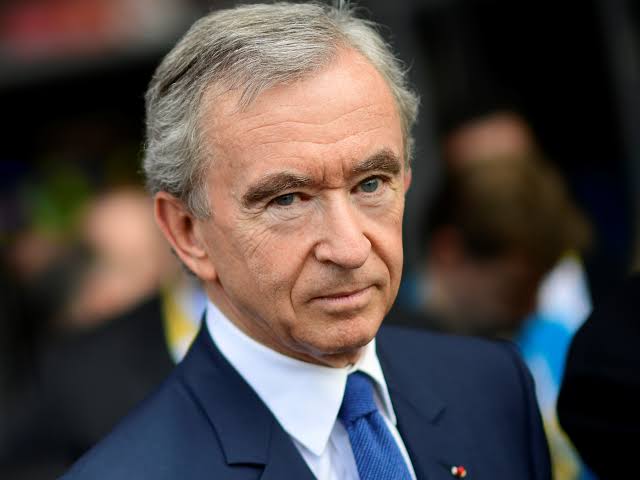
Bernard Arnault becomes world’s second-richest man
Published
7 years agoon
By
Mega Icon… how did he make his billions?
Louis Vuitton (LVMH) boss Bernard Arnault, 70, overtook Bill Gates to become the second richest person in the world, the Bloomberg Billionaires Index announced Wednesday—and he did it in style.

The French businessman, who is the force behind many of the biggest names in luxury, pushed to the second spot after a stellar year for LVMH, which saw company shares rise 43%. His net worth is now estimated at $107.6 billion—an increase of $39.1 billion in a single year.
This remains way short of Amazon founder Jeff Bezos’ $124 billion fortune. Yet Europe’s richest person—whose fortune is estimated to be equivalent to 3% of France’s GDP—is one of only three members in the ultra-exclusive centibillionaire’s club.
But just who is Bernard Arnault? And how did he make his fortune? More importantly, how does he manage to spend all that cash?
A fateful taxi ride
After studying engineering at the prestigious Ecole Polytechnique in Paris and graduating in 1971, Arnault joined his family’s construction company, Ferret-Savinel, as an engineer. Yet it was a chance meeting in New York that proved to have a far more dramatic impact.
Sitting in a yellow cab, Arnault asked the driver what he knew of France. “He could not name the president but he knew Dior,” Arnault recently told the Financial Times.

From there, Arnault’s course was set: within three years—and by the age of 30—he’d reinvented Ferret-Savinel as a real estate firm called Férinel, and replaced his father as company president. And in 1984, he embarked on an even more drastic venture. After lobbying the French government, he left Férinel and took up the reins of faltering textile company, Boussac—whose portfolio included the house of Dior—and systematically turned the company into the launchpad for his luxury empire. The purchase price? One Franc.
A luxury shopping spree
In 1987, Arnault was asked to mediate in the rancorous merger of Möet Hennessy and Louis Vuitton, largely because LV held the rights to Dior perfume and Henry Racamier, the 77-year-old chairman of LV, saw him as an ally, according to a report from the New York Times.
Arnault had other plans, however, and instead sided with Moet Hennessy boss, Alain Chevalier, and bought 27% of LVMH in combination with Guinness. This grew to 37% in 1988 and by 1989 Arnault was the biggest shareholder. A year later Racamier resigned from his own family firm and Arnault become both chairman and CEO of LVMH.
It was part of a rapid expansion that saw Arnault snap up luxury firms including Céline (1988), Berluti (1993), Guerlain (1994), Marc Jacobs (1997), Thomas Pink (1999), Fendi (2001), and DKNY (2001).

LVMH itself now comprises 75 ‘houses,’ including Dom Pérignon, Bulgari, Givenchy, and TAG Heuer. Alongside the 23-story LVMH Tower on New York’s 57th Street, the company owns the Cheval Blanc ski resort in Courchevel, the Hotel Cipriani in Venice (site of George Clooney’s 2016 wedding), the Orient Express, and luxury resorts in the Caribbean, Maldives, St. Tropez, and Paris.
In 1999, Arnault also invested in a small but enterprising DVD rental firm. It’s name? Netflix.
A bet pays off
Arnault was one of the first overseas businessmen to take the gamble of investing in China at the start of Deng Xiaoping’s market-economy reforms, opening a Louis Vuitton store in Beijing in 1992.
The risk has massively paid off over the years. In the first quarter of this year, for instance, LVMH reported a revenue increase of 16% to $14.10 billion, largely fueled by Chinese buyers, who account for over a third of the luxury sector’s sales.

“With the Chinese, the business is really moving from strength to strength,” Financial Director Jean-Jacques Guiony told reporters in April.
Going after Gucci
Like all business leaders, Arnault has suffered his fair share of failures along the way. Most notably, his 1999 attempt to takeover Gucci—described as “the bloodiest fight in fashion” by the New York Post—which resulted in litigation that Arnault ultimately lost. To his chagrin, the fashion house fell into the arms of arch-rival François Pinault for $2.92 billion.
In 2014, Arnault also admitted defeat in a four-year attempt to purchase luxury scarf-maker Hermès, after then-Hermès Chief Executive Patrick Thomas launched court proceedings to prevent LVMH from mounting a takeover. Arnault eventually agreed to relinquish his 23% stake in Hermès as a result.
Elsewhere, Arnault has unsuccessfully challenged the dominance of luxury auction houses Christie’s and Sotheby’s by buying British auctioneers Phillips in 1999 and got his fingers badly burnt with online retailer Boo.com, which went into liquidation in 2000.
Rising to second place
An April 10 release detailing first-quarter trading for LVMH, stated that, “All geographic regions are experiencing good growth.
“This includes a 20% increase in sales of fashion & leather goods, a 13 % rise in sales of wines & spirits and a 12 % increase in sales of perfumes & cosmetics. Overall, LMVH showed first-quarter growth of 16% and organic growth of 11% compared to 2018. Its overall revenue was around $14.3 billion.

These better-than-expected results have led to a 27% rise in LVMH shares since January 29, when the group announced record sales for 2018.
Arnault is not resting on his laurels, either. On April 17, LVMH announced the completion of its $3.2 billion deal for Belmond, making them part-owners or managers of 45 luxury hotel, restaurant, train, and river cruise properties.
Rihanna and Stella
On May 10, they followed this up with the creation of the new Fenty fashion line, centered around Barbadian pop star Rihanna.
“Designing a line like this with LVMH is an incredibly special moment for us,” Rihanna said in a release. “Mr. Arnault has given me a unique opportunity to develop a fashion house in the luxury sector, with no artistic limits. I couldn’t imagine a better partner both creatively and business-wise.”

More recently, LVMH announced a partnership with Stella McCartney’s name sake brand, which was publicly owned by rival company Kering until last year. The pair did not disclose the terms of the deal, but said it will allow McCartney to continue as creative director and majority owner of the brand.
“The chance to realize and accelerate the full potential of the brand alongside Mr. Arnault and as part of the LVMH family, while still holding the majority ownership in the business, was an opportunity that hugely excited me,” McCartney said in a release.
“It is the beginning of a beautiful story together, and we are convinced of the great long-term potential of her House,” said Arnault, before stressing that McCartney’s ethical principles were “a decisive factor”.
With the fashion world increasingly drawing criticism for its environmenal footprint, McCartney’s brand is clearly one that Arnault and LVMH can draw from.
“She was the first to put sustainability and ethical issues on the front stage, very early on, and built her House around these issues,” Arnault added about McCartney. “LVMH was the first large company in France to create a sustainability department, more than 25 years ago, and Stella will help us further increase awareness on these important topics.”
Source : Fortune

Related
You may like
-
Melinda Gates Resigns from Gates Foundation, Set to Receive $12.5 Billion
-
Data for Nothing: Fraudsters Use Fake Gift Cards to Lure Consumers into Handing Over Personal Data
-
Buhari’s Economic Blueprint Does Not Address Nigerians’ Needs — Bill Gates
-
Latest Richest Person In The World Emerged As Spanish Retailer Defeats Bill Gates!
News
Iran War Disrupts Oil Supply, Global Loss Hits $50bn
Published
5 days agoon
April 18, 2026By
Mega IconThe global oil market has recorded losses exceeding $50bn following massive supply disruptions triggered by the ongoing Iran war, which has now stretched to nearly 50 days.
Data from energy analytics firm Kpler showed that more than 500 million barrels of crude oil and condensate have been wiped off the global market since the crisis began in late February, making it the largest energy supply disruption in modern history.
Iran’s Foreign Minister, Abbas Araqchi, on Friday said the Strait of Hormuz had been reopened after a ceasefire agreement reached in Lebanon.
However, tensions escalated again on Saturday as Tehran warned it could shut the strategic waterway if the United States sustains its blockade of Iranian ports.
Also, U.S. President Donald Trump expressed optimism that a deal to end the conflict could be reached “soon,” although he did not provide a definite timeline.
Analysts warned that the scale of disruption could have prolonged effects on global energy stability, with shocks expected to linger for months or even years.
Providing context, Principal Analyst at Wood Mackenzie, Iain Mowat, said the 500 million barrels lost is equivalent to grounding global aviation demand for 10 weeks, halting all road transport worldwide for 11 days, or shutting down the entire global oil supply for five days.
Further estimates showed that the lost volume is nearly equal to one month of oil demand in the United States or more than a month’s supply for Europe. It also represents about six years of fuel consumption by the U.S. military and could power global shipping activities for approximately four months.
The crisis has significantly affected oil-producing nations in the Gulf, with output losses reaching about eight million barrels per day in March—roughly equivalent to the combined production of two of the world’s largest oil companies.
Jet fuel exports from major producers, including Saudi Arabia, Qatar, the United Arab Emirates, Kuwait, Bahrain, and Oman, dropped sharply from 19.6 million barrels in February to just 4.1 million barrels recorded across March and April combined. Analysts said the shortfall could have powered about 20,000 round-trip international flights.
With crude prices averaging around $100 per barrel since the onset of the conflict, the lost volumes translate to an estimated $50bn in revenue. Experts noted that this figure is equivalent to about one per cent of Germany’s annual Gross Domestic Product, or roughly the size of the economies of smaller European countries.
Meanwhile, global onshore crude inventories have declined by about 45 million barrels in April alone, while total production outages have risen to approximately 12 million barrels per day since late March.
Industry experts cautioned that unless a lasting resolution is reached, the disruption could intensify volatility in global oil markets, worsen inflationary pressures, and further strain fragile economies worldwide.
Related
News
Oseni Secures Prestigious City People Political Award Nomination
Published
6 days agoon
April 16, 2026By
Mega IconA member of the House of Representatives representing Ibarapa East/Ido Federal Constituency and Chairman of the House Committee on Federal Roads Maintenance Agency, Aderemi Oseni, has been nominated for a Special Award in Politics at the 2026 City People Political Awards.
The nomination was conveyed in a letter dated April 13, 2026, signed by the Publisher/Editor-in-Chief of City People Magazine, Seye Kehinde.
The development was disclosed in a statement issued by Oseni’s media aide, Idowu Ayodele, and made available to journalists in Ibadan on Thursday.
According to the statement, the lawmaker earned the nomination in recognition of his “outstanding contributions to politics in Oyo State, particularly in Ibarapa East/Ido Federal Constituency.”
The organisers noted that Oseni emerged as a nominee following a comprehensive review of performances across sectors by the award’s selection committee.
Part of the letter read, “Having performed creditably well in your sector last year, the Organising Committee presented you as a nominee in your sector.”
The award ceremony is scheduled to hold on Sunday, May 3, 2026, at Etal Hall, Kudirat Abiola Way, Oregun, Ikeja, Lagos, at 4pm.
The City People Awards is an annual event that recognises individuals who have distinguished themselves in governance, public service and other sectors of national development.
Related
News
Kaduna Electric to prosecute, expose attackers of staff
Published
6 days agoon
April 16, 2026By
Mega IconThe Kaduna Electricity Distribution Company has announced a crackdown on individuals who assault its staff, warning that offenders will face prosecution and public exposure.
In a statement issued on Thursday, the company expressed concern over what it described as a “disturbing surge” in attacks on its field workers and third-party partners.
It noted that the affected personnel were mainly engaged in meter installation, revenue collection and maintenance of electricity infrastructure.
According to the firm, the increasing cases of harassment, physical assault and unlawful detention of its workers pose a serious threat to employee safety and the stability of electricity service delivery across its franchise areas.
The Deputy Managing Director, Abubakar Mohammed, said the company would no longer tolerate any form of aggression against its workforce.
“Let this serve as a clear warning to anyone who engages in the assault of our staff. Kaduna Electric will pursue every case to its logical conclusion,” he said.
“We will work closely with security agencies to ensure offenders are brought to justice and face the full weight of the law,” Mohammed added.
He further disclosed that the company would publicly reveal the identities of individuals found culpable.
According to him, names, photographs and other details of offenders would be published on the company’s official platforms as well as in national and local media.
“This measure is intended to ensure accountability and serve as a strong deterrent. Anyone who chooses to attack our personnel should be prepared not only to face prosecution but also public exposure,” he added.
The company stressed that assaults on utility workers attract serious legal and financial consequences, noting that offenders risk criminal charges that may lead to fines or imprisonment.
It added that perpetrators could also face civil liabilities, including compensation for medical treatment, psychological trauma and loss of work hours.
While condemning the attacks, Kaduna Electric urged customers to adopt peaceful and lawful means of resolving disputes.
It advised aggrieved customers to channel complaints through its customer service units or appropriate regulatory bodies.
The management reaffirmed its commitment to protecting its workforce and partners, stressing that a safe working environment is essential for delivering reliable and efficient electricity services.
Although disputes between electricity providers and consumers are often linked to billing issues, metering challenges and service delivery concerns, the company maintained that such matters must be resolved through dialogue, insisting that violence against its staff will no longer be tolerated.
Related
Advertisement
Entertainment
Adekunle Gold, Simi welcome twins
Ayefele drops new album, Reflections
Reggae Legend, Jimmy Cliff, Dies At 81
Photos: Davido blows $3.7m on lavish Miami white wedding for Chioma
FAAN probes K1 for spilling alcohol on airport officer during boarding
Odunlade Adekola loses father
MegaIcon Magazine Facebook Page
MEGAICON TV
Advertisement
Trending
-
News6 days agoOseni Secures Prestigious City People Political Award Nomination
-
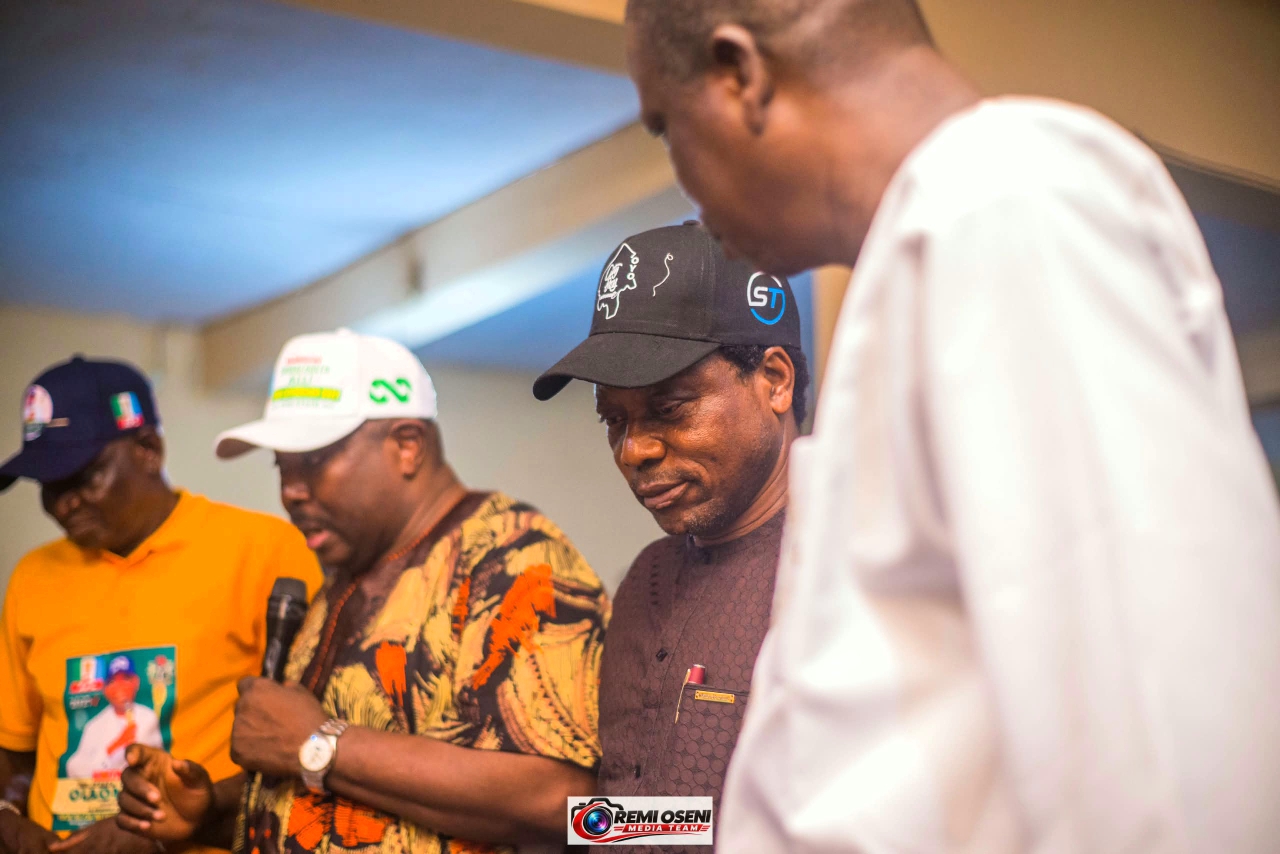
Politics2 days ago2027: Oseni kicks off Oyo South Senate bid, rallies support for one million Tinubu votes
-
Health6 days agoOyo confirms Lassa fever death in Ibadan, activates emergency response, traces contacts
-
Crime & Court6 days agoJoshua crash: Driver faces fresh charges as court adjourns trial