Connect with us

News

Ajimobi presents N267 budget of stability, receives defector from Accord Party

Published

on

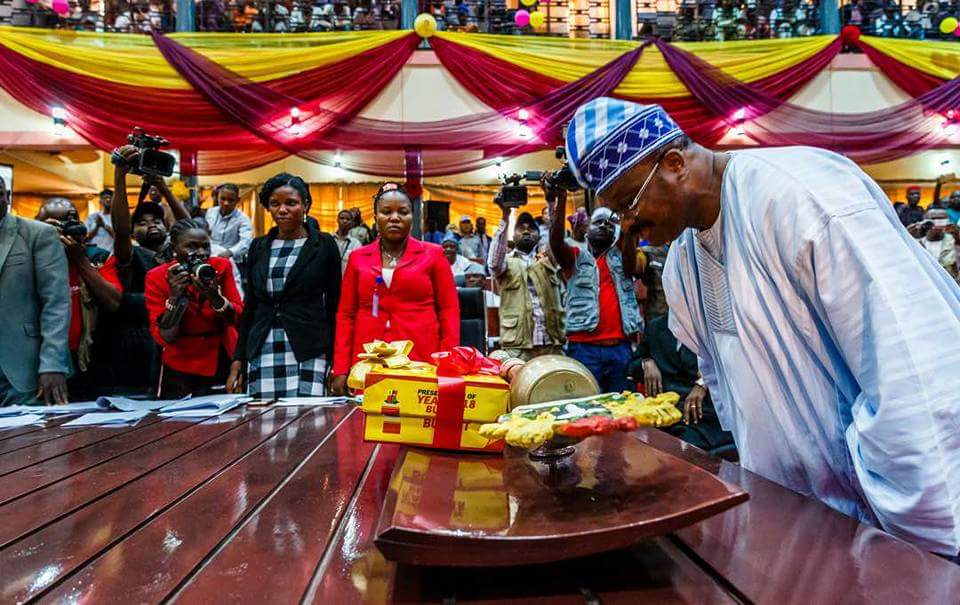
Governor Abiola Ajimobi of Oyo State on Thursday presented a budget of N267bn which represents an increase of 28% on the 2017 budget.

The 2018 fiscal appropriation of the state is tagged Budget of Stabilization and it has a difference of N60bn from that of 2017 which had the figure of N207bn.

One of the highlights of the budget presentation was the cross-carpeting of a staunch member of the opposition party in the State House of Assembly, Hon. Joshua Oyebamiji, representing Akinyele State Constituency to the ruling All Progressive Congress (APC).

The budget presentation witnessed the presence of eminent personalities in the state including former Deputy Governor of Oyo State, Ambassador Taofeek Arapaja, Former Senate Leader, Senator Teslim Folarin, Former Speaker of the Oyo State House of Assembly, Ashimiyu Alarape, traditional rulers , led by the Alaafin of Oyo, Oba Lamidi Adeyemi, Aseyin of Iseyin, Oba Salawudeen Adekunle Ajinese 1, Eleruwa of Eruwa, Oba Samuel Adegbola, the Olubadan in Council, Party stalwarts as well as members of the Ibadan Elders Forum led by Ambassador Olu Sanu.

Governor Ajimobi informed the members of the house that the budget submitted for consideration and approval of the legislature stood at N267,436,357,912.19, stressing that detailed facts behind the budget would be made known later by the State Ministry of Finance, Budget and Planning.

The governor explained that the proposed budget is expected to be funded from Internally Generated revenue of N112.10bn, Federation Account N93.68bn, Capital Receipts of N43.72bn, Transfer (LG, JAAC for LGSPB & LGSC) of N7.53bn and an unspent income of N10.40bn from 2017.

Senator Ajimobi said that the structure of the 2018 budgetary proposal reflects the priority the Government has accorded the various sectors in terms of their expected developmental effects, noting that the relative aggregate sectoral allocations were Economic Sector N85.390bn (57.29%), Social Services Sector N54.280bn (36.42%), Law & Justice Sector N0.517bn (0.35%) and General Administration Sector N8.860bn (5.94).

According to him, “The aggregate percentage of 93.71% of the capital expenditure allocated to the economic and social sub-sectors underscores the State Government’s determination to continue to pursue a people-centered, empowerment-focused agenda. We consider this as the best antidote to the problem of poverty amongst our people.

“It is to be recalled that apart from consistently utilizing more than the stipulated minimum of all the recurrent intervention from the federal government to settle salary/pension and arrears, our administration had conceded 100% monthly allocation from the federation accounts to payment of salaries and pensions of the State’s work force,” he added.

The Governor assured that his administration will further strengthen monitoring, supervision and inspection of our teaching staff as well as roll out  policies that will culminate to better performance of students at national and international examinations, adding that the State Government has awarded the construction and renovation of structures in Schools towards the provision of conducive environment for teaching and learning in our various schools with continued restructuring exercise in respect of staff redistribution with emphasis on professionalism and competence.

Governor Ajimobi pointed out that elections into our Local Government Areas and the newly created Local Council Development Areas will hold in 2018, adding “this is intended to bring governance to the door steps of the people and to enhance development at the grassroots. Therefore, the content and structure of this proposal have captured our vision towards achieving this and the continuation of our developmental strides in the 2018 fiscal year.”

He hinted that necessary actions would be taken to further control hazards associated with sanitation and street trading as more neighborhood markets would be established to cut down on centralization of social facilities in the cities which always lead to urban crisis.

He listed areas where rehabilitation and expansion of water projects would be embarked upon in the coming year to include rehabilitation of Igboho water supply scheme at a cost of N474m, rehabilitation of Owode water supply scheme with N200m, expansion of Ogbomoso/Ikoyi-Ile water supply scheme and procurement of water treatment chemical, worth N500m.

In Agriculture, Governor Ajimobi said the State government would to procure sufficient mechanization equipment which could be adapted by youths to enhance mechanized farming in the State.

He said, “It gladdens me to register my sincere appreciation for the wonderful support that our administration has enjoyed from all segments of the State. These range from our highly revered traditional rulers to community, political, opinion leaders, professional and trade groups, market women, civil society and nongovernmental organizations as well as students across all educational levels.

“You have all demonstrated to us your readiness to contribute directly or indirectly to the State’s economic growth. On the other hand, I appeal to tax defaulters to perform their civic responsibilities and join hands with others to contribute to government efforts at advancing the development of the State with its attendant socio – economic benefits,” Governor Ajimobi added.

Receiving the 2018 budget proposal, the Speaker of the Oyo State House of Assembly, Rt Hon Michael Adeyemo promised to support the administration of Senator Abiola Ajimobi and work in harmony with the executive to see to the transformation and repositioning of the State.

He said “We appreciate the good efforts of the Ajimobi-led executive and promise to give prompt and adequate attention to the passage of the 2018 fiscal budget. It is our wish that members will keep up the good work that has transformed into the notable achievements of this administration and we promise to continue working in harmony with the executive to achieve greater yields of democratic dividends for our people.”

Comments

News

Oseni mourns ex-Oyo lawmaker Akeem ‘Able’, says Oyo APC has lost loyal progressive

Published

on

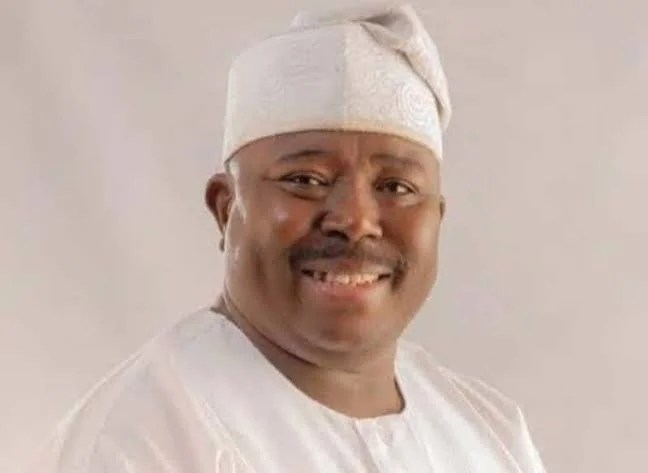
The lawmaker representing Ibarapa East/Ido Federal Constituency in the House of Representatives, Engr. Aderemi Oseni, has mourned the death of a chieftain of the All Progressives Congress (APC) in Oyo State and former member of the Oyo State House of Assembly, Hon. Akeem Abimbola Oladipupo, popularly known as Able, describing his demise as a painful loss to the progressive family.

Oladipupo, who represented Ibadan North-West Constituency in the Oyo State House of Assembly, was widely regarded as a grassroots politician and committed party loyalist until his passing.

Oseni, who is also the Chairman, House Committee on Federal Roads Maintenance Agency and the APC candidate for Oyo South Senatorial District, said the late politician’s death had created a vacuum within the party and among those who benefitted from his unwavering commitment to public service.

In a condolence statement issued on Monday by his Media Aide, Idowu Ayodele, and made available to journalists in Ibadan, the Oyo State capital, the federal lawmaker described the late Oladipupo as a dependable progressive, humble political actor and loyal party stalwart whose impact would remain indelible.

He said the deceased dedicated his life to serving humanity, strengthening the progressive movement and supporting the aspirations of many at the grassroots.

Oseni said, “The death of Hon. Akeem Abimbola Oladipupo (Able) came to me as a rude shock. Oyo State and the progressive family have indeed lost a committed, loyal and selfless leader whose passion for service, humility and dedication to the people stood him out.

“He was not just a politician but a bridge-builder, a dependable ally and a grassroots mobiliser who believed strongly in the ideals of our great party. His contributions to the growth of the APC in Oyo State and his service to humanity will remain unforgettable.”

The APC senatorial candidate noted that the late former lawmaker remained steadfast in promoting peace, unity and political development, adding that his simplicity and accessibility endeared him to many across political divides.

According to Oseni, the late politician’s legacy of service and sacrifice would continue to inspire younger politicians and party faithful.

He, however, urged members of the APC, associates and family members of the deceased to take solace in the remarkable life he lived and the positive impact he made during his lifetime.

Oseni also prayed for the repose of the deceased’s soul and for God to grant his family the fortitude to bear the painful loss.

Continue Reading

News

Governors Push N100,000 Minimum Wage to Ease Workers’ Economic Burden

Published

on

State governors have proposed a new national minimum wage of N100,000 for Nigerian workers as part of efforts to cushion them from the biting effects of inflation and the rising cost of living.

Governor AbdulRahman AbdulRazaq of Kwara State, who is also the Chairman of the Nigeria Governors’ Forum (NGF), disclosed the proposal on Saturday in a post by the state government’s official Facebook page. He said the move aims to improve workers’ welfare while ensuring that government finances remain sustainable.

“State governments recognise the urgent need to improve workers’ welfare in response to the current economic realities facing Nigerians,” AbdulRazaq said.

“We are actively engaging with the Federal Government and organised labour to arrive at a wage structure that is fair to workers and sustainable for government finances.”

The NGF chairman explained that ongoing discussions are focused on balancing the need to boost workers’ purchasing power with the capacity of governments to deliver essential public services and development projects.

“The goal is to improve the living conditions of workers while ensuring that states can continue to meet their obligations and sustain projects that directly impact citizens,” he added.

The proposed N100,000 minimum wage is expected to intensify national debates on salaries, inflation, and broader economic reforms as Nigerians continue to contend with rising food prices, transportation costs, and other living expenses.

Currently, Nigeria’s statutory minimum wage stands at N70,000 per month. Some states, including Lagos, Rivers, and Imo, are already paying above the national benchmark to support workers amid the country’s economic challenges.

Meanwhile, the Nigeria Labour Congress (NLC) has continued to call for a comprehensive review of salaries, insisting that workers deserve a living wage that reflects present-day economic realities rather than merely guaranteeing survival.

Continue Reading

News

Petrol hits N1,533/litre as cooking gas prices jump nationwide

Published

on

The average retail price paid by consumers for Premium Motor Spirit, popularly known as petrol, rose to N1,532.93 per litre in April 2026, representing a 23.69 per cent increase compared to the N1,239.33 recorded in the corresponding period of 2025, findings by the National Bureau of Statistics (NBS) have shown.

The sharp rise in petrol prices came amid mounting inflationary pressure and worsening living costs, with Nigerians grappling with soaring transportation and food expenses that have continued to shrink household purchasing power.

The NBS disclosed this in its Premium Motor Spirit (Petrol) Price Watch for April 2026, released on Friday.

The report further showed that on a month-on-month basis, petrol prices rose by 18.97 per cent from N1,288.54 recorded in March 2026, underscoring persistent volatility in the downstream petroleum market.

A breakdown of prices across states revealed that Yobe recorded the highest average retail price for petrol at N1,599.05 per litre during the review period.

Edo and Bauchi followed closely with average prices of N1,595.74 and N1,589.07, respectively.

However, Niger residents paid the least for petrol at an average of N1,403.89 per litre, while Sokoto and Katsina recorded N1,404.16 and N1,406.28 respectively.

At the zonal level, the South-South recorded the highest average retail price at N1,566.76 per litre, while the North-West posted the lowest at N1,508.81.

The latest petrol price increase comes as millions of Nigerians continue to battle the ripple effects of rising inflation, with higher energy costs worsening transportation fares and the prices of essential commodities.

Similarly, the NBS said the average retail price for refilling a 5kg cylinder of Liquefied Petroleum Gas, also known as cooking gas, rose by 13.73 per cent month-on-month to N8,706.93 in April 2026 from N7,655.73 recorded in March.
On a year-on-year basis, the price increased by 10.42 per cent from N7,885.60 recorded in April 2025.

Lagos recorded the highest average price for refilling a 5kg cylinder at N9,745.10, followed by Nasarawa at N9,451.70 and Bayelsa at N9,422.74.

In contrast, Anambra recorded the lowest average price at N7,204.76, while Ondo and Ogun followed with N7,239.49 and N7,825.75, respectively.

At the regional level, the North-West recorded the highest average retail price for refilling a 5kg cylinder at N9,025.07, followed by the North-East at N8,847.16, while the South-East posted the lowest average price at N8,224.37.

Also, the average retail price for refilling a 12.5kg cylinder of cooking gas increased by 13.89 per cent month-on-month to N22,382.20 in April 2026 from N19,652.83 in March.

Compared to April 2025, the price rose by 10.43 per cent from N20,268.06.

According to the NBS LPG Price Watch for April, Katsina recorded the highest average retail price for refilling a 12.5kg cylinder at N25,596.71, followed by Kogi at N24,558.25 and Gombe at N24,438.97.

Ogun recorded the lowest average price at N19,564.36, while Bauchi and Anambra followed at N20,178.87 and N20,511.90 respectively.

The North-West recorded the highest zonal average retail price for refilling a 12.5kg cylinder at N23,276.95, followed by the North-Central at N22,865.29, while the South-East posted the lowest average at N21,060.92.

The latest figures signal growing pressure on household energy costs, raising concerns over the implications for inflation and the cost of living in the coming months.

Continue Reading

Advertisement

Entertainment

Advertisement

MegaIcon Magazine Facebook Page

Advertisement

MEGAICON TV

Advertisement

Trending