News
Oyo APC aspirant, Akande proffers solution to herdsmen crisis
Published
8 years agoon
By
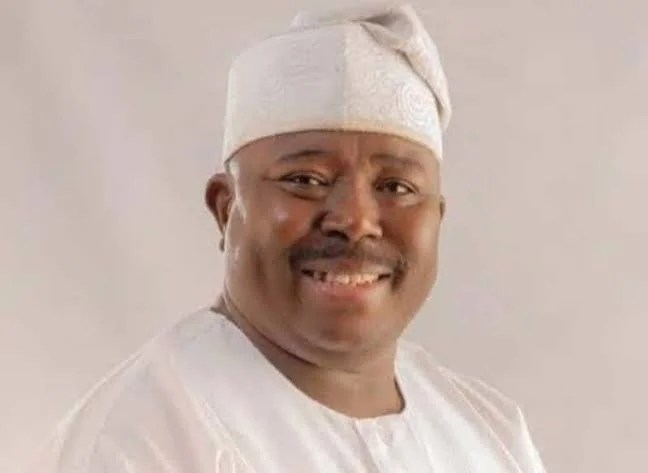
Mega IconA governorship aspirant on the platform of the All Progressives Congress, APC, in Oyo state, Prof. Adeolu Akande, has suggested ranching as the only solution to farmers/herdsmen’s crisis .
Akande, who was recently inaugurated as Chairman of the Board of the Nigeria Information Technology Development Agency, NITDA, averred that if that is adopted, herdsmen crisis will stop being a major source of inter-ethnic tension.
Speaking recently on the topic entitled “Grazing Reserve Bill: An Elixir to recent crisis between Fulani herdsmen and farmers at an event organised by the Students Representatives Council of the Lead City University, Ibadan, Akande said the grazing reserve bill is a proposal frozen in time.
According to him, ”the elixir to the frequent conflict between farmers and herdsmen is to adopt the ranching model which will keep the herds of cattle away from the farms of farmers and away from our roads. It will not only guarantee peaceful co-existence of farmers and herdsmen, it will also stop being a major source of inter-ethnic tension. Finally, it will also enhance productivity of livestock and contribute to food security in Nigeria and the west Africa sub-region.”
“The activities of herdsmen have become worrisome in recent times. There have been reported cases of farmer-herdsmen attacks across the country. Many people commit heinous crimes in the name of herdsmen. The spate of atrocities masterminded by herdsmen has continued to threaten national integration vis and vis national security. It further intensifies suspicion between ethnic nationalities in Nigeria. The Fulbe/Fulani usually graze cattle, goats, and sheep and live throughout the Sahel region, in Senegal, Mali, Niger, Chad, Cameroon and Northern Nigeria. At the end of the rainy season, the pastoralists move southward from the Sahara Desert. Mobility enables pastoralists to get the most out of the sporadic rainy seasons that are characteristic of these dry lands.
“Another factor responsible for conflict between pastoralists and farmer is that grazing resources including pasture and water are found in different places at different times of the year, hence the need for constant mobility among cattle herders for opportunistic resource use.
“The incidence of herdsmen/farmers conflict in Nigeria has been accentuated by the factors of climate change which has made it imperative for Fulani herdsmen to stay longer, if not permanently, in the North Central and Southern part of the country because of green pasture for their cattle. There is also the dislocation caused by the disappearing Lake Chad which had shrunk from about 400,000 square kilometres according to earliest records to 26,000 square kilometres in 1960 and 1,750 square kilometres today. This has pushed herdsmen who relied on the Lake Chad region for pasture to move down south in search of pasture.
“There is also the conflict that had traversed the northern fringe of West Africa which has made the entire region unsafe for pastoralists and their stock. Again, such displaced pastoralists found refuge in the southern fringe of West Africa. Another major consequence of the conflict in the region is that herdsmen who had to arm themselves to secure themselves and their stock in the dangerous terrain of civil war soon found arms a natural companion as they traversed the sub-region such that even when they arrive at relatively peaceful zones such as southern Nigeria, they had become so accustomed to the company of their arms that they found it difficult to live without them. Finally, the rampaging Boko Haram Conflict in the North Eastern part of the Nigeria also forced the emigration of herdsmen who also moved southwards for their safety and that of their stock. The combined effect of all of this is that there was more demand for pasture than the relatively fixed land in central and Southern Nigeria could provide. There was more demand than supply and the consequence is frequent conflict between host farmer communities and the Fulani herdsmen”, he continued.
The ex- Chief of Staff to Governor Abiola Ajimobi of Oyo state stressed further that the grazing reserve bill “is conceived with the business model of centuries-old cattle rearing method in view. This method is fixated with the notion that agriculture could only be done within the natural provision of rain water hence the pastoralists have to migrate in response to the raining season. It does not have to be so. The leading countries in beef production in the world do not rely on the rain for their livestock.
“The dominant business model in those countries is the ranching method where investors buy land space to nurture their stock. This has the advantage of keeping livestock under control and without threat to the farmland of other people. The other advantage is that cattle that are nurtured in such ranches are much more productive that the ones exposed to the torture of walking hundreds and thousands of kilometres in search of pasture. Research has shown that cows nurtured in ranches have better nutrients that the ones that ate exposed to hundreds of kilometres of walk. Also, the milk production by cows nurtured in ranches is much more than the milk produced by roaming cattle. For instance, an average cow in Brazil produces 40 litres of milk per day compared to the 10 litres produced by the roaming cattle in Nigeria.
”The major cause of frequent conflicts between the farmers and herdsmen is the contest for the control of land resource which both of them need for their economic enterprises but which unfortunately are not in equal supply as the demand for it.
“The notion of the bill is that if grazing reserves are established and grazing zones delineated, it will guarantee the pastoralists of the pasture for their stock. This provision is fraught with many challenges. The first is that the issue it seeks to address, that is, the control of livestock in neither in the exclusive nor the concurrent legislative list of the 1999 Constitution (as amended).This indicates that the National Assembly before which the bill is proposed does not have the power to make laws on the matter. The states, rather than the federal government, have such powers.
“The second assumption is that by taking over land across the states and turning them into grazing reserves, the frequent conflict between farmers and herdsmen will be reduced. That stands logic on its head. As noted in the earlier part of this paper, land is considered the heritance of the family in Nigeria, just as in most part of Africa. The confiscation of the land of a community, by whatever name it is called, and the offer of same to some other people for their own economic enterprise will only accentuate inter-ethnic tension and conflict. The communities disposed of their land will only view the opportune group as impostors and will be so disposed to engaging them in clashes at the slightest provocation.
“Besides, the history of indigenes/settlers conflict in Nigeria have shown that settlers who are given access to land by host communities soon claim equal right to such land especially when succeeding generations of the original settlers who have lost contact with their original places of birth soon lay claim to the indigene ship of their new abodes. Such claims are difficult to fault in the contests of the Nigerian Constitution that guarantees that every Nigerian can live wherever he chooses to reside or where descendants of such settlers have indeed lived for hundreds of years in the new home embraced by their immediate ancestors.
- “Finally, the practice of the pastoralists traversing hundreds of kilometres as they migrate in search of pasture for their stock which the Grazing Bill seeks to preserve by demarcating and protecting Stock Routes is a recipe for crisis. Experience has shown that it is not in all instances that the pastoralists are able to keep their stock on the route. Cows do stray from the herd and destroy farmlands, instigating crisis between farmers and herdsmen,” he proferred.

Related
You may like
-
Oyo Reps Member Denies Assault, Dares APC Chieftain to Prove ‘Hospitalisation’ Claim
-
2027: Oseni kicks off Oyo South Senate bid, rallies support for one million Tinubu votes
-
2027: Alli declares Oyo guber bid, promises inclusive governance
-
Oyo confirms Lassa fever death in Ibadan, activates emergency response, traces contacts
News
Iran War Disrupts Oil Supply, Global Loss Hits $50bn
Published
4 days agoon
April 18, 2026By
Mega IconThe global oil market has recorded losses exceeding $50bn following massive supply disruptions triggered by the ongoing Iran war, which has now stretched to nearly 50 days.
Data from energy analytics firm Kpler showed that more than 500 million barrels of crude oil and condensate have been wiped off the global market since the crisis began in late February, making it the largest energy supply disruption in modern history.
Iran’s Foreign Minister, Abbas Araqchi, on Friday said the Strait of Hormuz had been reopened after a ceasefire agreement reached in Lebanon.
However, tensions escalated again on Saturday as Tehran warned it could shut the strategic waterway if the United States sustains its blockade of Iranian ports.
Also, U.S. President Donald Trump expressed optimism that a deal to end the conflict could be reached “soon,” although he did not provide a definite timeline.
Analysts warned that the scale of disruption could have prolonged effects on global energy stability, with shocks expected to linger for months or even years.
Providing context, Principal Analyst at Wood Mackenzie, Iain Mowat, said the 500 million barrels lost is equivalent to grounding global aviation demand for 10 weeks, halting all road transport worldwide for 11 days, or shutting down the entire global oil supply for five days.
Further estimates showed that the lost volume is nearly equal to one month of oil demand in the United States or more than a month’s supply for Europe. It also represents about six years of fuel consumption by the U.S. military and could power global shipping activities for approximately four months.
The crisis has significantly affected oil-producing nations in the Gulf, with output losses reaching about eight million barrels per day in March—roughly equivalent to the combined production of two of the world’s largest oil companies.
Jet fuel exports from major producers, including Saudi Arabia, Qatar, the United Arab Emirates, Kuwait, Bahrain, and Oman, dropped sharply from 19.6 million barrels in February to just 4.1 million barrels recorded across March and April combined. Analysts said the shortfall could have powered about 20,000 round-trip international flights.
With crude prices averaging around $100 per barrel since the onset of the conflict, the lost volumes translate to an estimated $50bn in revenue. Experts noted that this figure is equivalent to about one per cent of Germany’s annual Gross Domestic Product, or roughly the size of the economies of smaller European countries.
Meanwhile, global onshore crude inventories have declined by about 45 million barrels in April alone, while total production outages have risen to approximately 12 million barrels per day since late March.
Industry experts cautioned that unless a lasting resolution is reached, the disruption could intensify volatility in global oil markets, worsen inflationary pressures, and further strain fragile economies worldwide.
Related
News
Oseni Secures Prestigious City People Political Award Nomination
Published
5 days agoon
April 16, 2026By
Mega IconA member of the House of Representatives representing Ibarapa East/Ido Federal Constituency and Chairman of the House Committee on Federal Roads Maintenance Agency, Aderemi Oseni, has been nominated for a Special Award in Politics at the 2026 City People Political Awards.
The nomination was conveyed in a letter dated April 13, 2026, signed by the Publisher/Editor-in-Chief of City People Magazine, Seye Kehinde.
The development was disclosed in a statement issued by Oseni’s media aide, Idowu Ayodele, and made available to journalists in Ibadan on Thursday.
According to the statement, the lawmaker earned the nomination in recognition of his “outstanding contributions to politics in Oyo State, particularly in Ibarapa East/Ido Federal Constituency.”
The organisers noted that Oseni emerged as a nominee following a comprehensive review of performances across sectors by the award’s selection committee.
Part of the letter read, “Having performed creditably well in your sector last year, the Organising Committee presented you as a nominee in your sector.”
The award ceremony is scheduled to hold on Sunday, May 3, 2026, at Etal Hall, Kudirat Abiola Way, Oregun, Ikeja, Lagos, at 4pm.
The City People Awards is an annual event that recognises individuals who have distinguished themselves in governance, public service and other sectors of national development.
Related
News
Kaduna Electric to prosecute, expose attackers of staff
Published
6 days agoon
April 16, 2026By
Mega IconThe Kaduna Electricity Distribution Company has announced a crackdown on individuals who assault its staff, warning that offenders will face prosecution and public exposure.
In a statement issued on Thursday, the company expressed concern over what it described as a “disturbing surge” in attacks on its field workers and third-party partners.
It noted that the affected personnel were mainly engaged in meter installation, revenue collection and maintenance of electricity infrastructure.
According to the firm, the increasing cases of harassment, physical assault and unlawful detention of its workers pose a serious threat to employee safety and the stability of electricity service delivery across its franchise areas.
The Deputy Managing Director, Abubakar Mohammed, said the company would no longer tolerate any form of aggression against its workforce.
“Let this serve as a clear warning to anyone who engages in the assault of our staff. Kaduna Electric will pursue every case to its logical conclusion,” he said.
“We will work closely with security agencies to ensure offenders are brought to justice and face the full weight of the law,” Mohammed added.
He further disclosed that the company would publicly reveal the identities of individuals found culpable.
According to him, names, photographs and other details of offenders would be published on the company’s official platforms as well as in national and local media.
“This measure is intended to ensure accountability and serve as a strong deterrent. Anyone who chooses to attack our personnel should be prepared not only to face prosecution but also public exposure,” he added.
The company stressed that assaults on utility workers attract serious legal and financial consequences, noting that offenders risk criminal charges that may lead to fines or imprisonment.
It added that perpetrators could also face civil liabilities, including compensation for medical treatment, psychological trauma and loss of work hours.
While condemning the attacks, Kaduna Electric urged customers to adopt peaceful and lawful means of resolving disputes.
It advised aggrieved customers to channel complaints through its customer service units or appropriate regulatory bodies.
The management reaffirmed its commitment to protecting its workforce and partners, stressing that a safe working environment is essential for delivering reliable and efficient electricity services.
Although disputes between electricity providers and consumers are often linked to billing issues, metering challenges and service delivery concerns, the company maintained that such matters must be resolved through dialogue, insisting that violence against its staff will no longer be tolerated.
Related
Advertisement
Entertainment
Adekunle Gold, Simi welcome twins
Ayefele drops new album, Reflections
Reggae Legend, Jimmy Cliff, Dies At 81
Photos: Davido blows $3.7m on lavish Miami white wedding for Chioma
FAAN probes K1 for spilling alcohol on airport officer during boarding
Odunlade Adekola loses father
MegaIcon Magazine Facebook Page
MEGAICON TV
Advertisement
Trending
-
News1 week ago500,000 risk eviction as Ibadan landlords reject Makinde’s 1,000m road plan
-
News5 days agoOseni Secures Prestigious City People Political Award Nomination
-
Health6 days agoOyo confirms Lassa fever death in Ibadan, activates emergency response, traces contacts
-
Crime & Court6 days agoJoshua crash: Driver faces fresh charges as court adjourns trial