Connect with us

News

Rwanda Genocide: 24 years later MSF field workers recall horrors, aftermath

Published

on

24-years ago on April 7, 1994, Doctors Without Borders (MSF) teams in Kigali witnessed the city descend into violence. These were the first days of what would go on to become known as the Rwandan genocide, during which more than a million people lost their lives, including MSF staff.

The crisis that engulfed the country also spilled across the border, forcing refugees into neighboring DRC, Uganda and Burundi. Among those who lived through the tragedy were young people who would decades later become fieldworkers for MSF.

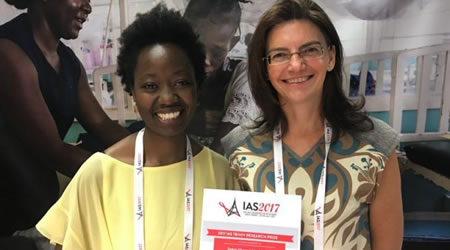
Claudia Kanyemera, Dominique Mukunzi and Innocent Maniraruta first encountered MSF as an organization providing medical care and assistance to people fleeing the violence in Rwanda. Today, they share the experiences that inspired and motivated them to join MSF:

‘As a genocide survivor, I know people need support’ Claudia Kanyemera – MSF Finance Manager

“I decided to join MSF long ago because I admired the mission of MSF, the neutrality, how MSF helps people who are in a critical situation, people who are victims of war. As a genocide survivor, a victim of political crisis, I know how much people need support when they are in these conditions.

At that time of the Rwandan genocide, in 1994, I was in secondary school. We lived in the south province of Rwanda when everything started, and I was forced to leave my home with my family. We were internally displaced to another part of the country. I lost some family members during that time. It was really difficult. We fled and went to a place we thought was secure, but everywhere in Rwanda, there was no place that was fully secure.

A few months after the fighting began, I found some work with a non-profit organization, helping to translate between French and Rwandese. That was where I first saw MSF – they had set up a hospital that shared the same compound with this non-profit.

Some days, I would help out with translations at the hospital when they needed me. That’s when I saw how MSF treated patients without discrimination and without any bias. They really cared for the people. That’s when I decided I would go to university and one-day also join MSF.

After the fighting stopped, and things finally returned to normal, I applied to go to university.

I dreamed of studying medicine, so I could join a humanitarian organization as a doctor. But after the genocide it was not easy to get scholarships and studying medicine was very expensive.

The scholarship I was able to get was to study finance, so I changed my mind about doing medicine. In the end, I couldn’t get my exact dream of becoming a doctor. But I built a career in finance, working as an auditor and then a finance manager at a bank, heading departments and doing a masters in economics.

But I still wanted to do more for people, so I decided to join MSF as a finance manager in the field. Today, even though I’m not a doctor, I can still help in some way, and work to achieve my dream of changing people’s realities.

‘MSF came to the middle of nowhere and made a hospital’ Dominique Mukunzi – MSF Pharmacist

“In 1994 I was 11 years old when we fled. The genocide just took place in my home country Rwanda, and we had to escape. We walked for days, all the way across the border, into the Democratic Republic of Congo (DRC), until we reached the refugee camp in Bukavu. That’s where I first met MSF – in the refugee camps, helping people.

We stayed there for over a year. Then in 1996, war started in Bukavu, and we had to leave again. Once more we walked for days, all the way to Kisangani, hundreds of kilometers away. Sometimes there were no villages along the way, so we just slept in plastic sheeting on the side of the road.

There is something which stays in my mind from that journey. I remember being on the road to Kisangani, and there was a camp along the way. One day a small plane landed close to where we were, and it was MSF. MSF came to the middle of nowhere and made a small hospital which was helping refugees on the road.

Before fleeing Rwanda, my father worked in a bank and my mother worked at Kigali hospital as a social worker. But with the violence, we had to leave (including my sister and two brothers). All in all, we spent three years on the road and in camps in the DRC. My mother got a job with MSF in the refugee camp, working in the nutrition centre. In 1997 it was finally safe enough to move home. We had to start everything over in Rwanda: home, work, and school for us kids.

After school I went to university to become a pharmacist. The experience of my mother influenced me to want to work in a similar field. Although there are other organisations doing humanitarian work, MSF inspires me. I remember the help MSF gave me when I was in need. I always keep that in mind, to remember to help what once helped me.”

‘Nothing could be as bad as what happened in Rwanda’ Innocent Maniraruta – MSF Finance Manager

“Since many years ago, I have always wanted to work with humanitarians so that I can help people who are in desperate need.

In fact, in the beginning I always wanted to work with children so that I can give back and share what I have. MSF does a great job in helping people in need. It’s something you can’t imagine until you go to the field and see how people suffer, and then you see how MSF helps those people solve their problems, especially by offering medical assistance.

I remember the genocide which took place in Rwanda in 1994.

We Rwandans saw how MSF came to assist the people who were in need, while at the same time we saw how a lot of the rest of the world didn’t come to assist or to offer help. For the most part, Rwandans had to find the solution to the crisis themselves.

I remember how I really wanted people from those countries to come and help us. But for a long time, no one came; people ignored what was happening, and Rwandans suffered.

But then I realized that MSF had come to assist in Rwanda. In fact, MSF did a great job, they did good work and saved lives. I remember thinking that other organizations and other countries should take MSF’s example to come and help immediately and not wait until problems become a big issue.

It was also a lesson to me. It made me feel that I should also work to help people who are in need, to transfer my skills in some way with the aim of assisting and protecting people.

That’s why I am committed to helping in places where MSF works. I am ready to contribute, even if it can be difficult. Because I know that nothing could be as bad as what happened during the genocide in Rwanda.”

Comments

News

Kano Assembly Moves to Impeach Deputy Governor Gwarzo Over ₦1.6bn Alleged Fraud

Published

on

By

Deputy Governor of Kano State Aminu Gwarzo

The Kano State House of Assembly has initiated impeachment proceedings against Deputy Governor Aminu Abdussalam Gwarzo over allegations of gross misconduct, abuse of office, and breach of public trust.

The notice was presented yesterday during plenary by the Majority Leader, Lawan Hussaini Dala, who said the action follows Section 188 of the 1999 Constitution of the Federal Republic of Nigeria.

Dala said the allegations stem from Abdussalam’s tenure as Commissioner for Local Government (2023–2024) and his current role as deputy governor. He accused the deputy governor of diverting funds meant for the 44 local government councils.

According to the majority leader, Abdussalam allegedly received N1.5 million monthly from each council between June 2023 and January 2024, totaling N462 million. Between February and July 2024, he allegedly collected N3.255 million monthly from each council under the guise of special assignments, amounting to N726 million.

Dala also accused the deputy governor of abuse of office, claiming he facilitated payments of N10 million from each council to NovoMed Pharmaceuticals Limited, totaling N440 million, in violation of state procurement laws.

“The misuse of official capacity to confer undue advantage constitutes abuse of power and undermines public trust,” Dala told lawmakers, adding that the allegations amount to gross misconduct under the Constitution.

The impeachment notice was reportedly endorsed by 38 lawmakers, meeting the constitutional threshold to proceed. The Speaker has acknowledged receipt, and the House is expected to serve the allegations on the deputy governor.

If approved, a panel may be constituted by the state Chief Judge to investigate the claims.

As of filing, Abdussalam had yet to respond publicly to the allegations.

Continue Reading

News

IGP Inaugurates State Police Committee, Gives Four-Week Deadline

Published

on

By

State policing has been on the frontburner in Nigeria in recent years. Photo: X@PoliceNG

The Inspector-General of Police, Tunji Disu, on Wednesday inaugurated a seven-member committee on the establishment of state police, giving it four weeks to submit its report.

The inauguration was held during his maiden conference with senior police officers at the Peacekeeping Conference Centre, Force Headquarters, Abuja.

Charging members of the panel to discharge their duties with professionalism and objectivity, Disu described the assignment as “both significant and timely,” noting that it would shape the framework through which state policing may operate in Nigeria.

“In carrying out this assignment, your deliberations must be guided by professionalism, objectivity, and a clear appreciation of the unique complexities of policing a diverse nation such as our own,” the IGP said.

He stated that if properly designed and effectively implemented, state policing holds significant potential benefits for the country.

“By bringing law enforcement closer to communities, state police institutions can deepen local knowledge of security dynamics and enable quicker and more targeted responses to emerging threats,” he added.

The committee is expected to review existing policing models within and outside Nigeria, assess community security needs and emerging risks, and propose an operational framework for the establishment and coordination of state police structures.

It will also address issues relating to recruitment, training, standards and resource allocation, as well as develop accountability and oversight mechanisms to ensure professionalism and public trust.

The panel is chaired by Olu Ogunsakin, with Bode Ojajuni as secretary. Other members are Emmanuel Ojukwu, Okebechi Agora, Suleyman Gulma, Ikechukwu Okafor and Tolulope Ipinmisho.

Disu said the committee had about four weeks to conclude its assignment and submit a comprehensive report.
The move marks one of the first major steps taken by the new police chief since his appointment and confirmation a few days ago.

The development comes amid rising security concerns across the country, with several stakeholders advocating state policing as part of measures to tackle insecurity.

President Bola Tinubu had earlier asked the National Assembly to commence the process of amending relevant laws to pave the way for the creation of state police.

Continue Reading

News

Tinubu swears in Disu as IGP, inaugurates RMAFC, FCSC commissioners

Published

on

By

President Bola Tinubu on Wednesday swore in Olatunji Disu as the Inspector-General of Police (IGP).

Disu took the oath of office at the Council Chamber of the Presidential Villa, Abuja, shortly before the commencement of the Federal Executive Council (FEC) meeting.

The President also administered the oath of office to six commissioners of the Revenue Mobilisation Allocation and Fiscal Commission (RMAFC) and two commissioners of the Federal Civil Service Commission (FCSC).

The ceremonies were witnessed by ministers, senior government officials and family members of the appointees.
The council meeting began shortly after the swearing-in.

In attendance were Vice President Kashim Shettima; the Secretary to the Government of the Federation, Senator George Akume; the Chief of Staff to the President, Femi Gbajabiamila; the National Security Adviser (NSA), Nuhu Ribadu; and the Head of the Civil Service of the Federation, Mrs EsthMrs.Walson-Jack.

Disu was appointed acting IGP on February 25, 2026, by President Tinubu, following the resignation of former IGP Kayode Egbetokun.

His appointment was subsequently endorsed by the Nigeria Police Council (NPC).

The former Assistant Inspector-General of Police assumed office last Wednesday.

He previously served as Assistant Inspector-General in charge of the Force Criminal Investigation Department (FCID) Annex, Alagbon, Lagos, after his promotion to the rank last year.

A former head of the Lagos Rapid Response Squad (RRS), Disu has pledged to deliver accountable, modern and professional policing.

Continue Reading

Advertisement

Entertainment

Advertisement

MegaIcon Magazine Facebook Page

Advertisement

MEGAICON TV

Advertisement

Trending