Oyin Adejobi, late Yoruba cripple thespian, renowned for his famous African alternative dispute resolution drama sketches called Kootu Asipa of the 1980s, once allegorized the story of how he became disabled. In Orogun Adedigba, (the wicked co-wife) an autobiographical movie, Adejobi narrativized how his mother’s jealously wicked co-wife puffed up the fire of a destructive potion that immobilized him for life. That singular malediction became the burden Adejobi shouldered for his 74 years on earth. Though the Osogbo-born thespian’s stepmother’s potion succeeded in crippling him, it couldn’t stop the realization of his life’s attainment. Iconoclastic Yoruba Kennery brand music lord, Orlando Owo’s Itan Orogun Meji (the story of two co-wives) also explains the concept of a polygamous home’s squabbles.
Owo, the nonconformist musician’s narrative goes thus: Two co-wives in polygamy, in a traditional African Yoruba home, were engaged in spirited scuffles for the heart of their joint household. One day, the eldest wife conspired to kill the son of her co-wife, simply because he was more brilliant than hers. She cooked a portage delicacy served on two different plates. One, which was invitingly reddish and garnished with condiments, was sauced with a killer potion while the second plate, bereft of any poison, was whitish and uninviting. As the children of the two women arrived from school, they headed for the plates of food. While the son of the woman who hewn the death drama picked the reddish but poisoned plate, her stepson picked the one without. The malefactor’s son dies but the co-wife’s immediately went to the local football field and went a-playing football. Owo’s moral is similar to that in Bob Marley’s Small Axe track (by the way, happy posthumous anniversary to Bob. If he were alive, he would have been 76 on Saturday). They both teach that anyone who contrives calamity for his fellow man would soon pick its evil faggots, or what Marley termed “whosoever diggeth a pit, shall fall in it.”
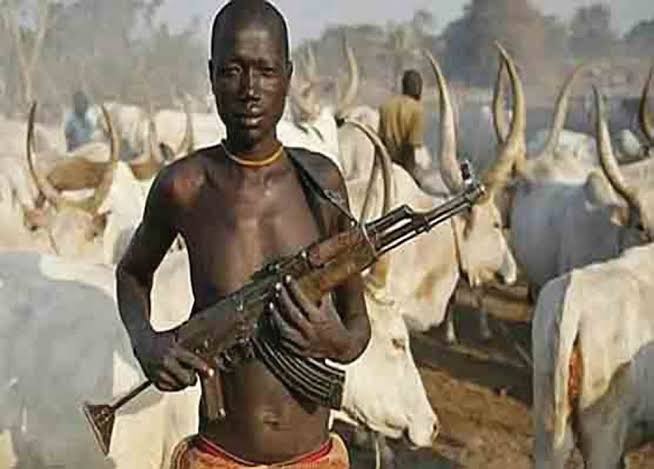
Northern and Southern Nigeria are the proverbial co-wives in a polygamous home, A home always replete with commotion, tension is visible at the moment. There is a cow war. Are you a doctor who frequently watches patients’ throes as they wangle through their last breaths? Or, you were old enough to witness the fire and brimstones hauled at each other by Eastern and Northern Nigerian centrifugal forces in July 1967, prior to Chuwuemeka Odumegwu Ojukwu’s declaration of a state of Biafra? Nigeria personifies the last breaths in those narratives. For those who live within Nigeria’s borders today or who live without but regularly scoop up daily saber-rattling effusions from Nigeria, de ja vu is the eerie feeling. In their subconscious, they reckon that they had been here before. It is like a voyage through Nigeria’s jungle past, arriving at a hostile present.
In typical polygamy, illogical, selfish, and self-centered postulations are always fired. It is like hot artillery fires. As Ojukwu hauled his, they were repelled by more destructive canons from the western and northern flanks. Perhaps because they were soldiers, their exchanges were uncivil and lacked a human touch. Fast-forward to January 1970. Over a million people martyred to selfish ego and senseless tribal nationalism, millions of dollars propitiated by the groove of a blood-thirsty god of war, the two sides concluded that the spillages could have been averted at a peace table.
In 1950s Nigeria, under Ahmadu Bello and Tafawa Balewa, his Prime Minister surrogate, Nigeria’s ethnic disagreements reached their zenith. Palpable ethnic tension was the code of relationship. The north was terribly afraid of the southern head-start in the field of education which it felt conferred developmental advantages. Southern Nigeria also feared that the north’s geographical advantage and its disadvantageous fraternalism with British colonialists could make an intellectual weakling the valiant. Time proved it right after all.
Though the 1946 Richards constitution allowed the three regions to develop at their own paces, mutual suspicions defined the relationships as in polygamy. The Orogun adedigba syndrome made Balewa and Bello to side with Premier S.L. Akintola in the Western Nigerian crisis, against the Obafemi Awolowo group. It was as if they took pleasure in and sought a nihilistic end for their highly hated western region. It provoked Michael Okpara, Eastern Premier, his region and the rump of Action Group in the west to jointly fight the wicked co-wife called the northern hegemons. The ethnic tension, rather than abate, grew over the decades. Even years of military rule, led by northern military coup plotters, savoured by a sprinkle of southern officers, couldn’t tame the tension.
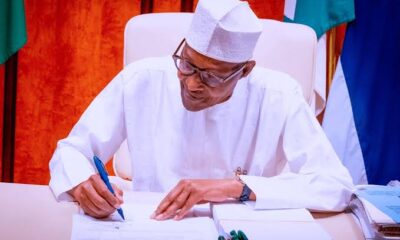
Today under Muhammadu Buhari, Nigeria has taken ten steps backwards to the period of 1950s and 1960s. Unless it is a matter of life and death, it is almost an unconscionable plunge for any southerner to undertake a journey to the north today. Fear of a rekindling of the 1966 pogrom is the beginning of wisdom. That pogrom was a series of mindless massacres perpetrated against Igbo and other sympathetic ethnic groups of southern Nigeria who lived in northern Nigeria. It began in May of that year and by September 29, 1966, an estimated 8,000 to 30,000 Igbo/easterners and their southern sympathizers had been butchered.
Unlike the spat of the 1950s/1960s, today’s impending war cries have nothing to do with the spatial contest with the north over its unfair dominance of the political space. It is about cows – cattle – and where they should graze. While Rwanda is carving new dominance in technology and the world is going to space, Nigeria’s internal squabble is cattle territory.
Yes, the nationalism of Fulani tribesmen has engaged literature over the years. In 1985 as Head of State, Buhari voted against Nigerian Igbo man, Peter Onu, who was vying for OAU’s Secretary-General position, choosing instead to vote his Fulani brother, Ude Oumarou. Oumarou, born in N’Dounga in the Niger Republic in 1937, was a Nigerien diplomat, government minister, as well as a journalist. He was Niger’s ambassador to the United Nations from 1980 to 1983 and served as the country’s foreign minister between 1983 and 1985. No thanks to Buhari’s vote, he later became the Secretary-General of the OAU and served between 1985 and 1988. He died on February 12, 2002. Nwalimu Julius Nyerere, late Tanzanian leader, could not stomach this scum of a stab of the Nigerian people and openly berated Major General Buhari for that spineless betrayal.
We didn’t however know that this Fulani nationalism was this iniquitously pervasive and destructively genetic.
Its metastasis is so bad that a Nigerian president would wangle in spaces for foreign members of his Fulani kindred in the geographical territory of the place he administers. He never utters a word while these same people kill his Nigerian constituents. It is something in the mold of a contrived Olusegun Obasanjo, as Nigerian president, because he is Yoruba, forcefully using his presidential powers to seek spaces in Yobe State for his Beninese brethren who speak fluent Yoruba, sing/dance Bolojo traditional song more than even his brother in Ipokia, Ogun State and practice same traditional religion that can be found in Yorubaland. And on top of it, look the other way if they kill, maim and rape his Northern Nigerian brothers and sisters in that Nigerian territory. It is eerily curious. A scriptwriter would need a vastly fertile mind to concoct such a weird scenario. But that is Nigeria’s lot in the hands of Buhari.
Estimated to be about 38 million, Fulani are spread across West Africa, beginning from Senegal to the Central African Republic. They live in numerous countries in Africa which range from Nigeria, Guinea, Guinea-Bissau, Cameroon, Senegal, The Gambia, Mali, Niger, Burkina Faso, Ghana, Sudan, Chad, Mauritania, among many others. They even represent between 32.1% and 40% of the population in Guinea. One noticeable feature of theirs is also that they are ultra-violent. In 2014, their violence in Nigeria was ranked fourth most deadly in the world. Just like in Nigeria, Fulani of Mali were accused of herding their cattle onto farms and destroying crops. In March, 2019, irked by their repugnant insolence and audacity, the Mali’s Dogon ethnic group slaughtered more than 130 Fulani herdsmen, in the yet most deadly riposte ever. Earlier in 2018, 202 were killed in the same Mali’s Mopti region.
Buhari has sought land for these same people in Nigeria through his RUGA policy and protection for them through the Water Resources Bill. He and his aides have told Nigerians repeatedly that these itinerant Fula pastoralists, who have no passport or any immigration clearance, can live in any part of Nigeria. Caring less whose ox was gored, his kin in Niger were the first he visited immediately he was made president in 2015. In September 2020, Buhari’s Federal Executive Council approved the sum of $2 billion for the construction of a rail line from Kano to Maradi in Niger Republic.
If Nigerians know Buhari’s huge infrastructural spending in Niger Republic, we probably will collapse. In February last year, his government announced that it would construct $81 million worth of road network from Sokoto, Jigawa down to Niger Republic. In April 2018, it also said that it would be collaborating with Niger to build a $2billion refinery to be located in Niger. Justifying the influx of criminal elements from Niger to Nigeria, he recently said that only God could protect that route from criminals.
What kind of human being justifies killings and pains inflicted on his fellow man? It is only on the Animal TV Channel that one would think this was excusable and practicable. But no, northern elders have proven that that Animal Channel trait isn’t an exclusive preserve of the carnivorous fauna society. For more than half a century, Yoruba have lived peaceably with Fulani herders. In some northern parts of Oyo State, especially those who trace their progeny to Ibaribaland, intermarriages of decades have subsisted. Many of these so-called Yoruba there have a mixture of Fulani/Yoruba blood. Fulani are councilors in local councils in the area and fight for political space to be chairmen.
They speak Yoruba more than they do their own Fulani. Now that an influx of their murderous Fula kin have infiltrated the people’s land, destroying crops, raping women and visiting unknown banditry on the people as they did to the Dogon of Central Mali, it is only logical that this violent variant of Fulani be flushed out from Yorubaland. Policemen would not lift a finger against these lords of the manor as they are the president’s kinsmen. There is nowhere that they have ever been convicted for their crimes. It is only logical for the law not to prosecute kin of an Almighty Buhari who, about two decades ago, stormed same Oyo State as the champion of the rights of “his people” being killed “by your people.”
In all this, Yoruba’s Northern Orogun adedigba and their elders never raised their voices against the villainy of the Fulani. When their fly was feasting on the Yoruba wound, it was desirable to keep mute but when the victim started to masticate the offending fly, all hell is now let loose. Now that the Yoruba have had a fill of the Fulani violence and are asking their murderous guests to leave them in peace, a cacophony of sickening, self-centered cries is flying in the firmament. The Northern Elders Forum (NEF) was the first to grump. Last week, it worried over ejection notices given to Fulani herders and their families in some states of the south. No one heard NEF upbraid Fulani when they embarked on their spate of murders.
Enters Nasir el-Rufai, the Kaduna State governor. Under him, Fulani have allegedly killed Southern Kaduna indigenes probably in proportion to the casualties of the Nigerian civil war. Now, el-Rufai is preaching against anarchy. This is simply because his Fula kindred have been asked to leave Yorubaland for peace to reign. In a statement he issued last week, el-Rufai expressed worry over video clips he said were circulating on the social media, even though he said he had not seen any himself, of how his people were being “massacred and their property destroyed.” These were one of the same set of people who claimed that the word “massacre” by soldiers was inappropriate for the Lekki Toll Gate killings. Now, el-Rufai is bothered about “avoidable rhetoric, frenzied ethnic profiling” and the place of the law in human killings. Neither he nor Buhari has expressed disgust at the broad daylight rape and killing of Yoruba by Fulani herdsmen.
Restructuring in a properly practiced federal Nigeria, akin to the two Orogun adedigba living in their different abodes, working for their individual survival and sustenance and being given their dues by their superintending husband, is the only remedy to this quarrelsome togetherness. That is if the two troublous wives won’t go their separate ways.