Connect with us

News

Makinde to test 2,000 Oyo residents for COVID-19 within 2 weeks

Published

on

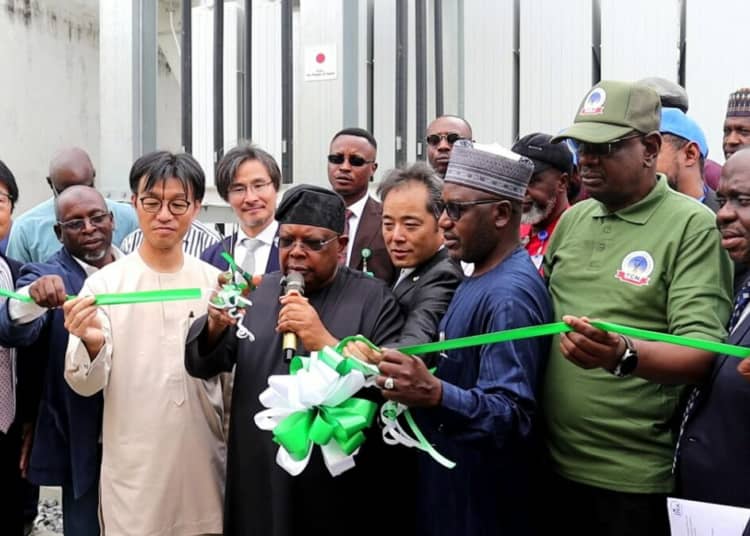
Oyo state governor, Engr Seyi Makinde, on Tuesday informed  that the COVID-19 Drive-Through/Walk Through -Testing initiative is expected to test 2,000 samples within two weeks, at the Lekan Salami Stadium, Adamasingba, Ibadan, saying that  the rapid testing initiative aligned to his administration’s commitment to test at least 10,000 residents within a short time.

The governor,  while  kicking off a rapid testing initiative for COVID-19 in the State,  also declared that the outcome of the exercise would help contain the spread of the virus.

The Chief Press Secretary to the governor, Mr. Taiwo Adisa in a statement

quoted the governor as saying that the State was scaling up testing in alignment with expert opinions that the best way to contain and control the spread of the novel Coronavirus is by ensuring mass testing.

Governor Makinde appreciated the Citizen for Citizen, a non-governmental organisation headed by the chairman of First Bank Nigeria, Mrs. Ibukun Awosika, which provided the 2,000 testing kits and the LifeBank Nigeria, for partnering with the State on rapid testing for COVID-19.

Speaking on behalf of the NGO, Mrs. Temidayo Olatunbosun, said that the guidelines of Nigeria Centre for Disease Control (NCDC) would be strictly followed in conducting the COVID-19 tests in Oyo State.

She also urged residents of Oyo State who have the COVID-19 symptoms to call the emergency operation centre for necessary action.

In his speech, Governor Makinde said: “Experts have opined that the best place to start in solving our peculiar problems is by ramping up our testing capabilities. For this reason, a few weeks ago, the Oyo State Government, in collaboration with the University College Hospital, Ibadan, set up a diagnostic centre to test for COVID-19 right here in Ibadan.

“Indeed, with social distancing through lockdowns proving to be the most effective way of checking community spread, and the fact that people can have COVID-19 and be asymptomatic, large-scale testing will help us determine where and when targeted lockdowns are necessary.”

The governor maintained that his administration had begun to put necessary things in place to ensure its capability to prevent, contain and control the spread of COVID-19 even before the index case was recorded in the state.

He said: “The flag-off that we are witnessing here today is a culmination of weeks of planning and hard work. Even before the index case was recorded in the state, on the 21st of March, we had started putting things in place to ensure that we will be able to prevent, contain, and control the spread of COVID-19 in Oyo State.

“As I have said in the past, we are walking in uncharted territory, and no one can claim to know it all when it comes to the best way to handle this pandemic. We can only listen to the experts and apply common sense. Especially in Africa, and indeed Nigeria, the challenges we face are multipronged. Aside from not having health infrastructure that can handle a full-scale pandemic, we also have a largely informal economy.

“Caught between a rock and a hard place, we must find and apply solutions that are a product of scientific and logical thought. These solutions must also take our local circumstances into cognizance.

“In recent times, the Oyo State Government has come under intense criticism for not implementing a total lockdown in the state, and for not forcing people to shut down their businesses. We have seen the result of more extensive lockdowns in neighbouring states. Yet, we are not celebrating a win, because this is not a competition.

“Today, we are implementing one of the actions that is fundamental in deciding what our next steps will be. In the next few days after we increase testing, we will see for ourselves whether a complete lockdown is necessary. Our aspiration is to test up to 10,000 people within the shortest possible time. We are starting with the first 2,000 from today. I have been told we can complete this round in two weeks.

“Let me use this opportunity to express our gratitude to the Citizen for Citizen Initiative led by Mrs Ibukun Awosika, which donated the 2,000 test kits we will use for the tests. We also thank LifeBank Nigeria, which is collaborating with us to conduct the tests.”

Governor Makinde, who also used the occasion to appreciate health workers in the State for putting their lives at risk for the people, assured that his administration would continue to prioritise theirwelfare and safety.

The governor stated that 610 personal protective equipment were already on ground for the use of health workers while the State has also ordered an additional 400.

He added that health workers would be the first to be tested in the drive-through/walk-through testing exercise.

The governor further warned residents of the State not to take lightly the Government’s warnings and directives on COVID-19, noting that the virus is real.

He said: “Today is not a day to speak many words. We are here to kick-off the testing, and I will let you get right to it. But before I leave you, I want to say, and I will say this in both English and Yoruba to everyone listening. There may seem to be reasons to disbelieve that Coronavirus is real. Some people have said that the government is just using it to steal money.

“Some people have even used me as an example, saying “our governor had it but was not sick.” But let me say this, Coronavirus is real. I may have been lucky not to have shown any symptoms, my immune system may have fought it, but the next person may not be as lucky. We do not know who that next person may be.

“Luck is not a strategy for beating COVID-19. We have to follow logic and science. This is why we must maintain social distancing. You must stand at least three feet apart from other people. You must wash your hands regularly with soap and water or use an alcohol-based sanitizer. You must co-operate with us when we give you guidelines to follow. After this testing, when we see the results, there may be more guidelines. Please, work with us and choose to stay safe. Together, we can beat COVID-19 in Oyo State.


Comments

News

Ajimobi’s Legacy Still Guides Us, Oladele Urges Oyo APC Unity

Published

on

A chieftain of the All Progressives Congress in Oyo State and aspirant for the Irepo/Oorelope/Olorunsogo Federal Constituency seat in the 2027 general elections, Hon. Bosun Oladele, has called on members of the party and the wider progressive family in the state to embrace unity in order to preserve and advance the legacy of the late former Governor, Senator Abiola Ajimobi.

Oladele made the appeal on Thursday as political associates, loyalists and admirers marked the remembrance of the former governor, whose administration was widely associated with the popular slogan, “Koseleri.”

In a statement he personally issued,  the federal lawmaker hopeful described Ajimobi as a visionary leader whose passion for development transformed Oyo State and left an enduring footprint in its political history.

According to him, the annual remembrance of the late governor offers an opportunity for progressives to reflect on the ideals, discipline and commitment that defined Ajimobi’s leadership.

“It is that time of the year to remember the passion that once drove the developmental strides of the Pace Setter State, the centre of politics in Nigeria and a state renowned for many firsts,” Oladele said.

He noted that although the former governor had departed, his contributions to governance and public service remain fresh in the minds of many residents and party faithful.

“Oyo State still misses his sharp mind, problem-solving abilities, oratory prowess, focused leadership and developmental initiatives. His style of governance inspired confidence and demonstrated what purposeful leadership could achieve,” he stated.

Oladele stressed that Ajimobi’s legacy should continue to serve as a source of inspiration for members of the APC, urging them to close ranks and work towards a common goal.

“Even though he is gone, his legacy gives the progressive family in Oyo State hope that the future he envisioned for our dear state remains achievable through oneness and unity of purpose.

“I therefore call on all members of the APC and the progressive family at large to join hands, put aside differences and work together towards winning future elections as part of efforts to actualise the developmental aspirations our departed leader had for Oyo State,” he added.

The APC stalwart also prayed for the repose of Ajimobi’s soul and sought divine strength for his family, particularly his widow, Ambassador Florence Ajimobi, as she continues to shoulder public and private responsibilities.

He expressed optimism that Oyo State would once again witness progressive governance driven by visionary leadership, inclusiveness and a shared commitment to the welfare of the people.

Continue Reading

News

Senate passes state police bill, governors to appoint CPs

Published

on

The Senate on Wednesday passed a bill seeking to amend the 1999 Constitution to establish state police services across the country, a major milestone in ongoing efforts to decentralise policing and tackle Nigeria’s worsening security challenges.

The proposed legislation introduces a dual policing framework comprising a Federal Police Service and State Police Services, effectively replacing the existing structure under which policing is exclusively controlled by the Federal Government through the Nigeria Police Force.

The bill was passed after Senate Leader, Opeyemi Bamidele, presented its general principles on the floor of the Red Chamber.

It subsequently scaled second reading, underwent a rigorous clause-by-clause consideration and was passed for third reading after securing the support of more than two-thirds of the senators.

A key provision of the constitutional amendment empowers governors to appoint Commissioners of Police for their respective states, subject to confirmation by the state Houses of Assembly.

Clause 17 of the bill provides that a State Police Service shall be headed by a Commissioner of Police appointed by the governor on the recommendation of the National Police Council and confirmed by the House of Assembly of the state.

The proposed law further defines the operational relationship between governors and state police commands, allowing governors to issue lawful written directives of a general policy nature to Commissioners of Police on matters relating to the maintenance of public safety and order within their states.

To address widespread concerns over possible abuse of the proposed policing structure, lawmakers incorporated safeguards aimed at protecting political freedoms and civil liberties.

The bill expressly states that a state Commissioner of Police shall not arrest, detain, investigate or deploy force against any individual, political party or group merely for criticising the government, except in accordance with the law.

The provision is intended to prevent state police formations from being used to intimidate political opponents, activists, journalists and other dissenting voices while ensuring that all actions taken conform with due process.

The amendment also empowers the Federal Police Service to temporarily intervene in the internal security affairs of a state where there is an actual or imminent breakdown of public order or public safety which the state police are unable or unwilling to contain.

Such intervention must be authorised in writing by the President, who is required to state the grounds, territorial scope, functions and duration of the operation.

The President must also notify the governor, the Speaker of the state House of Assembly, the National Police Council and the National Assembly within 48 hours of the commencement of the intervention.

The bill further provides that no federal intervention shall continue beyond a period to be prescribed by an Act of the National Assembly unless approved by a resolution of the Senate.

The Senate’s approval came barely a day after President Bola Tinubu transmitted the bill to the National Assembly as part of his administration’s efforts to reform Nigeria’s security architecture.

According to the President, the proposed amendment is designed to provide a legal framework for a dual policing structure that would allow states to establish and operate their own police services alongside the federal police.

Tinubu said the proposal is a critical component of ongoing efforts to reorganise the country’s policing system, enhance security and better protect citizens, adding that communities, municipalities and local government areas would play more active roles in policing responsibilities under the new arrangement.

The renewed push for state police comes amid growing concerns over insecurity, banditry and mass kidnappings across parts of the country.

Supporters of the proposal argue that decentralised policing would strengthen grassroots intelligence gathering, deepen community-based security initiatives and ensure quicker responses to crimes and emergencies.

Critics, however, have cautioned against possible political interference by governors, funding challenges and the risk of exacerbating ethnic or communal tensions.

Tinubu had earlier described state police as inevitable in addressing the nation’s security challenges and urged lawmakers to fast-track constitutional amendments aimed at bringing the proposal to fruition.

Continue Reading

News

Tinubu sends state police bill to Senate

Published

on

President Bola Tinubu has transmitted a Constitution Alteration Bill to the Senate seeking the establishment of state police as part of efforts to reform Nigeria’s security architecture.

The proposed legislation, contained in a communication dated June 15, 2026, was read during plenary on Tuesday by Senate President Godswill Akpabio.

Tinubu said the bill was aimed at providing a legal framework for a dual policing structure that would allow states to establish and operate their own police services alongside the Nigeria Police Force.

According to the President, the proposed amendment forms a key component of ongoing efforts to restructure the country’s policing system to improve security and enhance the protection of lives and property.

He explained that under the arrangement, communities, municipalities and local government areas would play more active roles in policing, enabling local authorities to detect suspicious activities and promptly relay intelligence to security agencies.

Following the presentation, Akpabio referred the bill to the Senate Committee on Constitution Review and directed it to report back on Wednesday.

Speaking on the importance of community-based policing, the Senate President said local authorities were better placed to identify security threats and support proactive responses by law enforcement agencies.

“You will know when foreigners infiltrate Nigeria and alert security agencies so they can react proactively rather than reactively,” he said.

Akpabio expressed optimism that sustained collaboration between the executive and legislative arms would ensure the successful passage and implementation of the initiative.

He disclosed that the process would be undertaken in phases through constitutional amendments and subsequent Acts of Parliament.

“We will do it in two phases through alteration and an Act of Parliament. There will be a lot of safeguards; let us come and do this important task. It is extremely important that we come tomorrow,” he said.

The Senate President also informed lawmakers that plenary would not entertain other major business following the death of a member of the House of Representatives, Yahaya Tongo of Gombe State.

Similarly, the Senate Leader urged senators to attend the next sitting, stressing the significance of the proposed state police framework.

“We need a minimum of two-thirds of members to vote on constitutional alterations. The issue of state police is non-partisan and cuts across geopolitical zones and interests,” he said.

The latest development came barely two weeks after the Senate passed an executive bill on state police for second reading.

Akpabio said the fresh Constitution Alteration Bill transmitted by the President builds on the earlier proposal and seeks to provide the constitutional foundation necessary for the establishment and operation of state police services across the country.

Continue Reading

Advertisement

Entertainment

Advertisement

MegaIcon Magazine Facebook Page

Advertisement

MEGAICON TV

Advertisement

Trending