Connect with us

Top Stories

Another Untapped GoldMine In Oyo : The Untold Story Of Eleyele River

Published

on

Despite sitting on tourism and hospitality goldmines with several tourist attractions of international reputation that could make other states and countries envious, Oyo state has yet to develop the industry to drive diversification, boost revenue and create jobs for its teeming unemployed youths.

The goldmines that could substitute irregular income from Abuja, the nation’s capital tagged ‘Allocation’ has not been exploited due to the negligence and inability of several administrations in the state to creatively utilize the tourism potentials around for economic development and transformation of the society are some of the problems militating against the advancement of Oyo state.

Unfortunately, most of these tourist attractions, have yet to be fully developed by successive administrations. Issues around lack of supportive infrastructure, insecurity, policy inconsistency, and lack of political will to articulate a clear policy roadmap that will reposition  tourism, have continued to thwart efforts at leveraging on a vibrant tourism industry to grow the economy.

Tourism sites that could have served as Oyo’s major pride and economic booster  are now in ruins and safe haven for hoodlums, armed robbers, kidnappers,  among others.

Among several tourist attraction sites in Oyo state, the abandoned Agodi Gardens was the only site that received the attention of the immediate past government, while others, as usual; suffered total neglect. Right now, the celebrated Agodi Gardens is gradually fading away due to lack of adequate maintenance.

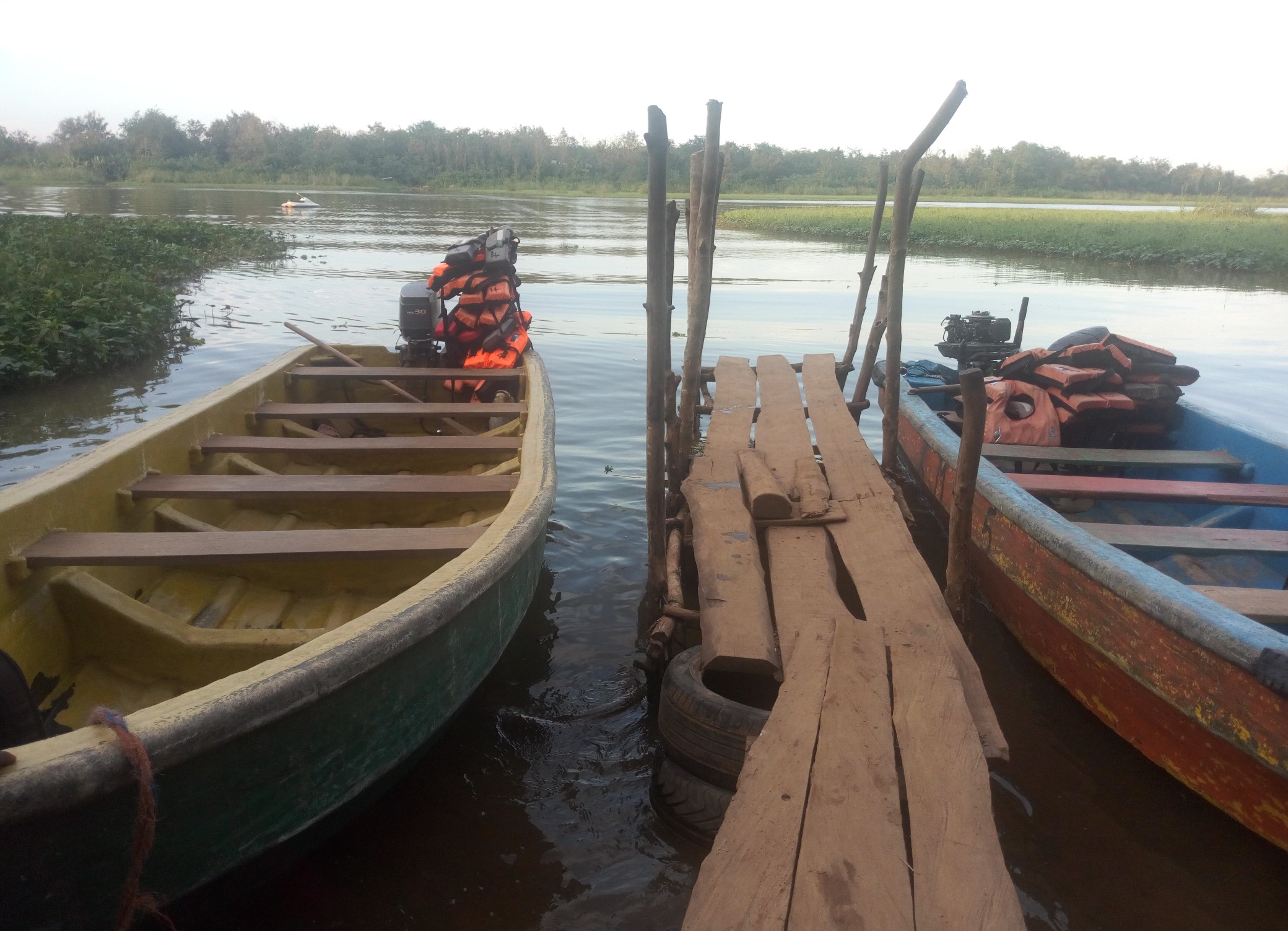
Mega Icon Magazine visit to Eleyele river, a maritime tourism site, housed by Ido and Ibadan North West Local Government Areas of Oyo state, reveals the pathetic state of the tourist attraction site with  huge potentials that when harnessed properly, could form part of the state’s economic mainstay.

Aside from the Dam project which supplies water to the city, the river and  its environs is underutilized for other purposes which include, water transport, fishing, construction of resort of international standard,  recreational boating, yachting, cruising, nautical sports, and water based tourism such as marine wildlife tourism (marine parks).

Our reporter also identified a ferry terminal run by private boat operator, who is making brisk business on the water ways without remitting anything to the coffers of government. Further checks revealed that the private boat operator is a company from Lagos state, operating with six  boats with engine capacities, ranging from   20, 30, 40 horse powers. The boats convey passengers from Eleyele, Ifelodun, Taaska, Alakuta, Apete.

Residents of Obaido, Ologuneru, Agbaje, Ijokodo, Power line communities are among the commuters who are abandoning stressful road transportation for the boats. The fare for a boat trip is N50.

The boat operators, who confided in our reporter,  also disclosed that morning hours and evenings are the peak period for their  business.

“During rush hours, around 6pm when people are coming from their shops or offices, we normally charge N100”.

The boat operators blame poor funding, high operating costs, poor infrastructure and lack of government support for their inability to develop the sector.


“Oyo state government had earlier visited us here and they promised to assist us, but we are still waiting for their gesture. Honestly, we are ready to partner with the government, we need new boats, there are new boats that will enhance smooth operation.


“Also, we are appealing to Governor Makinde to come to our aid by clearing the hyacinth on the waterways to pave way for free flow of water and ease movement on the water to all areas as we intend to expand our routes”.

Not only that the access road is in a lamentable situation, fishermen are also busy carrying out their illegal businesses without proper license from the government, while the traders at Temidire Market  have no option than  to continue with their trading activities in an unhealthy environment.


Poor access road

The market further confirmed the extent or degree of neglect by the government as unbearable odour from  cassava products such as fufu , garri, starch and other waste products hijacked the atmosphere, posing considerable risks for public health.

Teak plantation providing shelter for some buildings around the river

Part of the areas covered by the teak plantation, which is also providing an interim shelter for buildings around, is expected to accommodate resorts, cafes/restaurants.

Pathway leading directly to the river

During the visit, our reporter also observed that automobile  mechanics are major occupants of this untapped tourism site with several abandoned vehicles whose components had deteriorated and leaked, polluting the surroundings. The disused vehicles left in the environment are not only unsightly and affect the visual amenity of the site, but also provide harbourage for pests like rats and mice which spread disease.

Speaking with Mega Icon Magazine, some of the commuters who are steadily abandoning the road for the waterways narrated : “Before the introduction of the new boats,  we use to cross through Canoe and we have recorded several casualties. We have lost friends and loved ones as well, we are appealing to the state government to take rightful steps  on this, because this is the only shortest route to our homes.

” The waterways has made it easier and quicker for us to keep appointments and go about our normal business without much stress about the chaotic traffic congestion on the roads”, the commuters claimed.

Also, the  President, Awotan Community Landlord Association, Ahaji Rasaq Fabayo, in a chat with our reporter lamented the underdevelopment of the tourism potential.

According to the Community leader, ” apart from being concerned as a landlord, I am also a tourism enthusiast, I understand the import of tourism in economic development . Eleyele river is a great potential”, he added.


 

Comments

Politics

Oyo: Adekanmbi should clear corruption allegations before attacking others, says Team Arapaja

Published

on

Team Arapaja, a political group loyal to former Oyo State Deputy Governor Taofeek Arapaja, has challenged the All Progressives Movement governorship candidate, Bimbo Adekanmbi, to address allegations against him before making accusations against political opponents.

The group made the call in a statement signed by its spokesperson, Comrade Ibrahim Sheriff, in reaction to Adekanmbi’s recent appearance on Fresh FM, where he reportedly accused the All Progressives Congress candidate of embezzling funds while serving as chairman of Ibadan North Local Government.

Adekanmbi was also reported to have claimed that he had evidence to back up his allegation.

But Team Arapaja dismissed the claim as political mudslinging, questioning why Adekanmbi had yet to make the alleged evidence public despite Senator Sharafadeen Alli’s previous electoral contests, including the 2023 Oyo South Senatorial District election.

The group said voters should not take serious allegations at face value but should demand evidence and examine the records of those seeking public office.

It also questioned Adekanmbi’s record during his time as acting chairman of the Board of Internal Revenue and commissioner for finance, alleging that some staff members were subjected to humiliation and mistreatment under his leadership.

The statement further raised questions over allegations concerning ₦30bn in local government funds during his tenure as finance commissioner, challenging him to publicly address the matter.

Team Arapaja, however, did not provide documentary evidence to substantiate the allegations in its statement.

The group also questioned Adekanmbi’s political relationship with Governor Seyi Makinde, citing his reported admission that he associated with the governor for nearly seven years after the death of his former political benefactor, the late Governor Abiola Ajimobi.

It alleged that Adekanmbi’s relationship with Makinde raised questions about his political loyalty and suggested that he should explain his role during the period.

The group further challenged him to respond to allegations that he provided the Economic and Financial Crimes Commission with information about properties belonging to the Ajimobi family.

Team Arapaja said the issues deserved clarification, particularly given what it described as the role of the Ajimobi family in bringing Adekanmbi from the private sector into public service.

Quoting the saying, “He who comes to equity must come with clean hands,” the group questioned whether Adekanmbi had adequately addressed the allegations it raised before criticising other politicians.

It also recalled the controversy surrounding the 2023 governorship election campaign, when Governor Makinde reportedly made allegations against the then APC governorship candidate, Senator Teslim Folarin.

The group urged politicians to avoid making accusations they could not substantiate, warning that such claims could distract voters from issues of governance and accountability.

As political activities gather momentum ahead of the 2027 elections, Team Arapaja urged residents of Oyo State to scrutinise the records, integrity and competence of candidates rather than be swayed by campaign rhetoric.

It challenged Adekanmbi to respond to the issues raised and provide evidence for his own allegations against political opponents.

Continue Reading

Politics

Oyo: Adekanmbi Fabricating Lies Against Alli to Save Himself, Says SSACO

Published

on

The campaign organisation of Senator Sharafadeen Alli, the All Progressives Congress (APC) governorship candidate in Oyo State, has accused Hon. Bimbo Adekanmbi of making false allegations against the senator in a desperate attempt to damage his reputation ahead of the 2027 governorship election.

The organisation, SSACO, said Adekanmbi was distorting historical facts to discredit Alli rather than engaging in meaningful discussions about the development of Oyo State.

In a statement issued on Saturday by its Director of Media and Publicity, Mr Bisi Oladele, the campaign organisation described the allegations made by Adekanmbi during a radio interview as politically motivated, insisting that they would not erase Alli’s record in public office.

Defending the senator’s tenure as chairman of Ibadan North Local Government, SSACO said Alli maintained prompt salary payments and prioritised workers’ welfare, earning recognition from the Nigeria Union of Teachers (NUT) in Oyo State.

The organisation argued that the financial difficulties experienced by local governments following the Federal Military Government’s January 1993 policy on staff promotions and salary increases were not peculiar to Alli’s administration.

According to the statement, the problem affected local governments across the country because of inadequate allocations to implement the policy. It added that the difficulties continued beyond Alli’s tenure and were later addressed through institutional measures, including the establishment of the National Primary Education Commission in 1997 and the introduction of first-line charges for teachers’ salaries by 1999.

SSACO accused Adekanmbi of using the historical challenges to create a misleading impression of Alli’s record, insisting that the circumstances surrounding the crisis should not be ignored in assessing the senator’s performance.

The organisation challenged Adekanmbi to produce the report on which he based his corruption allegation against Alli, warning that it would pursue legal action if the claims were found to be defamatory.

It maintained that public officials should be held accountable through verifiable facts, not allegations designed to damage political opponents, and insisted that Alli had nothing to fear from a fair examination of his record.

The campaign organisation also turned its attention to Governor Seyi Makinde’s administration, accusing it of weakening local government administration and limiting the ability of councils to meet the needs of residents at the grassroots.

It said Alli would make the revitalisation of the state’s 33 local government areas a priority if elected governor in 2027.

According to SSACO, his proposed agenda would focus on strengthening the administrative and financial capacity of local councils, enabling them to deliver services more effectively and respond to the needs of their communities.

The organisation also identified the reconstruction of feeder and access roads as a priority, saying better road networks would ease the movement of people and goods, support farmers and traders, and open up more economic opportunities across the state.

SSACO expressed confidence in Alli’s prospects ahead of the 2027 election, insisting that its campaign would focus on his record, development plans and the need to restore effective grassroots governance.

It urged Adekanmbi to produce evidence to support his allegations and engage in substantive debate on the state’s future, rather than what it described as attempts to distort history for political advantage.

Continue Reading

Opinion

Doctors’ Strike and the Price of Human Life | By Olusegun Hassan

Published

on

The popular Yoruba saying, “Ẹni kan l’ọmọ,” meaning that only the person wearing the shoes knows where they pinch, recently took on a deeper meaning for me. Just last week, I experienced its true significance beyond its familiar place as an aphorism.

Popular sayings often remain mere expressions in our consciousness until we find ourselves at the receiving end of the experiences they describe. Similarly, systemic flaws and structural deficiencies in society may seem distant until we become victims of them. News of kidnapping is just another newspaper report until a loved one is abducted and the family is thrown into a desperate search for money to pay a ransom. In the same vein, the news that “doctors are on strike” may appear to be just another headline until someone close to us dies because urgent medical attention was unavailable as a result of the strike.

Nigeria’s story is replete with such unfortunate experiences, which have given rise to another familiar expression: “May Nigeria not happen to you.”

While the media landscape was still reeling from reports of the death of popular gospel singer Toluwanisings, who reportedly died on October 14, 2026, following an alleged lack of urgent medical attention during a doctors’ strike, I also lost a close relative two days later, on October 16, under circumstances involving the same lack of timely medical care.

She was an asthma patient who suffered an attack in the middle of the night. After receiving first aid, she was rushed to the nearest hospital, a teaching hospital, only to be turned away because doctors were on strike and none was available to attend to her. By the time the family reached the nearest private hospital, she had died. Her death left the entire family, myself included, traumatised.

These are only two cases among many similar tragedies that have occurred over the years. They raise a painful question: how many of these deaths could have been prevented if essential medical services had remained accessible?

I cannot help but wonder: what is the value of human life in this country? At what point did the sanctity of human life become secondary to demands for improved welfare by medical unions?

This is not to suggest that the grievances of doctors are illegitimate. Far from it. Medical professionals deserve fair remuneration, adequate facilities, safe working conditions and an environment that enables them to perform their duties effectively. The question, however, is whether the pursuit of these legitimate demands should come at such a devastating cost to human life, particularly when the fundamental purpose of the medical profession is to preserve life through the provision of appropriate healthcare.

It is a troubling paradox.

Doctors undoubtedly have the right to demand fair treatment and safe working conditions. However, that right must be exercised in a manner that protects patients from abandonment and avoidable harm. When patients die because essential medical services have been withdrawn without adequate safeguards, the ethical justification for the action becomes a serious matter for scrutiny.

The World Medical Association (WMA), an international body that promotes widely recognised ethical standards for physicians, upholds principles that include respect for human life and the dignity of patients. These principles underscore the responsibility of doctors to protect the health and well-being of those under their care, provide competent and timely treatment, prevent avoidable harm and act in their patients’ best interests.

These are not merely ideals about compassion. They are professional obligations that must continue to guide medical decisions, including during industrial disputes.

In Nigeria, the Medical and Dental Council of Nigeria (MDCN) addressed this issue in January 2024, reportedly directing the heads of teaching hospitals, federal medical centres and specialised hospitals to ensure that industrial action did not result in the abandonment or premature discharge of patients.

Among the safeguards outlined were the following:

  • Accident and emergency departments must remain open and adequately staffed.
  • Emergency paediatric services, labour wards, neonatal units and intensive care units must continue to provide emergency and critical care.
  • Patients already admitted to hospital must not be discharged merely because a strike has commenced.
  • Patients with scheduled appointments before the strike must be attended to in accordance with the applicable directives.

These safeguards reinforce an important principle: the right to pursue employment-related demands does not extinguish a doctor’s professional obligation to protect patients from preventable harm.

Where emergency patients are turned away, critically ill patients are abandoned, or essential services are shut down without adequate arrangements for emergency care, the circumstances warrant investigation. Where evidence establishes a breach of professional obligations or applicable regulations, appropriate disciplinary or legal action should follow.

Similarly, when a patient dies after being denied emergency treatment during an industrial action, the circumstances surrounding the death deserve a thorough and impartial investigation. Where negligence, professional misconduct or a breach of applicable directives is established, appropriate sanctions should be imposed in accordance with the law and relevant professional regulations.

The point is simple: no legitimate grievance should justify abandoning a patient whose life is in immediate danger.

At this juncture, it is equally important to acknowledge the government’s share of the blame. While this article emphasises the ethical obligation of doctors to preserve human life, the government must also recognise that poor remuneration, unpaid allowances, inadequate medical facilities, excessive workloads and unsafe working conditions undermine doctors’ morale and their ability to provide quality healthcare.

The consequences are increasingly evident in Nigeria’s continuing loss of medical professionals to other countries.

In 2025, the Coordinating Minister of Health and Social Welfare, Professor Muhammad Ali Pate, reportedly disclosed that more than 16,000 Nigerian doctors had emigrated over the preceding five to seven years, largely in search of better opportunities abroad. Furthermore, a 2025 report on Nigeria’s health statistics reportedly indicated that 4,193 doctors and dentists left the country in 2024 alone.

These departures deepen staffing shortages, increase the pressure on the doctors who remain and expose patients to longer waiting times and potentially avoidable deaths.

The government must therefore move beyond repeated negotiations and implement sustainable reforms. These should include the prompt payment of salaries and allowances, improved working conditions, adequate funding for public hospitals, transparent career progression and the effective implementation of agreements reached with medical unions.

The Federal Ministry of Health and relevant hospital authorities must also strengthen monitoring and oversight during industrial disputes to ensure that emergency and critical care services remain available in public hospitals. Patients in life-threatening conditions must not be turned away simply because doctors are on strike.

Ultimately, responsibility for Nigeria’s healthcare crisis cannot be placed entirely on one side. Doctors must uphold their professional and ethical obligations, while the government must fulfil its responsibility to create conditions in which those obligations can be discharged effectively.

Medicine is not an ordinary occupation. It carries a profound moral responsibility because, in certain circumstances, the timely intervention of a medical professional can make the difference between life and death. No employment grievance should be used to justify abandoning a patient whose life is in immediate danger.

The sanctity of human life demands responsibility from the doctors entrusted with treating patients and from the government authorities responsible for ensuring that appropriate treatment remains available.

A functional healthcare system depends on cooperation between these two critical stakeholders. When they fail to find common ground, it is the ordinary citizen who suffers the consequences. As the familiar saying goes, when two elephants fight, the grass suffers.

And trust me, I know what that suffering feels like. I have just experienced it.

Olusegun Hassan, Ph.D.
Public Policy Analyst and Social Commentator

Continue Reading

Trending