Connect with us

News

Bernard Arnault becomes world’s second-richest man

Published

on

how did he make his billions?


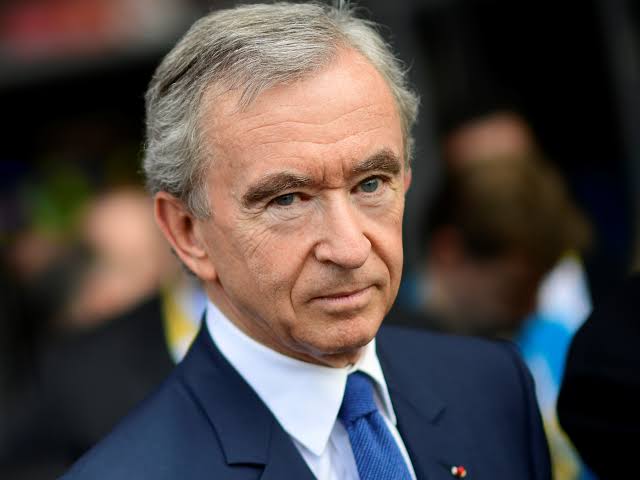
Louis Vuitton (LVMH) boss Bernard Arnault, 70, overtook Bill Gates to become the second richest person in the world, the Bloomberg Billionaires Index announced Wednesday—and he did it in style.

The French businessman, who is the force behind many of the biggest names in luxury, pushed to the second spot after a stellar year for LVMH, which saw company shares rise 43%. His net worth is now estimated at $107.6 billion—an increase of $39.1 billion in a single year.

This remains way short of Amazon founder Jeff Bezos’ $124 billion fortune. Yet Europe’s richest person—whose fortune is estimated to be equivalent to 3% of France’s GDP—is one of only three members in the ultra-exclusive centibillionaire’s club.

But just who is Bernard Arnault? And how did he make his fortune? More importantly, how does he manage to spend all that cash?

A fateful taxi ride

After studying engineering at the prestigious Ecole Polytechnique in Paris and graduating in 1971, Arnault joined his family’s construction company, Ferret-Savinel, as an engineer. Yet it was a chance meeting in New York that proved to have a far more dramatic impact.

Sitting in a yellow cab, Arnault asked the driver what he knew of France. “He could not name the president but he knew Dior,” Arnault recently told the Financial Times.

From there, Arnault’s course was set: within three years—and by the age of 30—he’d reinvented Ferret-Savinel as a real estate firm called Férinel, and replaced his father as company president. And in 1984, he embarked on an even more drastic venture. After lobbying the French government, he left Férinel and took up the reins of faltering textile company, Boussac—whose portfolio included the house of Dior—and systematically turned the company into the launchpad for his luxury empire. The purchase price? One Franc.

A luxury shopping spree

In 1987, Arnault was asked to mediate in the rancorous merger of Möet Hennessy and Louis Vuitton, largely because LV held the rights to Dior perfume and Henry Racamier, the 77-year-old chairman of LV, saw him as an ally, according to a report from the New York Times.

Arnault had other plans, however, and instead sided with Moet Hennessy boss, Alain Chevalier, and bought 27% of LVMH in combination with Guinness. This grew to 37% in 1988 and by 1989 Arnault was the biggest shareholder. A year later Racamier resigned from his own family firm and Arnault become both chairman and CEO of LVMH.

It was part of a rapid expansion that saw Arnault snap up luxury firms including Céline (1988), Berluti (1993), Guerlain (1994), Marc Jacobs (1997), Thomas Pink (1999), Fendi (2001), and DKNY (2001).

LVMH itself now comprises 75 ‘houses,’ including Dom Pérignon, Bulgari, Givenchy, and TAG Heuer. Alongside the 23-story LVMH Tower on New York’s 57th Street, the company owns the Cheval Blanc ski resort in Courchevel, the Hotel Cipriani in Venice (site of George Clooney’s 2016 wedding), the Orient Express, and luxury resorts in the Caribbean, Maldives, St. Tropez, and Paris.

In 1999, Arnault also invested in a small but enterprising DVD rental firm. It’s name? Netflix.

A bet pays off

Arnault was one of the first overseas businessmen to take the gamble of investing in China at the start of Deng Xiaoping’s market-economy reforms, opening a Louis Vuitton store in Beijing in 1992.

The risk has massively paid off over the years. In the first quarter of this year, for instance, LVMH reported a revenue increase of 16% to $14.10 billion, largely fueled by Chinese buyers, who account for over a third of the luxury sector’s sales.

“With the Chinese, the business is really moving from strength to strength,” Financial Director Jean-Jacques Guiony told reporters in April.

Going after Gucci

Like all business leaders, Arnault has suffered his fair share of failures along the way. Most notably, his 1999 attempt to takeover Gucci—described as “the bloodiest fight in fashion” by the New York Post—which resulted in litigation that Arnault ultimately lost. To his chagrin, the fashion house fell into the arms of arch-rival François Pinault for $2.92 billion.

In 2014, Arnault also admitted defeat in a four-year attempt to purchase luxury scarf-maker Hermès, after then-Hermès Chief Executive Patrick Thomas launched court proceedings to prevent LVMH from mounting a takeover. Arnault eventually agreed to relinquish his 23% stake in Hermès as a result.

Elsewhere, Arnault has unsuccessfully challenged the dominance of luxury auction houses Christie’s and Sotheby’s by buying British auctioneers Phillips in 1999 and got his fingers badly burnt with online retailer Boo.com, which went into liquidation in 2000.

Rising to second place

An April 10 release detailing first-quarter trading for LVMH, stated that, “All geographic regions are experiencing good growth.

“This includes a 20% increase in sales of fashion & leather goods, a 13 % rise in sales of wines & spirits and a 12 % increase in sales of perfumes & cosmetics. Overall, LMVH showed first-quarter growth of 16% and organic growth of 11% compared to 2018. Its overall revenue was around $14.3 billion.

These better-than-expected results have led to a 27% rise in LVMH shares since January 29, when the group announced record sales for 2018.

Arnault is not resting on his laurels, either. On April 17, LVMH announced the completion of its $3.2 billion deal for Belmond, making them part-owners or managers of 45 luxury hotel, restaurant, train, and river cruise properties.

Rihanna and Stella

On May 10, they followed this up with the creation of the new Fenty fashion line, centered around Barbadian pop star Rihanna.

“Designing a line like this with LVMH is an incredibly special moment for us,” Rihanna said in a release. “Mr. Arnault has given me a unique opportunity to develop a fashion house in the luxury sector, with no artistic limits. I couldn’t imagine a better partner both creatively and business-wise.”

More recently, LVMH announced a partnership with Stella McCartney’s name sake brand, which was publicly owned by rival company Kering until last year. The pair did not disclose the terms of the deal, but said it will allow McCartney to continue as creative director and majority owner of the brand.

“The chance to realize and accelerate the full potential of the brand alongside Mr. Arnault and as part of the LVMH family, while still holding the majority ownership in the business, was an opportunity that hugely excited me,” McCartney said in a release.

“It is the beginning of a beautiful story together, and we are convinced of the great long-term potential of her House,” said Arnault, before stressing that McCartney’s ethical principles were “a decisive factor”.

With the fashion world increasingly drawing criticism for its environmenal footprint, McCartney’s brand is clearly one that Arnault and LVMH can draw from.

“She was the first to put sustainability and ethical issues on the front stage, very early on, and built her House around these issues,” Arnault added about McCartney. “LVMH was the first large company in France to create a sustainability department, more than 25 years ago, and Stella will help us further increase awareness on these important topics.”


Source : Fortune



Comments

News

Kola Oyewo’s family to Adeleke, Ooni, Atiku: Your condolences are our pillar of strength

Published

on

The family of the late veteran actor and scholar, Chief (Prof.) Adekola “Kola” Oyewo, has expressed deep appreciation to Governor Ademola Adeleke of Osun State, the Ooni of Ife, Oba Adeyeye Enitan Ogunwusi, Ojaja II, and former Vice President Atiku Abubakar, among other Nigerians, for their messages of condolence and support following the death of their patriarch.

In a statement issued on Saturday by Dr. Adewale Oyewo on behalf of the family, the bereaved household said the overwhelming show of sympathy, prayers, visits and acts of kindness from across Nigeria and beyond had served as a strong pillar of comfort in their period of grief.

The family described the late Oyewo as a respected community leader, accomplished academic, devoted family man, and traditional title holder whose life was defined by service, integrity, and unwavering commitment to societal development.

According to the statement, the tributes received in his honour reflect the far-reaching impact he made on students, colleagues, cultural practitioners and the wider society.

The family particularly appreciated Governor Ademola Adeleke for his condolence message and prayers, noting that his support had been deeply comforting.

It also expressed gratitude to the Ooni of Ife, whose words of encouragement were described as uplifting and consoling during the mourning period.

The statement further acknowledged the Oloba of Oba-Ile, Oba (Prof.) Adekunle Ashamu Oyeyemi (Tewogbade I), the Oloba-in-Council, and other traditional institutions for their fatherly support and solidarity.

Former Vice President Atiku Abubakar was also commended for his message of sympathy, which the family said brought reassurance in their moment of loss.

The family extended appreciation to professional bodies including the National Association of Nigerian Theatre Arts Practitioners (NANTAP) and the Theatre Arts and Motion Pictures Practitioners Association of Nigeria (TAMPAN), as well as academic communities of Obafemi Awolowo University, Redeemer’s University, Ekiti State University, and Elizade University, where the deceased served.

They also thanked friends, associates and well-wishers who stood by them with prayers and support.

“As we continue preparations to honour the life and legacy of our beloved patriarch, we humbly seek continued prayers and support,” the statement added, praying for the peaceful repose of his soul.

Continue Reading

News

IGP appoints Iniedu Force spokesman, replaces Placid

Published

on

photo combo of Anietie Iniedu and outgoing Force spokesman, Anthony Placid

The Inspector-General of Police, Tunji Disu, has appointed Anietie Iniedu as the new Public Relations Officer of the Nigeria Police Force, succeeding Anthony Placid, who was appointed to the position barely three months ago.

The appointment was announced in a statement issued on Friday by Placid, who described his successor as a seasoned police officer with extensive experience in public communication, operational policing, intelligence management, institutional accountability and administration.

An indigene of Etinan Local Government Area of Akwa Ibom State, Iniedu holds a Bachelor of Science degree in Pure Chemistry from the University of Uyo and has attended several professional courses in investigative interviewing, crime scene management, intelligence analysis, strategic communication and human rights-based policing.

Before his latest appointment, Iniedu headed the Complaint Response Unit at the Force Headquarters, Abuja, where he coordinated the management of public complaints and drove initiatives aimed at deepening transparency, accountability and public trust in the Nigeria Police Force.

He also served as Public Relations Officer of the Police College of Information Technology, Kobape, Ogun State, in addition to holding several operational and administrative positions across the country.

His previous postings include Operations Officer at the Maisandari Division in Yobe State, Area Crime Officer at the Umuahia Area Command in Abia State, Staff Officer at the IGP Secretariat, Force Headquarters, Second-in-Command of the 50 Police Mobile Force Squadron, Kubwa, and Officer-in-Charge of the Force Headquarters Situation Room, where he coordinated the dissemination of crime and security information nationwide.

The statement quoted the Inspector-General as expressing confidence in Iniedu’s capacity to lead the Force Public Relations Department, noting that his wealth of experience and professional background would further strengthen the police’s strategic communication architecture and enhance engagement with members of the public.

Continue Reading

News

Govs Back State Police, Power Reform, Nutrition Drive, World Bank Partnership

Published

on

Insist state policing must align with federalism, citizens’ rights as governors deepen talks on constitutional review, energy transition, agriculture, social protection

The 36 state governors under the umbrella of the Nigerian Governors’ Forum have renewed their support for the establishment of state police and sweeping reforms in Nigeria’s power sector, signalling fresh momentum for key constitutional and economic restructuring efforts.

The position was contained in a communiqué issued at the end of the Forum’s second meeting held on Wednesday, where the governors deliberated on security, energy, nutrition, agriculture and development partnerships affecting the country.

According to the communiqué, the governors engaged in extensive consultations with Attorneys-General across the states to review proposed constitutional amendments relating to state policing and other governance reforms.

They stressed that any framework for state police must be “constitutionally sound, consistent with federalism, and protective of citizens’ rights,” adding that ongoing legal consultations would help shape a unified and stronger position for the states ahead of national engagement.

The Forum noted that the collaborative review process with legal advisers was already producing inputs expected to strengthen the collective stance of states on security restructuring in the country.

On social development, the governors received a presentation from the Federal Ministry of Budget and Economic Planning on progress under the National Nutrition 774 (N-774) Initiative, aimed at tackling malnutrition at the grassroots.

They reaffirmed their commitment to improving nutrition outcomes across Nigeria, particularly in reducing child malnutrition, and expressed support for the ongoing consideration of the National Nutrition Bill.

The governors also called for sustained engagement with stakeholders to strengthen the legal and institutional framework guiding nutrition governance nationwide.

In another briefing, the Forum was updated by the World Bank Country Office on the proposed Country Partnership Framework (CPF) for Nigeria (FY2026–2032), alongside the Nigeria Sustainable Agricultural Value-Chains for Growth (AGROW) Programme.

The AGROW initiative is designed to boost agricultural productivity, strengthen value chains, attract private sector investment, improve food security, and support early childhood development interventions across participating states.

The governors expressed support for continued collaboration with the Federal Government, the World Bank and development partners, while endorsing state-specific interventions aimed at ensuring effective implementation and measurable impact.

They further urged stronger inter-sectoral coordination in health, nutrition, education, water and sanitation, and social protection systems to improve outcomes for citizens.

On energy reform, the Forum considered the National Solar Super-Grid (NSSG) Initiative, a plan to expand electricity access through decentralised solar generation integrated into a national transmission backbone.

The governors noted the initiative’s potential to improve energy security, deepen industrialisation, strengthen state electricity markets and accelerate economic growth across the federation.

Reaffirming their commitment to power sector reforms, the governors pledged sustained collaboration with stakeholders to expand access to reliable and affordable electricity, describing energy reform as central to job creation, productivity and national development.

The meeting ended with a renewed resolve by the governors to deepen cooperation on reforms seen as critical to economic stability, security restructuring and improved welfare for Nigerians.

Continue Reading

Advertisement

Entertainment

Advertisement

MegaIcon Magazine Facebook Page

Advertisement

MEGAICON TV

Advertisement

Trending