Connect with us

News

Libya on verge of civil war, threatening ‘permanent division’

Published

on

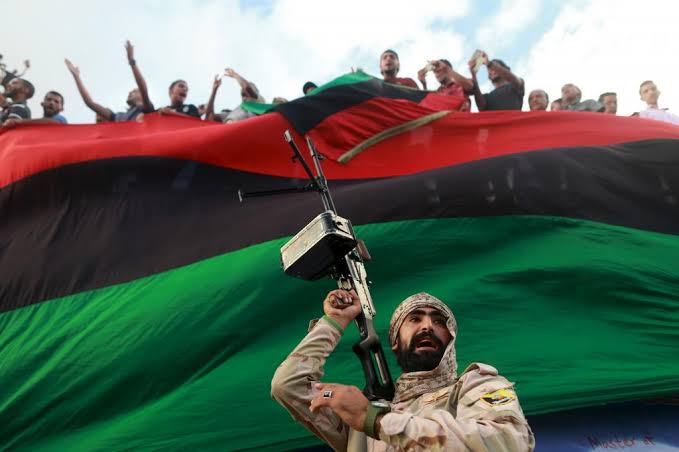
The damage done to Libya will already take “years to mend” but unless fighting around the capital Tripoli stops, the country risks “descending into a civil war which could lead to the permanent division of the country”.

That was the blunt assessment of UN Special Representative to Libya, Ghassan Salamé,  who also heads the UNSMIL Support Mission, briefing the Security Council on Tuesday, following weeks of intensifying conflict in and around the outskirts of Tripoli, instigated by the self-styled Libyan National Army forces of General Khalif Haftar who also leads a parallel administration based in the eastern city of Benghazi.

Mr. Salamé said grimly, that he had spent two years hoping to avoid having to deliver such a bleak in-person briefing to the Council, noting there were already 460 dead – 29 civilians – since the offensive began in early April. More than 2,400 have been injured, and 75,000 forced from their homes, the majority civilians, with half of the displaced women and children.

Violence began on the eve of an UN-backed National Conference planned to bring more than 150 representatives together from across the country, which had to be postponed. “There was great public excitement about what the conference could yield” said the top UN official, “in terms of a way forward to end Libya’s eight-year long period of transition” which threw him “into the deepest level of sadness for the opportunity lost”.

Tripoli violence could spark ‘long and bloody war’ across region

“I am no Cassandra” he added, referencing the mythical Greek figure who uttered prophesies which nobody believed, “but the violence on the outskirts of Tripoli is just the start of a long and bloody war…imperilling the security of Libya’s immediate neighbours and the wider Mediterranean”.

Mr. Salamé noted that in southern Libya, terrorist group Daesh, or ISIL, was flying its distinctive black flags, and reportedly had been responsible for four attacks, killing a total of 17, with more than 10 wounded, and eight others kidnapped, since Libya’s militias turned their guns on each other this year, not the common extremist threat.

“There are numerous reports of extremists, persons under international sanctions, and individuals wanted by the International Criminal Court appearing on the battlefield on all sides. All parties must publicly disassociate themselves from such elements without delay and refer to the ICC those for whom arrest warrants have been issued”, he said.

He bemoaned the flow of weapons back into the country noting “many countries” were providing arms to all sides. “Without a robust enforcement mechanism, the arms embargo into Libya will be come a cynical joke. Some nations are fuelling this bloody conflict; the United Nations should put an end to it”, he added.

Turning to the humanitarian needs he said health facilities were struggling to cope, with 11 ambulances “directly hit” by airstrikes, rockets and shelling. “I am appalled by the apparent disregard for the due protection of personnel engaging in vital medical tasks”, he noted, expressing deep concern for the rise in abductions, disappearances and arbitrary arrests in the past 6 weeks. He called on the Council’s “unequivocal support” in applying International Humanitarian Law.

UN remains ‘alongside the Libyan people’

Mr. Salamé said despite scaling-down non-essential UN staff in Tripoli and Benghazi, “we remain in Libya alongside the Libyan people to deliver as best we can”, with over 42,000 receiving aid so far. He said through local democratic elections held since 30 March, the people were showing their stoical resolve too, saying it was “vital to keep the pilot light of democracy alive”, and appealed for Council support to “the municipal election process.”

“There is no military solution” he reiterated, “and it is high time for those who have harboured this illusion to open their eyes and adjust themselves to this reality. Libya’s mosaic of communities cannot be governed without alliances and relationships stretching across the whole country”. He said Libyans would need to adjust in light of the attempts to take Tripoli by force since 4 April.

“A better future is still possible, but we all must be seized with the fierce urgency of now, while the front lines remain on the outskirts of Tripoli, and before the battle moves, God forbid, to the capital’s more densely populated neighbourhoods. This will require concerted and immediate action by the international community”.

He concluded with a call for the Council to act immediately, in support of politics over any military solution. “Full civil war in Libya is not inevitable. It may occur by the will of some parties, and by the inaction of others. I hear Libyans resigning themselves to a conflict of many months or even many years. My duty, and

that of this family of nations, is to tell them: ‘No. You need to stop the fighting and stop it now, for the sake of your loved ones, for the sake of your country, and for the sake of international peace and security.”

Comments

News

Tinubu sends state police bill to Senate

Published

on

President Bola Tinubu has transmitted a Constitution Alteration Bill to the Senate seeking the establishment of state police as part of efforts to reform Nigeria’s security architecture.

The proposed legislation, contained in a communication dated June 15, 2026, was read during plenary on Tuesday by Senate President Godswill Akpabio.

Tinubu said the bill was aimed at providing a legal framework for a dual policing structure that would allow states to establish and operate their own police services alongside the Nigeria Police Force.

According to the President, the proposed amendment forms a key component of ongoing efforts to restructure the country’s policing system to improve security and enhance the protection of lives and property.

He explained that under the arrangement, communities, municipalities and local government areas would play more active roles in policing, enabling local authorities to detect suspicious activities and promptly relay intelligence to security agencies.

Following the presentation, Akpabio referred the bill to the Senate Committee on Constitution Review and directed it to report back on Wednesday.

Speaking on the importance of community-based policing, the Senate President said local authorities were better placed to identify security threats and support proactive responses by law enforcement agencies.

“You will know when foreigners infiltrate Nigeria and alert security agencies so they can react proactively rather than reactively,” he said.

Akpabio expressed optimism that sustained collaboration between the executive and legislative arms would ensure the successful passage and implementation of the initiative.

He disclosed that the process would be undertaken in phases through constitutional amendments and subsequent Acts of Parliament.

“We will do it in two phases through alteration and an Act of Parliament. There will be a lot of safeguards; let us come and do this important task. It is extremely important that we come tomorrow,” he said.

The Senate President also informed lawmakers that plenary would not entertain other major business following the death of a member of the House of Representatives, Yahaya Tongo of Gombe State.

Similarly, the Senate Leader urged senators to attend the next sitting, stressing the significance of the proposed state police framework.

“We need a minimum of two-thirds of members to vote on constitutional alterations. The issue of state police is non-partisan and cuts across geopolitical zones and interests,” he said.

The latest development came barely two weeks after the Senate passed an executive bill on state police for second reading.

Akpabio said the fresh Constitution Alteration Bill transmitted by the President builds on the earlier proposal and seeks to provide the constitutional foundation necessary for the establishment and operation of state police services across the country.

Continue Reading

News

Kola Oyewo’s family to Adeleke, Ooni, Atiku: Your condolences are our pillar of strength

Published

on

The family of the late veteran actor and scholar, Chief (Prof.) Adekola “Kola” Oyewo, has expressed deep appreciation to Governor Ademola Adeleke of Osun State, the Ooni of Ife, Oba Adeyeye Enitan Ogunwusi, Ojaja II, and former Vice President Atiku Abubakar, among other Nigerians, for their messages of condolence and support following the death of their patriarch.

In a statement issued on Saturday by Dr. Adewale Oyewo on behalf of the family, the bereaved household said the overwhelming show of sympathy, prayers, visits and acts of kindness from across Nigeria and beyond had served as a strong pillar of comfort in their period of grief.

The family described the late Oyewo as a respected community leader, accomplished academic, devoted family man, and traditional title holder whose life was defined by service, integrity, and unwavering commitment to societal development.

According to the statement, the tributes received in his honour reflect the far-reaching impact he made on students, colleagues, cultural practitioners and the wider society.

The family particularly appreciated Governor Ademola Adeleke for his condolence message and prayers, noting that his support had been deeply comforting.

It also expressed gratitude to the Ooni of Ife, whose words of encouragement were described as uplifting and consoling during the mourning period.

The statement further acknowledged the Oloba of Oba-Ile, Oba (Prof.) Adekunle Ashamu Oyeyemi (Tewogbade I), the Oloba-in-Council, and other traditional institutions for their fatherly support and solidarity.

Former Vice President Atiku Abubakar was also commended for his message of sympathy, which the family said brought reassurance in their moment of loss.

The family extended appreciation to professional bodies including the National Association of Nigerian Theatre Arts Practitioners (NANTAP) and the Theatre Arts and Motion Pictures Practitioners Association of Nigeria (TAMPAN), as well as academic communities of Obafemi Awolowo University, Redeemer’s University, Ekiti State University, and Elizade University, where the deceased served.

They also thanked friends, associates and well-wishers who stood by them with prayers and support.

“As we continue preparations to honour the life and legacy of our beloved patriarch, we humbly seek continued prayers and support,” the statement added, praying for the peaceful repose of his soul.

Continue Reading

News

IGP appoints Iniedu Force spokesman, replaces Placid

Published

on

photo combo of Anietie Iniedu and outgoing Force spokesman, Anthony Placid

The Inspector-General of Police, Tunji Disu, has appointed Anietie Iniedu as the new Public Relations Officer of the Nigeria Police Force, succeeding Anthony Placid, who was appointed to the position barely three months ago.

The appointment was announced in a statement issued on Friday by Placid, who described his successor as a seasoned police officer with extensive experience in public communication, operational policing, intelligence management, institutional accountability and administration.

An indigene of Etinan Local Government Area of Akwa Ibom State, Iniedu holds a Bachelor of Science degree in Pure Chemistry from the University of Uyo and has attended several professional courses in investigative interviewing, crime scene management, intelligence analysis, strategic communication and human rights-based policing.

Before his latest appointment, Iniedu headed the Complaint Response Unit at the Force Headquarters, Abuja, where he coordinated the management of public complaints and drove initiatives aimed at deepening transparency, accountability and public trust in the Nigeria Police Force.

He also served as Public Relations Officer of the Police College of Information Technology, Kobape, Ogun State, in addition to holding several operational and administrative positions across the country.

His previous postings include Operations Officer at the Maisandari Division in Yobe State, Area Crime Officer at the Umuahia Area Command in Abia State, Staff Officer at the IGP Secretariat, Force Headquarters, Second-in-Command of the 50 Police Mobile Force Squadron, Kubwa, and Officer-in-Charge of the Force Headquarters Situation Room, where he coordinated the dissemination of crime and security information nationwide.

The statement quoted the Inspector-General as expressing confidence in Iniedu’s capacity to lead the Force Public Relations Department, noting that his wealth of experience and professional background would further strengthen the police’s strategic communication architecture and enhance engagement with members of the public.

Continue Reading

Advertisement

Entertainment

Advertisement

MegaIcon Magazine Facebook Page

Advertisement

MEGAICON TV

Advertisement

Trending