
Top Stories
29 million babies born into conflict in 2018 – UNICEF

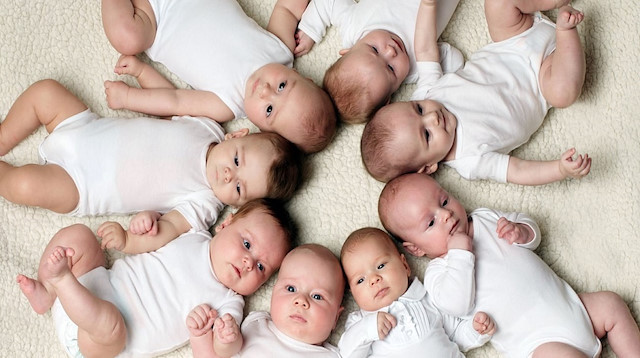

More than 29 million babies were born into conflict-affected areas in 2018, UNICEF said today.
Armed violence across countries including Afghanistan, Somalia, South Sudan, Syria and Yemen meant that, throughout last year, more than 1 in 5 babies globally spent their earliest moments in communities affected by the chaos of conflict, often in deeply unsafe, and highly stressful environments.
“Every parent should be able to cherish their baby’s first moments, but for the millions of families living through conflict, the reality is far bleaker,” said UNICEF Executive Director Henrietta Fore. “In countries around the world, violent conflict has severely limited access to essential services for parents and their babies. Millions of families lack access to nutritious food, safe water, sanitation, or a secure and healthy environment to grow and bond. Along with the immediate, obvious dangers, the long-term impacts of such a start in life are potentially catastrophic.”
When young children experience prolonged or repeated adverse and traumatic events, the brain’s stress management system is activated without relief causing ‘toxic stress’. Over time, stress chemicals break down existing neural connections and inhibit new ones from forming, leading to lasting consequences for children’s learning, behaviour, and physical and mental health.
Examples of the impact of conflict on babies and young children – given by UNICEF staff working in conflict zones – include:
- “Some of the young children we see shake with fear, uncontrollably, for hours on end. They don’t sleep. You can hear them whimpering, it’s not a usual cry but a cold, weak whimper. Others are so malnourished and traumatized they detach emotionally from the world and people around them, causing them to become vacant and making it impossible for them to interact with their families,” UNICEF worker in Yemen.
- “My son, five-year-old Heraab, finds himself in a community where he is constantly exposed to the sounds of explosions, smell of smoke, accompanied by the regular shrieking of sirens, be it police or ambulance, or the persistent honking of cars and motorbikes rushing the injured to hospital. He shudders and wakes up at night if a truck passes by with speed, sometimes shaking the windows of our house, thinking it must be another attack,” UNICEF worker in Afghanistan.
- “Some of the children are scared and look very anxious, others are very aggressive. They are frightened of visitors and flee when they see visiting vehicles coming. The cars remind them of fighting, war weaponry they need to flee from,” UNICEF worker in Somalia.
- “I’ve travelled to the hardest to reach areas of South Sudan to help provide humanitarian assistance to children who have been forced to flee their villages because of violence. With no basic services, no health facilities, poor sanitation, no food, and deep-set trauma, families struggle to survive. I see despair in the eyes of the children I meet. The conflict has taken away their childhood,” UNICEF worker in South Sudan.
This year marks the 30th anniversary of the landmark Convention on the Rights of the Child, in which, among other things, governments pledged to protect and care for children affected by conflict. Yet today, more countries are embroiled in internal or international conflict than at any other time in the past three decades, threatening the safety and wellbeing of millions of children. Hospitals, health centres and child friendly spaces – all of which provide critical services to parents and babies – have come under attack in conflicts around the world in recent years.
Providing safe spaces for families and their young children living through conflict – where children can use play and early learning as outlets for some of the trauma they have experienced; and providing psychosocial support to children – and their families – are critical parts of UNICEF’s humanitarian response.
When caregivers are given the support they need to cope with and process trauma, they have the best possible chance of providing their young children with the nurturing care needed for healthy brain development – acting as a ‘buffer’ from the chaos around them.
“Parents who interact with their babies can help shield them from the negative neurological effects of conflict. Yet, in times of conflict, parents are frequently overwhelmed,” said Fore. “Ultimately what these families need is peace, but until then they desperately need more support to help them and their children cope with the devastation they face – 29 million new lives and futures depend on it.”


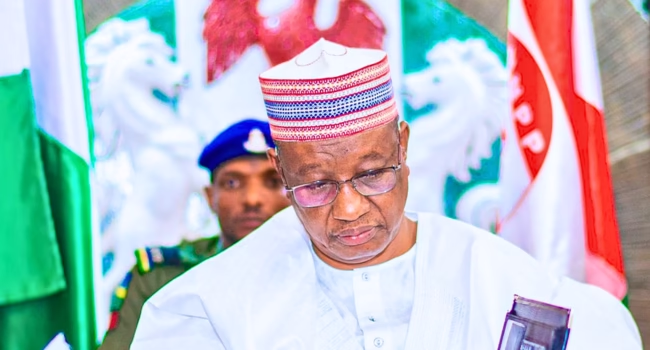
The Kano State House of Assembly has initiated impeachment proceedings against Deputy Governor Aminu Abdussalam Gwarzo over allegations of gross misconduct, abuse of office, and breach of public trust.
The notice was presented yesterday during plenary by the Majority Leader, Lawan Hussaini Dala, who said the action follows Section 188 of the 1999 Constitution of the Federal Republic of Nigeria.
Dala said the allegations stem from Abdussalam’s tenure as Commissioner for Local Government (2023–2024) and his current role as deputy governor. He accused the deputy governor of diverting funds meant for the 44 local government councils.
According to the majority leader, Abdussalam allegedly received N1.5 million monthly from each council between June 2023 and January 2024, totaling N462 million. Between February and July 2024, he allegedly collected N3.255 million monthly from each council under the guise of special assignments, amounting to N726 million.
Dala also accused the deputy governor of abuse of office, claiming he facilitated payments of N10 million from each council to NovoMed Pharmaceuticals Limited, totaling N440 million, in violation of state procurement laws.
“The misuse of official capacity to confer undue advantage constitutes abuse of power and undermines public trust,” Dala told lawmakers, adding that the allegations amount to gross misconduct under the Constitution.
The impeachment notice was reportedly endorsed by 38 lawmakers, meeting the constitutional threshold to proceed. The Speaker has acknowledged receipt, and the House is expected to serve the allegations on the deputy governor.
If approved, a panel may be constituted by the state Chief Judge to investigate the claims.
As of filing, Abdussalam had yet to respond publicly to the allegations.

The Senator representing Bayelsa West, Seriake Dickson, on Thursday announced his resignation from the Peoples Democratic Party (PDP), declaring that he had joined the newly registered Nigeria Democratic Congress (NDC).
Dickson, a former governor of Bayelsa State, made the announcement during a media briefing in Abuja, attributing his decision to what he described as irreconcilable differences within the PDP.
The lawmaker said the emergence of the NDC would strengthen Nigeria’s democratic system by providing a credible opposition platform.
According to him, the party recently received its certificate of registration from the Independent National Electoral Commission.
He said, “Last week INEC issued a certificate of registration and we now have the newest party in Nigeria known as the Nigeria Democratic Congress and our symbol is victory, the victory sign.
“So, my dear Nigerians, you now have a credible alternative opposition party known as the Nigeria Democratic Congress.”
Dickson noted that although the party’s registration took longer than expected, its eventual approval was a welcome development for the country’s democratic landscape.
“Yes, it is coming at this time. We would have wished it started some years or months back. We don’t control INEC and their processes; they delayed. We don’t also control the judiciary, but thank God it has finally arrived,” he said.
The senator also stressed that Nigeria’s democracy must not slide into a one-party system, insisting that political diversity remained vital for national stability.
“This nation cannot be a one-party state. Nigeria cannot be a one-party state. Nigeria is not designed to be a one-party state.
“We are a very diverse nation culturally, religiously and politically and that is the beauty of our country.
“So anyone or any party promoting one-party rule in Nigeria is mistaken. We build political parties and get involved in movements to access power for the good of the people, not for our personal benefit,” he added.
Meanwhile, the Independent National Electoral Commission recently announced the registration of two new political parties.
The parties are the Democratic Leadership Alliance and the Nigeria Democratic Congress, bringing the total number of registered political parties in Nigeria to 21.
The announcement was made by the INEC Chairman, Prof. Joash Amupitan, during the commission’s first quarterly consultative meeting with political party stakeholders for 2026.
According to him, the Democratic Leadership Alliance completed the required verification process, while the Nigeria Democratic Congress was registered in compliance with a Federal High Court order.
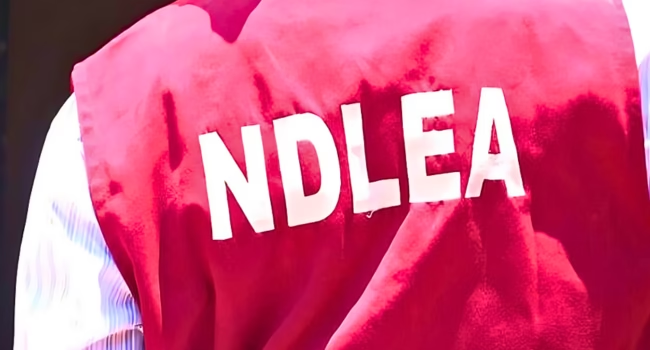
The National Drug Law Enforcement Agency (NDLEA) has arrested a 58-year-old alleged drug lord, Uzoma Valentine Ilomuanya, who had reportedly been on the agency’s wanted list and that of British authorities for over 15 years.
Ilomuanya was apprehended in Lagos on Monday, February 23, 2026, following what the agency described as a high-level, coordinated operation by officers of its Special Operations Unit.
The development was disclosed in a statement issued on Wednesday by the Director of Media and Advocacy of the agency, Femi Babafemi.
Babafemi said the suspect’s arrest ended a prolonged manhunt linked to his alleged involvement in drug trafficking activities across Nigeria and the United Kingdom.
According to the statement, Ilomuanya was first arrested in February 2003 in the United Kingdom and convicted for drug trafficking.
He was sentenced to nine years imprisonment but was released after serving two years following a successful appeal.
Babafemi added that the suspect was again arrested in the UK in July 2011 over drug-related offences.
He said, “He was granted administrative bail but jumped jurisdiction and fled to Nigeria.
“Typical of a recidivist, Ilomuanya was in November 2018 arrested in Nigeria by NDLEA operatives following the discovery of two clandestine methamphetamine laboratories in his Obinugwu, Orlu Local Government Area country home in Imo State and at his No. 3 Barrister Declan Uzoma Close, Lagos residence where officers recovered 77.960 kilograms of methamphetamine and extensive production equipment.
“He was subsequently charged before a Federal High Court in Lagos, after which he jumped court bail and has been on the run since then.”
Reacting to the development, the Chairman and Chief Executive Officer of the NDLEA, Brig. Gen. Mohamed Buba Marwa (retd.), described the arrest as a major breakthrough in the agency’s ongoing war against drug trafficking networks.
Marwa said the operation demonstrated the agency’s resolve to track down criminal elements regardless of how long they evade the law.
He said, “This arrest serves as a stern warning to those who think they can hide behind borders to escape justice.
“Whether you jump bail in London or set up clandestine labs in your village, the long arm of the NDLEA will eventually catch up with those who choose to undermine the health, security, and future of our nation.
“We remain committed to our international collaborations to ensure that Nigeria is not used as a sanctuary for global drug lords.”
Marwa also commended officers of the Special Operations Unit for their professionalism and persistence in tracking down the suspect.
He added that the agency would continue to strengthen intelligence-driven operations and international cooperation to dismantle drug trafficking networks operating within and beyond Nigeria.




-
 Politics1 week ago
Oyo Assembly Hopeful, Ramon congratulates Beelolari on his emergence as Ibarapa East APC chairman
-
 Politics2 days ago
Ibarapa East Assembly Hopeful, Ramon Congratulates Ajiboye, Says Emergence Good for Oyo APC
-
 Politics6 days ago
Makinde: My Successor Must Be Loyal to Oyo, Not Me
-
 Politics2 days ago
2027: Former Oyo Deputy Governor Adeyemo Emerges APC Chairman (See Full List)