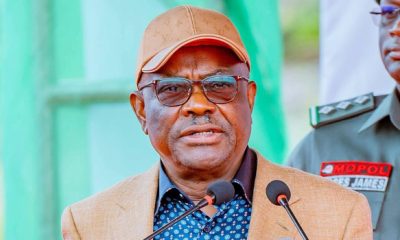
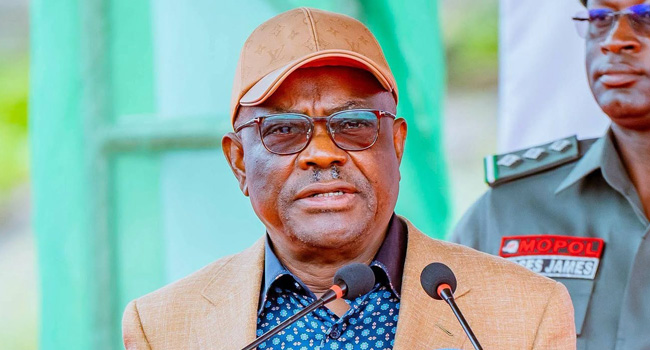
The Minister of the Federal Capital Territory, Nyesom Wike, has said his decision to support President Bola Tinubu’s re-election bid in 2027 does not mean the Peoples Democratic Party will withdraw from other elections.
Wike said he would mobilise support for Tinubu’s second-term bid while the PDP remained free to field candidates for governorship, National Assembly and State House of Assembly elections.
The minister made the clarification in a statement issued on Tuesday by his Senior Special Assistant on Public Communications and Social Media, Lere Olayinka.
Wike also dismissed suggestions that the emerging “rainbow coalition” was an arrangement with the ruling All Progressives Congress, saying it was simply a platform for politicians across party lines to mobilise support for Tinubu.
He said he would not take responsibility for helping politicians win elections in their respective states, insisting that political disputes at the state level should be settled locally.
“Politics is local and those having problems in their States should resolve them instead of using the reelection of the President to whip up sentiments,” Wike said.
The former Rivers State governor recalled that he and other members of the G5 governors did not negotiate with the APC before supporting Tinubu in the 2023 presidential election.
He maintained that his position for 2027 remained centred on securing Tinubu’s re-election and not determining the outcome of other elections.
Wike argued that the 2023 elections showed that Nigerian voters could support different political parties in presidential and National Assembly contests held on the same day.
He cited Imo, Abia, Enugu and Ebonyi states as examples, noting that the APC won some National Assembly seats despite recording relatively low votes for the presidential election in the states.
“In Imo State under Governor Hope Uzodinma, how did APC win two senate seats in 2023, in an election held the same day with that of the President and APC had less than 15 per cent in the presidential election? Was it rainbow coalition? Were the voters confused?” he asked.
Wike further cited the APC’s victories in National Assembly elections in Ebonyi, Abia and Enugu, despite the party’s performance in the presidential poll in those states.
He said the results demonstrated that voters could make different choices in different elections.
“If in 2023, the voters in Imo, Abia, Enugu and Ebonyi voted APC in the Senatorial election and voted another party in the presidential election, they won’t be confused in 2027 provided we all support the president genuinely this time?” he added.
The FCT minister urged political stakeholders to separate the President’s re-election from their individual political battles at the state level.
“What I said and stand for is that I will mobilise support for the reelection of the President. I never promised anyone that PDP will not field candidates to contest governorship, National Assembly and States House of Assembly elections,” Wike said.
He also stressed that the rainbow coalition had no formal connection with the APC.
“Most importantly, rainbow coalition has nothing to do with the APC. Rather, it is own way of mobilising support across political parties for Mr President, who has done well to deserve a second term,” he said.