
Crime & Court
SERAP reacts to $16bn power projects, backs EFCC’s decision to probe past govts’ spending

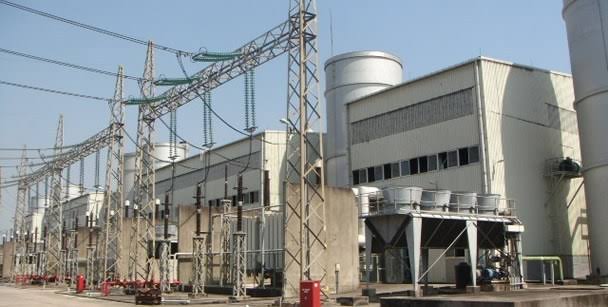

The Socio-Economic Rights and Accountability Project (SERAP) has agreed that “the reported probe by the Economic and Financial Crimes Commission (EFCC) of the past governments, starting with the government of former president Olusegun Obasanjo’s $16 billion power project.
SERAP noted that it is an opportunity for the anti-graft agency to show that former heads of state and other high-ranking public officials are not immune from investigation and prosecution for allegations of grand corruption in Nigeria.
“This probe is something, which SERAP has consistently called for. Nigerians have for far too long been denied justice and the opportunity to get to the bottom of why they continue to pay the price for corruption in the electricity sector–staying in darkness, but still made to pay crazy electricity bills.”
According to reports, the EFCC has begun the probe of the $16 billion power project of the administration of former President Olusegun Obasanjo. While some put the exact cost of the project at $16 billion others say it is $13.8 billion. Key contractors and about 18 top public officers allegedly involved in the power project scam during the Obasanjo administration, and those of former Presidents Umaru Yar’Adua and Goodluck Jonathan, may also be arrested.
SERAP, in a statement signed on Sunday by its deputy director, Kolawole Oluwadare, said: “The probe is timely, especially coming at a time of citizens’ frustrations at persistent allegations of corruption and the impacts on their human rights. Investigating allegations of grand corruption and prosecuting former heads of state and other high-ranking officials where such allegations show relevant and sufficient admissible evidence would address the grave travesty that has for many years occurred in the power sector.”
The organization also added: “The EFCC should urgently invite anyone suspected to be involved for questioning. The agency should also expand the probe to cover the alleged squandering of a total of N11 trillion in the power sector between 1999 and 2015, and the unresolved case of the reported missing $12.4 billion oil windfall, allegedly spent between 1988 and 1993 by the government of former military dictator, General Ibrahim Babangida.”
“The EFCC has the full support of Nigerians in its efforts to hold high-ranking public officials to account for grand corruption, and if consistently, fairly and diligently pursued, this probe would contribute to ending impunity for corruption, and to mobilizing and encouraging youth civic engagement in the anti-graft fight in the country. SERAP stands ready to work with the EFCC in pursuing all allegations of grand corruption.
“SERAP notes that former presidents have routinely faced corruption charges in countries like Iceland, Kyrgyzstan, Brazil, Montenegro, South Korea, Pakistan, Zimbabwe, South Africa, Slovakia, Peru, and Mauritius, and the probe by the EFCC would mean this list would grow even further to include Nigeria.
“Impunity for grand corruption will continue as long as high-ranking public officials go largely unpunished for their alleged crimes. It is by pursuing these allegations and taking the evidence before the court that the truth will be revealed and justice best served. Addressing impunity in the power sector should be total. This would help to further public perception of fairness and thoroughness.
“Lack of regular electricity supply in the country had occasioned many other problems, including lack of access to potable water. The failure by successive governments to tell Nigerians the truth about allegations of corruption in the power sector amounts to a failure to ensure that electricity services are progressively made available, on the basis of equality and non-discrimination.
“In November 2016, SERAP petitioned the former Chief Justice of Nigeria, Walter Onnoghen, urging him to probe the alleged spending of the $16 billion. In April 2017, SERAP sent President Muhammadu Buhari an open letter, advising him to take allegations of corruption in the power sector to the international criminal courts to ensure that justice is served.
“SERAP has also called on Mr Buhari to refer the alleged $16 billion spending on electricity between 1999 and 2007 to the EFCC. Mr Buhari subsequently raised questions over the issues, saying that ‘one of the former Heads of State was bragging that he spent more than 15 billion American dollars, not naira, on power. Where is the power? Where is the power?
“In August 2017, SERAP published a report, ‘From Darkness to Darkness: How Nigerians are Paying the Price for Corruption in the Electricity Sector’, which revealed how over N11 trillion meant to provide regular electricity supply was allegedly squandered under the governments of former presidents Olusegun Obasanjo, Umaru Musa Yar’Adua and Goodluck Jonathan”, the statement concluded.
Meanwhile, the said report reads: “The Obasanjo’s administration spent $10 billion on NIPP with no results in terms of increase in power generation. $13.278,937,409.94 was expended on the power sector in eight years while unfunded commitments amounted to $12 billion.
“The Federal Government then budgeted a whopping N16 billion for the various reforms under Liyel Imoke (2003 to 2007) which went down the drains as it failed to generate the needed amount of electricity or meet the set goals. Imoke was alleged to have personally collected the sum of $7.8 million for the execution of the contract for the construction of the Jos-Yola Transmission Line, which was never executed. There were documented/reported allegations of corruption against Imoke that fizzled-out shortly thereafter.”





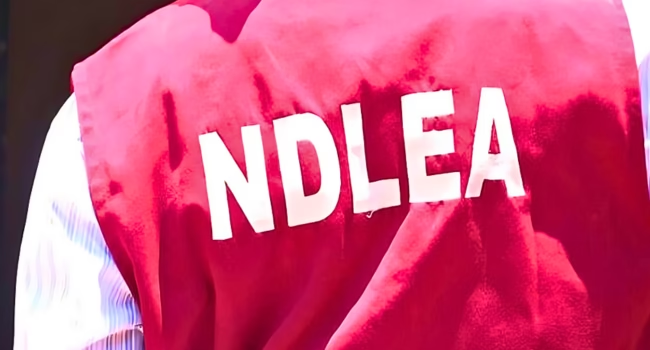
The National Drug Law Enforcement Agency (NDLEA) has arrested a 58-year-old alleged drug lord, Uzoma Valentine Ilomuanya, who had reportedly been on the agency’s wanted list and that of British authorities for over 15 years.
Ilomuanya was apprehended in Lagos on Monday, February 23, 2026, following what the agency described as a high-level, coordinated operation by officers of its Special Operations Unit.
The development was disclosed in a statement issued on Wednesday by the Director of Media and Advocacy of the agency, Femi Babafemi.
Babafemi said the suspect’s arrest ended a prolonged manhunt linked to his alleged involvement in drug trafficking activities across Nigeria and the United Kingdom.
According to the statement, Ilomuanya was first arrested in February 2003 in the United Kingdom and convicted for drug trafficking.
He was sentenced to nine years imprisonment but was released after serving two years following a successful appeal.
Babafemi added that the suspect was again arrested in the UK in July 2011 over drug-related offences.
He said, “He was granted administrative bail but jumped jurisdiction and fled to Nigeria.
“Typical of a recidivist, Ilomuanya was in November 2018 arrested in Nigeria by NDLEA operatives following the discovery of two clandestine methamphetamine laboratories in his Obinugwu, Orlu Local Government Area country home in Imo State and at his No. 3 Barrister Declan Uzoma Close, Lagos residence where officers recovered 77.960 kilograms of methamphetamine and extensive production equipment.
“He was subsequently charged before a Federal High Court in Lagos, after which he jumped court bail and has been on the run since then.”
Reacting to the development, the Chairman and Chief Executive Officer of the NDLEA, Brig. Gen. Mohamed Buba Marwa (retd.), described the arrest as a major breakthrough in the agency’s ongoing war against drug trafficking networks.
Marwa said the operation demonstrated the agency’s resolve to track down criminal elements regardless of how long they evade the law.
He said, “This arrest serves as a stern warning to those who think they can hide behind borders to escape justice.
“Whether you jump bail in London or set up clandestine labs in your village, the long arm of the NDLEA will eventually catch up with those who choose to undermine the health, security, and future of our nation.
“We remain committed to our international collaborations to ensure that Nigeria is not used as a sanctuary for global drug lords.”
Marwa also commended officers of the Special Operations Unit for their professionalism and persistence in tracking down the suspect.
He added that the agency would continue to strengthen intelligence-driven operations and international cooperation to dismantle drug trafficking networks operating within and beyond Nigeria.
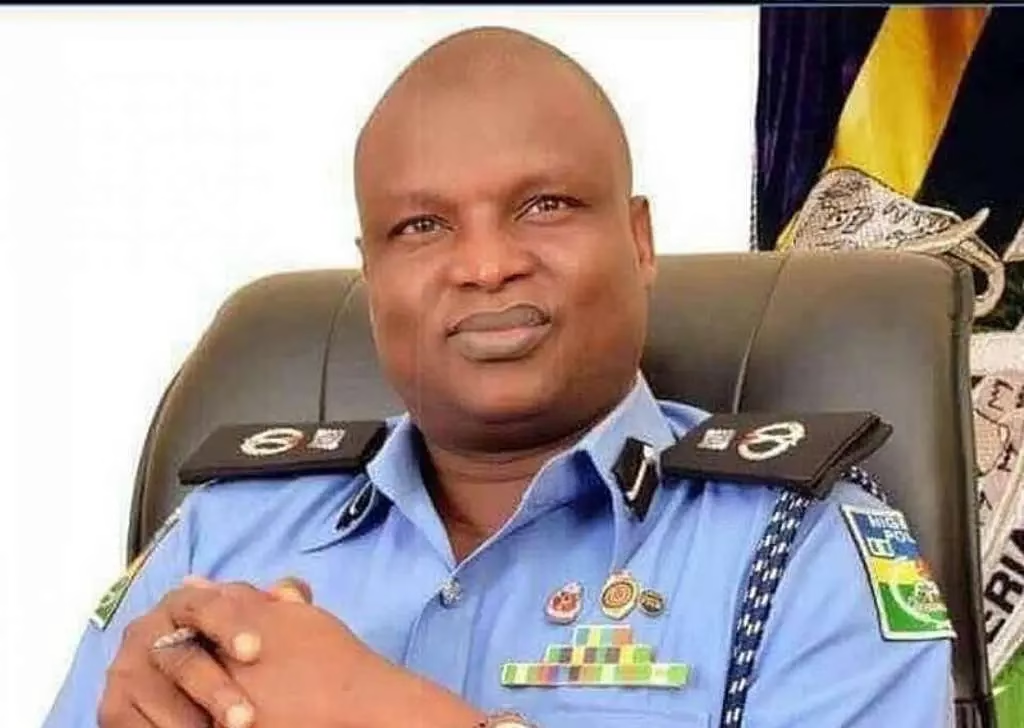
The Federal High Court in Abuja on Thursday discharged and acquitted a suspended Deputy Commissioner of Police, Abba Kyari, of a 23-count charge bordering on alleged non-declaration of assets filed by the National Drug Law Enforcement Agency.
Delivering judgment, Justice James Omotosho held that the prosecution failed to present sufficient evidence to substantiate the allegations against the defendants.
Kyari was arraigned alongside his two brothers, who were accused of swearing to false affidavits in an alleged attempt to conceal the origin of certain properties.
However, the court ruled that the anti-drug agency failed to establish that the properties allegedly not declared by Kyari were actually owned by him.
Justice Omotosho explained that ownership of landed property could be established through traditional history, title documents, acts of possession, or possession by connection.
According to the judge, the prosecution did not present any of these forms of evidence to prove that the properties located at Fountain Estate in Karsana, said to belong to Ramatu Kyari, were owned by the suspended police officer.
The court also held that the prosecution failed to produce material evidence linking Kyari to properties located on Linda Choko Road in Asokoro, Abuja, as well as properties in Maiduguri, Borno State.
In his defence, Kyari maintained that the properties in Borno State belonged to his late father, who bequeathed them to him and his siblings.
The judge held that the prosecution failed to prove otherwise.
Justice Omotosho also faulted the prosecution for charging Kyari’s brothers with conspiracy, describing the allegation as unsubstantiated.
He described the NDLEA’s case as weak and lacking credible evidence, adding that the defendant had served the country well and should not be subjected to persecution.
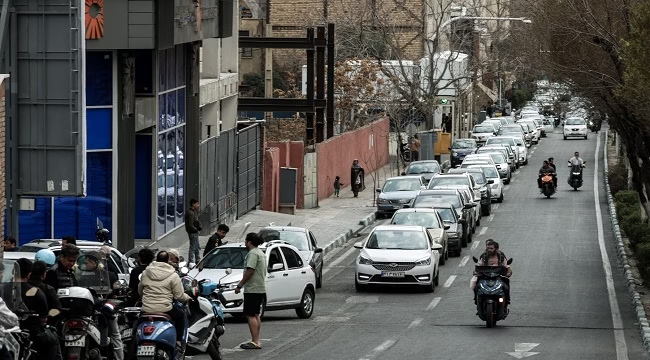
The Federal Government yesterday advised Nigerians living in the Middle East, particularly in the Islamic Republic of Iran and neighbouring Gulf states, to take extra security precautions following rising military tensions in the region.
In a statement issued on Saturday, the Ministry of Foreign Affairs said it is closely monitoring developments involving reported military operations carried out by Israel and the United States against targets in Iran, as well as subsequent retaliatory actions affecting parts of the Gulf.
The government urged Nigerians in the affected areas to remain vigilant and avoid strategic or sensitive locations such as military bases and government installations that could become flashpoints for further hostilities.
It also advised citizens to limit non-essential movement and refrain from participating in or attending public gatherings and demonstrations until the security situation stabilises.
“Nigerian citizens are strongly advised to comply with directives issued by local security authorities. Cooperation with host authorities is critical to ensuring personal safety,” the statement said.
Diplomatic missions, including the Nigerian Embassy in Tehran and consular offices in Qatar, Bahrain, Kuwait, the United Arab Emirates and Saudi Arabia, have been placed on high alert to assist Nigerians and facilitate communication where necessary.
The advisory followed reports of airstrikes on sites in Iranian cities, with explosions and plumes of smoke observed in the capital.
United States officials described the operations as efforts to neutralise security threats, while Israeli authorities characterised them as preventive and defensive measures.
Former U.S. President Donald Trump said the United States aimed to eliminate what he described as imminent dangers and vowed to destroy missile infrastructure linked to Iran’s defence capabilities. Israeli officials similarly framed the operations as defensive.
International reactions have been cautious. The African Union expressed concern over the potential impact on regional and global stability, urging restraint from all sides.
The European Union also reacted, with European Council President Antonio Costa describing the developments as troubling and confirming that European leaders remain in contact with regional partners.
The Federal Government reiterated that the safety and welfare of Nigerians abroad remain a priority and appealed to all parties involved to de-escalate hostilities and return to dialogue in the interest of global peace and stability.





-
 Politics1 week ago
Oyo Assembly Hopeful, Ramon congratulates Beelolari on his emergence as Ibarapa East APC chairman
-
 Politics2 days ago
Ibarapa East Assembly Hopeful, Ramon Congratulates Ajiboye, Says Emergence Good for Oyo APC
-
 Politics6 days ago
Makinde: My Successor Must Be Loyal to Oyo, Not Me
-
 Politics2 days ago
2027: Former Oyo Deputy Governor Adeyemo Emerges APC Chairman (See Full List)