
Crime & Court
Police not coping with serious violent crime, ISS laments

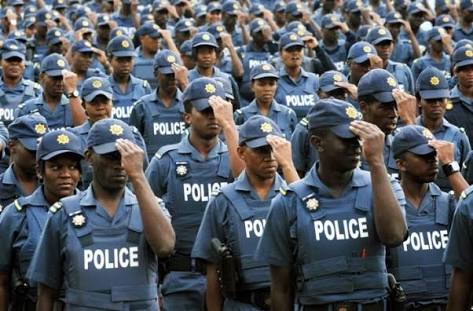

A steady rise in murder and armed robbery shows police are not getting a grip on serious violent crime in South Africa, despite a budget increased by almost 50% since 2011/12 to R87 billion.
This is largely due to inappropriate political interference in the police, the Institute for Security Studies (ISS) said in response to the latest SA Police Service (SAPS) crime statistics released on Tuesday in Parliament.
The National Development Plan called it a ‘crisis of top management’ in the SAPS. President Jacob Zuma’s presidency has resulted in a profound deterioration in policing and caused notable decline in public safety, the ISS said.
Murder
Police reported murder up 1.8% with 52 people now killed every day in South Africa on average. The murder rate has increased 13.3% in the past five years, following a 55% decrease in the first 18 years of South Africa’s democracy since 1994.
Armed robbery
In the latest SAPS figures, armed robbery increased by 8 429 cases to 140 956 (up 6.4%).
More than half of all reported armed robberies are street robberies with 79 878 recorded in the 12 months under review. Every day on average 219 cases of street robbery were reported. Street robberies increased by around 5% compared to the previous year and by 38.6% over five years.
Street robbery primarily affects the poor and working classes as it typically targets people who travel on foot and who need to use public transport to and from work, school or shops. It is one of the most feared crimes.
Armed attacks on people’s homes have increased by 1 523 reported incidents to 22 343 incidents (up 7.3%). There were 982 more armed attacks on businesses, up 5% to 20 680.
Hijacking
Hijacking of cars is up 77.5% in the past five years and up 14.5% in the year under review. There are now 46 cars hijacked a day in South Africa, more than half (52%) of them in Gauteng, where an average 24 cars are forcibly taken from drivers by armed gunmen daily.
SAPS leadership crisis
“Police reported murder up 1.8% with 52 people now killed every day in South Africa on average”
The ISS recognised the bold efforts of many competent and honest police in South Africa, but said the root of the crime and policing crises in South Africa was the failure of the president to appoint a highly experienced woman or man of integrity as SAPS National Commissioner. Ongoing political interference at all levels of the SAPS has severely weakened the organisation.
The political protection of Zuma loyalist, Crime Intelligence Head Lt-General Richard Mdluli, who has been suspended for six years with full pay and benefits despite facing criminal prosecution for murder and corruption, is one of many examples, said Gareth Newham, head of the ISS Justice and Violence Prevention Programme.
‘The protection of Mdluli has severely undermined and compromised police crime intelligence capability. This is why police cannot adequately tackle organised crime syndicates behind crimes such as hijackings and gang violence.’
The SAPS can only be professionalised when there ceases to be inappropriate political interference that favours some officers because of their political loyalties, irrespective of their conduct and ability.
If political interference is halted, then South Africans have good reason to expect better results from the police, said Newham.
‘The police have sufficient skilled operational commanders, resources and technology to effectively tackle violent criminal syndicates and gangs. But they need the right leadership for it to be effective.’
Change would need to start with the way the SAPS National Commissioner is appointed. The ISS and Corruption Watch are urging President Jacob Zuma to follow guidelines in the NDP, as adopted by the cabinet in 2012, and appoint South Africa’s top cop based on competence, experience and integrity – not political loyalty.
‘The same criminals commit many violent crimes from murder to hijacking and armed robbery,’ Newham said. ‘Failure by police to identify violent criminals and investigate their crimes just keeps them on the street as a continued public danger. Police could prevent hundreds of hijackings by stopping the activity of just one syndicate.’
Better investigation
The ISS said police urgently need to improve their capability to investigate crime, gather evidence and arrest the perpetrators. This requires police to earn the trust of communities and reverse a decline in trust levels, as indicated by the most recent Victims of Crime Survey (VoCS).
The annual SAPS crime statistics released on Tuesday cover the period April 2016 to March 2017 and are not a reflection of the past seven months in South Africa.
The ISS has noted that the VoCS found nearly five times more house robberies than those recorded by police, Newham said. ‘It may be that the police are under-recording such incidents or that there are other reasons for difference in numbers. But we need to get to the bottom of this as accurate information is critical if we are to develop effective strategies for reducing crime.’
The ISS encouraged police to work closely with Stats SA and civil society groups to ensure crime data is accurate, and that crime is tackled in a collaborative way.
The ISS points out that corruption is not a category included in the crime statistics, despite it being a criminal threat to South Africa’s economy and social cohesion.
‘Corruption undermines public safety as it weakens the economy, breaks down confidence in government and leads to community frustration.’ The public need to see that the police are proactively tackling this profound threat to our national security, the ISS said.



The National Drug Law Enforcement Agency (NDLEA) has arrested a 58-year-old alleged drug lord, Uzoma Valentine Ilomuanya, who had reportedly been on the agency’s wanted list and that of British authorities for over 15 years.
Ilomuanya was apprehended in Lagos on Monday, February 23, 2026, following what the agency described as a high-level, coordinated operation by officers of its Special Operations Unit.
The development was disclosed in a statement issued on Wednesday by the Director of Media and Advocacy of the agency, Femi Babafemi.
Babafemi said the suspect’s arrest ended a prolonged manhunt linked to his alleged involvement in drug trafficking activities across Nigeria and the United Kingdom.
According to the statement, Ilomuanya was first arrested in February 2003 in the United Kingdom and convicted for drug trafficking.
He was sentenced to nine years imprisonment but was released after serving two years following a successful appeal.
Babafemi added that the suspect was again arrested in the UK in July 2011 over drug-related offences.
He said, “He was granted administrative bail but jumped jurisdiction and fled to Nigeria.
“Typical of a recidivist, Ilomuanya was in November 2018 arrested in Nigeria by NDLEA operatives following the discovery of two clandestine methamphetamine laboratories in his Obinugwu, Orlu Local Government Area country home in Imo State and at his No. 3 Barrister Declan Uzoma Close, Lagos residence where officers recovered 77.960 kilograms of methamphetamine and extensive production equipment.
“He was subsequently charged before a Federal High Court in Lagos, after which he jumped court bail and has been on the run since then.”
Reacting to the development, the Chairman and Chief Executive Officer of the NDLEA, Brig. Gen. Mohamed Buba Marwa (retd.), described the arrest as a major breakthrough in the agency’s ongoing war against drug trafficking networks.
Marwa said the operation demonstrated the agency’s resolve to track down criminal elements regardless of how long they evade the law.
He said, “This arrest serves as a stern warning to those who think they can hide behind borders to escape justice.
“Whether you jump bail in London or set up clandestine labs in your village, the long arm of the NDLEA will eventually catch up with those who choose to undermine the health, security, and future of our nation.
“We remain committed to our international collaborations to ensure that Nigeria is not used as a sanctuary for global drug lords.”
Marwa also commended officers of the Special Operations Unit for their professionalism and persistence in tracking down the suspect.
He added that the agency would continue to strengthen intelligence-driven operations and international cooperation to dismantle drug trafficking networks operating within and beyond Nigeria.
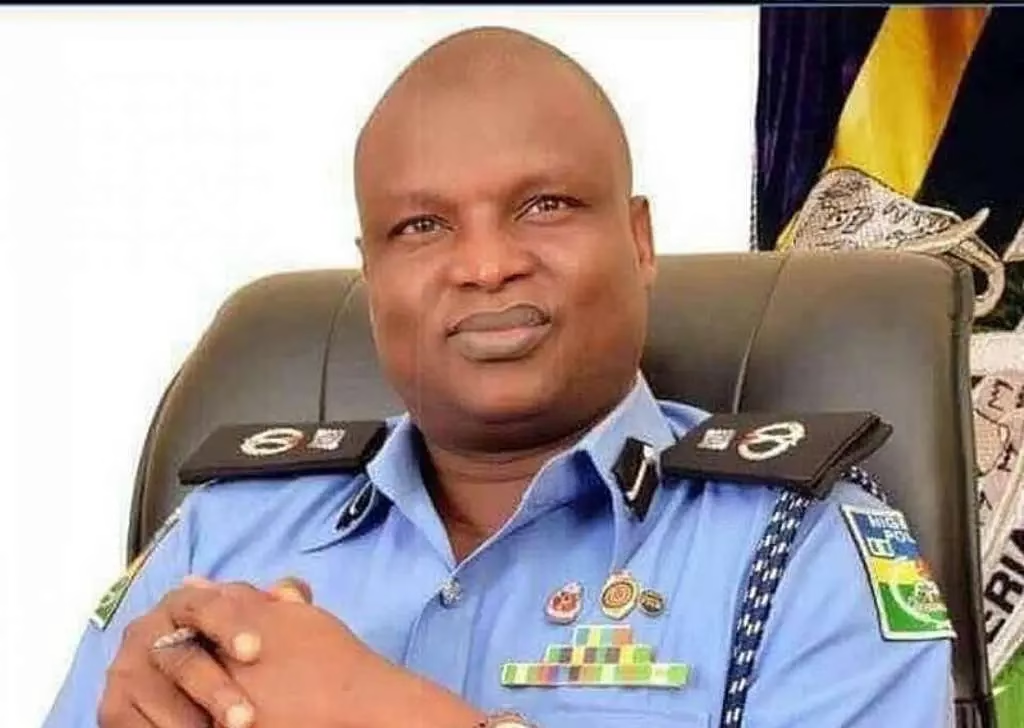
The Federal High Court in Abuja on Thursday discharged and acquitted a suspended Deputy Commissioner of Police, Abba Kyari, of a 23-count charge bordering on alleged non-declaration of assets filed by the National Drug Law Enforcement Agency.
Delivering judgment, Justice James Omotosho held that the prosecution failed to present sufficient evidence to substantiate the allegations against the defendants.
Kyari was arraigned alongside his two brothers, who were accused of swearing to false affidavits in an alleged attempt to conceal the origin of certain properties.
However, the court ruled that the anti-drug agency failed to establish that the properties allegedly not declared by Kyari were actually owned by him.
Justice Omotosho explained that ownership of landed property could be established through traditional history, title documents, acts of possession, or possession by connection.
According to the judge, the prosecution did not present any of these forms of evidence to prove that the properties located at Fountain Estate in Karsana, said to belong to Ramatu Kyari, were owned by the suspended police officer.
The court also held that the prosecution failed to produce material evidence linking Kyari to properties located on Linda Choko Road in Asokoro, Abuja, as well as properties in Maiduguri, Borno State.
In his defence, Kyari maintained that the properties in Borno State belonged to his late father, who bequeathed them to him and his siblings.
The judge held that the prosecution failed to prove otherwise.
Justice Omotosho also faulted the prosecution for charging Kyari’s brothers with conspiracy, describing the allegation as unsubstantiated.
He described the NDLEA’s case as weak and lacking credible evidence, adding that the defendant had served the country well and should not be subjected to persecution.
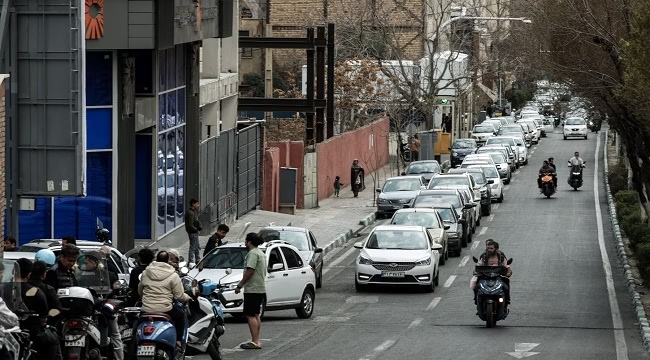
The Federal Government yesterday advised Nigerians living in the Middle East, particularly in the Islamic Republic of Iran and neighbouring Gulf states, to take extra security precautions following rising military tensions in the region.
In a statement issued on Saturday, the Ministry of Foreign Affairs said it is closely monitoring developments involving reported military operations carried out by Israel and the United States against targets in Iran, as well as subsequent retaliatory actions affecting parts of the Gulf.
The government urged Nigerians in the affected areas to remain vigilant and avoid strategic or sensitive locations such as military bases and government installations that could become flashpoints for further hostilities.
It also advised citizens to limit non-essential movement and refrain from participating in or attending public gatherings and demonstrations until the security situation stabilises.
“Nigerian citizens are strongly advised to comply with directives issued by local security authorities. Cooperation with host authorities is critical to ensuring personal safety,” the statement said.
Diplomatic missions, including the Nigerian Embassy in Tehran and consular offices in Qatar, Bahrain, Kuwait, the United Arab Emirates and Saudi Arabia, have been placed on high alert to assist Nigerians and facilitate communication where necessary.
The advisory followed reports of airstrikes on sites in Iranian cities, with explosions and plumes of smoke observed in the capital.
United States officials described the operations as efforts to neutralise security threats, while Israeli authorities characterised them as preventive and defensive measures.
Former U.S. President Donald Trump said the United States aimed to eliminate what he described as imminent dangers and vowed to destroy missile infrastructure linked to Iran’s defence capabilities. Israeli officials similarly framed the operations as defensive.
International reactions have been cautious. The African Union expressed concern over the potential impact on regional and global stability, urging restraint from all sides.
The European Union also reacted, with European Council President Antonio Costa describing the developments as troubling and confirming that European leaders remain in contact with regional partners.
The Federal Government reiterated that the safety and welfare of Nigerians abroad remain a priority and appealed to all parties involved to de-escalate hostilities and return to dialogue in the interest of global peace and stability.







-
 Politics3 days ago
Ibarapa East Assembly Hopeful, Ramon Congratulates Ajiboye, Says Emergence Good for Oyo APC
-
 Politics1 week ago
Makinde: My Successor Must Be Loyal to Oyo, Not Me
-
 Politics4 days ago
2027: Former Oyo Deputy Governor Adeyemo Emerges APC Chairman (See Full List)
-

 News3 days ago
NERC orders DisCos to refund ₦20.33bn meter costs to customers