News
Iraq Undertakes Historic Census After 40-Year Gap
Published
1 year agoon
By
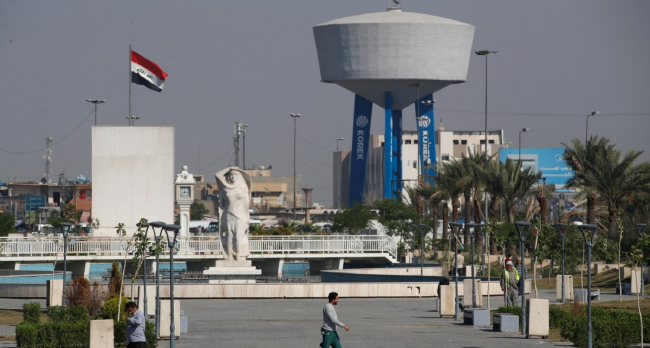
AFPIraq is holding its first nationwide census in nearly four decades this week, a long-awaited count in a nation that has been blighted by sectarian and ethnic divisions.
The census is scheduled for Wednesday and Thursday, and will provide sorely needed up-to-date demographic data for the country which has an estimated population of around 44 million.
It will be the first census to cover all 18 governorates since 1987, when dictator Saddam Hussein was in power, following repeated delays caused by years of war and political tensions between factions.
“More generally across the country, parliamentary representation will change,” said Hamzeh Hadad, a visiting fellow at the European Council on Foreign Relations (ECFR).
With one member of parliament allocated by the constitution per 100,000 Iraqis, “having an official census will mean the numbers will have to be adjusted” based on the new demographic breakdown, he said.
A count conducted in 1997 excluded the three northern provinces that make up the autonomous Kurdistan region.
The upcoming census has reignited tensions between Baghdad and Kurdistan over disputed territories in the north.
The census includes religion but does not differentiate between sects, such as Sunni and Shiite Muslims, and, unlike previous counts, it excludes ethnicity.
“There are some crucial details in this census that might be missing to appease all sides to finally allow it to take place,” Hadad added.
Iraq has been keen to conduct the census for budgetary reasons.
Prime Minister Mohammed Shia al-Sudani said the census was important for “development and planning steps in all sectors that contribute to the advancement and progress of Iraq”, where electricity is scarce and infrastructure largely in disrepair.
– Two-day curfew –
During the census a two-day curfew will operate, with families having to stay at home so 120,000 researchers can collect data directly from households.
A questionnaire seen by AFP records the number of people per household, health status, education level, employment status, number of cars and even an inventory of household appliances, so standards of living can be assessed.
Iraq has spent much of the past few decades devastated by conflict and sanctions, including a sectarian struggle after the US-led invasion 2003 toppled Saddam and the emergence of the Islamic State group in 2014.
Demographics are likely to have shifted with the exile of hundreds of thousands of Christians, and also of tens of thousands of Yazidi families who were displaced from Sinjar by atrocities committed by IS extremists.
Iraq has regained some semblance of stability in recent years, despite sporadic violence and political turmoil.
To organise the count, authorities partnered with the United Nations Population Fund (UNFPA), in an effort to generate “accurate demographic information, facilitating effective policymaking and promoting inclusive growth”.
After years of uncertainty, the census will reveal “the reality of Iraq in its smallest details”, said planning ministry spokesman Abdel-Zahra al-Hindawi.
“We will be able to diagnose all the problems that paralyse development in the areas of health, education, housing,” he added.
– Demographic shift –
Previous censuses were cancelled mainly because of tensions over disputed territories between the Kurdish, Arab, and Turkoman communities in the northern governorates of Kirkuk and Nineveh.
There is still “a lot of sensitivity over disputed territories”, said the ECFR’s Hadad.
“It’s not just the Arabisation policy under Saddam Hussein. But the reversal of it and Kurdification of disputed territories post-2003. So it’s not one-sided.”
Fahmi Burhane, a Kurdistan region official focused on the disputed territories, voiced long-standing fears among Kurds about a demographic shift in Kirkuk and other areas claimed by both Baghdad and Arbil.
“If we look at past censuses, the number of Kurds has gradually decreased in the Kurdish regions outside autonomous Kurdistan,” he said, referring to the movement of Arabs into areas such as Kirkuk under Saddam.
“Arab neighbourhoods have been built in recent years, which absolutely do not correspond to normal population growth,” he said.
In the census, Baghdad has agreed to register only the descendants of families who were present in the disputed territories during the 1957 count, in order to prevent subsequent waves of migration from disrupting the demographic balance. Newcomers will be counted in their province of origin.
Burhane said the Iraqi government has been able to “alleviate certain concerns” over the poll.

Related
You may like
News
Kano Assembly Moves to Impeach Deputy Governor Gwarzo Over ₦1.6bn Alleged Fraud
Published
12 hours agoon
March 5, 2026By
adminThe Kano State House of Assembly has initiated impeachment proceedings against Deputy Governor Aminu Abdussalam Gwarzo over allegations of gross misconduct, abuse of office, and breach of public trust.
The notice was presented yesterday during plenary by the Majority Leader, Lawan Hussaini Dala, who said the action follows Section 188 of the 1999 Constitution of the Federal Republic of Nigeria.
Dala said the allegations stem from Abdussalam’s tenure as Commissioner for Local Government (2023–2024) and his current role as deputy governor. He accused the deputy governor of diverting funds meant for the 44 local government councils.
According to the majority leader, Abdussalam allegedly received N1.5 million monthly from each council between June 2023 and January 2024, totaling N462 million. Between February and July 2024, he allegedly collected N3.255 million monthly from each council under the guise of special assignments, amounting to N726 million.
Dala also accused the deputy governor of abuse of office, claiming he facilitated payments of N10 million from each council to NovoMed Pharmaceuticals Limited, totaling N440 million, in violation of state procurement laws.
“The misuse of official capacity to confer undue advantage constitutes abuse of power and undermines public trust,” Dala told lawmakers, adding that the allegations amount to gross misconduct under the Constitution.
The impeachment notice was reportedly endorsed by 38 lawmakers, meeting the constitutional threshold to proceed. The Speaker has acknowledged receipt, and the House is expected to serve the allegations on the deputy governor.
If approved, a panel may be constituted by the state Chief Judge to investigate the claims.
As of filing, Abdussalam had yet to respond publicly to the allegations.
Related
News
IGP Inaugurates State Police Committee, Gives Four-Week Deadline
Published
1 day agoon
March 4, 2026By
adminThe Inspector-General of Police, Tunji Disu, on Wednesday inaugurated a seven-member committee on the establishment of state police, giving it four weeks to submit its report.
The inauguration was held during his maiden conference with senior police officers at the Peacekeeping Conference Centre, Force Headquarters, Abuja.
Charging members of the panel to discharge their duties with professionalism and objectivity, Disu described the assignment as “both significant and timely,” noting that it would shape the framework through which state policing may operate in Nigeria.
“In carrying out this assignment, your deliberations must be guided by professionalism, objectivity, and a clear appreciation of the unique complexities of policing a diverse nation such as our own,” the IGP said.
He stated that if properly designed and effectively implemented, state policing holds significant potential benefits for the country.
“By bringing law enforcement closer to communities, state police institutions can deepen local knowledge of security dynamics and enable quicker and more targeted responses to emerging threats,” he added.
The committee is expected to review existing policing models within and outside Nigeria, assess community security needs and emerging risks, and propose an operational framework for the establishment and coordination of state police structures.
It will also address issues relating to recruitment, training, standards and resource allocation, as well as develop accountability and oversight mechanisms to ensure professionalism and public trust.
The panel is chaired by Olu Ogunsakin, with Bode Ojajuni as secretary. Other members are Emmanuel Ojukwu, Okebechi Agora, Suleyman Gulma, Ikechukwu Okafor and Tolulope Ipinmisho.
Disu said the committee had about four weeks to conclude its assignment and submit a comprehensive report.
The move marks one of the first major steps taken by the new police chief since his appointment and confirmation a few days ago.
The development comes amid rising security concerns across the country, with several stakeholders advocating state policing as part of measures to tackle insecurity.
President Bola Tinubu had earlier asked the National Assembly to commence the process of amending relevant laws to pave the way for the creation of state police.
Related
News
Tinubu swears in Disu as IGP, inaugurates RMAFC, FCSC commissioners
Published
1 day agoon
March 4, 2026By
adminPresident Bola Tinubu on Wednesday swore in Olatunji Disu as the Inspector-General of Police (IGP).
Disu took the oath of office at the Council Chamber of the Presidential Villa, Abuja, shortly before the commencement of the Federal Executive Council (FEC) meeting.
The President also administered the oath of office to six commissioners of the Revenue Mobilisation Allocation and Fiscal Commission (RMAFC) and two commissioners of the Federal Civil Service Commission (FCSC).
The ceremonies were witnessed by ministers, senior government officials and family members of the appointees.
The council meeting began shortly after the swearing-in.
In attendance were Vice President Kashim Shettima; the Secretary to the Government of the Federation, Senator George Akume; the Chief of Staff to the President, Femi Gbajabiamila; the National Security Adviser (NSA), Nuhu Ribadu; and the Head of the Civil Service of the Federation, Mrs EsthMrs.Walson-Jack.
Disu was appointed acting IGP on February 25, 2026, by President Tinubu, following the resignation of former IGP Kayode Egbetokun.
His appointment was subsequently endorsed by the Nigeria Police Council (NPC).
The former Assistant Inspector-General of Police assumed office last Wednesday.
He previously served as Assistant Inspector-General in charge of the Force Criminal Investigation Department (FCID) Annex, Alagbon, Lagos, after his promotion to the rank last year.
A former head of the Lagos Rapid Response Squad (RRS), Disu has pledged to deliver accountable, modern and professional policing.
Related
Advertisement
Entertainment
Adekunle Gold, Simi welcome twins
Ayefele drops new album, Reflections
Reggae Legend, Jimmy Cliff, Dies At 81
Photos: Davido blows $3.7m on lavish Miami white wedding for Chioma
FAAN probes K1 for spilling alcohol on airport officer during boarding
Odunlade Adekola loses father
MegaIcon Magazine Facebook Page
MEGAICON TV
Advertisement
Trending
-
Politics2 days agoIbarapa East Assembly Hopeful, Ramon Congratulates Ajiboye, Says Emergence Good for Oyo APC
-
Politics7 days agoMakinde: My Successor Must Be Loyal to Oyo, Not Me
-
Politics3 days ago2027: Former Oyo Deputy Governor Adeyemo Emerges APC Chairman (See Full List)
-
Politics7 days agoFintiri Dumps PDP for APC, Moves with Cabinet, 14 Adamawa Lawmakers