Connect with us

Politics

How Awolowo, Akintola Destroyed Action Group | By Idowu Ayodele

Published

on

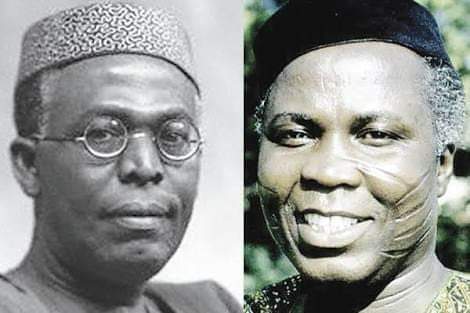
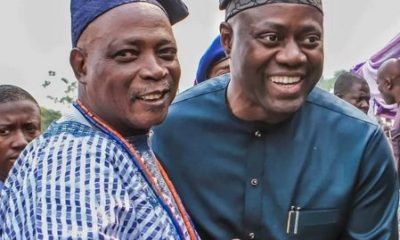
Awolowo and Akintola (filed photo)

NIGERIA has witnessed a number of political crisis since independence, such as the Action Group crisis of 1962, the census crisis of 1962/63, the civil war of 1966-1970, the Federal election crisis of 1964/1965 amongst others.

In 1945, a group of Nigerian Students who were by the time studying in Britain came together to form a Yoruba socio- cultural group named ‘Egbe Omo Oduduwa’. However, in 1951, led by Chief Obafemi Awolowo, the party was formed and Christened ‘Action Group’, AG. Other members of the party were Chief Samuel Ladoke Akintola, Chief Sonibare, Sir Adesoji Aderemi and Chief Bode Thomas. It is believed that the Egbe Omo Oduduwa metamorphosed into the Action Group.

Chief Awolowo later became the Premier of the Western Region on the platform of the party until 1955 when he moved to the central to become the official opposition leader of the parliament. The main objectives of the Action Group Party, AG were among others to bring and organize within its fold, all nationalists in the Western Region, so that they may work together as a united party, and submit themselves to party loyalty and discipline. Also, to prepare and present to the public programs for all departments of government, and to strive faithfully to ensure the effectuation of such programs through those of its members that are elected into the Western House of Assembly and Federal Legislature.

The Action Group which was the party in government in the Western Region was plunged into serious crisis early in 1962 over a number of irreconcilable differences between the leader of the party, Chief Obafemi Awolowo and his deputy, Chief Samuel Ladoke Akintola who by then was the Premier of the region after Awolowo had assumed the position of the leader of the opposition at the federal level. Unfortunately, in 1959, Awolowo failed in the federal election and his ambition to become the prime minister was frustrated . While he was still nursing this anger, the prime minister, Abubakar Tafawa Balewa requested him to form government of national unity which he turned down.

The reluctance of Chief Awolowo to support his deputy, Akintola as the Premier of Western Region when he was made the leader of opposition in the Federal House of Representatives in Lagos, also ignited the crisis as  the newly appointed Premier, took independent decisions without consulting his leader who was then at the center as leader of opposition. Akintola and some others supported the move to join the ruling Northern People’s Congress, NPC, to form a government of national unity which did not go down well with Chief Awolowo.

Another circumstance that threatened the existence of the then  Action Group, (AG) was the adoption of Democratic socialism as its ideology  which was also not well received by the premier of western region, Akintola.

It is interesting to note that intra-party disagreement and mutual suspicious were the remote causes of this crisis. The intolerance within the rank and file of the leaders that later spread to other members of the party. The accusation and counter accusation of the leaders clearly revealed a deep seated hatred they had for each other.

In a related development, the Action Group’s leader, Awolowo had allegedly instructed the Premier of the Western Region, Akintola to refer important matters to him before any action was taken. This was considered to be an undue interference in the office of the Premier. Similarly, Awolowo had earlier suggested a nation-wide political campaign to create sufficient awareness for the electoral preparatory to the Federal Elections of 1964, but turned down by his deputy, Akintola who wanted the campaign to be restricted to Western Region alone. This increased the suspicion between the two leaders and Chief Awolowo believed that his deputy wanted to overthrow him as the leader of the party.

The ideological disparity between the two leaders could be likened to the event of Cold War when the United States of America led the West, and the East controlled by the Union of Soviet Socialist Republic, this was indeed a great challenge which Awolowo and Akintola failed to resolve.

However, the crisis brew open at the party’s Annual National Congress held on 2nd February, 1962 in Jos, when the Premier of the Western Region, Akintola and a few of his ministers failed to attend. The party broke into two factions, Chief Akintola and others having charged with anti party activities was advised to resign which he refused to and was consequently sacked by the Governor of the Region, Oba Adesoji Aderemi and replaced by Alhaji Dauda Adegbenro as the new Premier. Chief Akintola did not stop there, he went to court to challenge his removal as the Premier of Western Region.

When the newly appointed Premier convened the meeting of the House of Assembly, fracas broke out and the mace, a symbol of authority was destroyed. Thereafter, the police was called to maintain order and lock up the House of Assembly. Violence ensued between the two factions (Awolowo and Akintola’s loyalists) and there was widespread killings and burning of houses. The federal government, for the first time in the history of the provisions of the constitution invoked the emergency powers and declared a state of emergency in the Western Region. By the time the state of emergency was lifted after six months, Chief Awolowo, other Action Group leaders and their aides were jailed for treason.

After the collapse of Action Group, AG, Chief Akintola later formed the Nigerian National Democratic Party, NNDP. It should be noted that the crisis weakened the power of the opposition in the House of Representatives and made mockery of the parliamentary system of government. This portends that our political leaders cannot tolerate the opposing views of their colleagues. This crisis led to series of events and subsequently in the country before the military took over in 1966.

Comments

Politics

2027: Omidiji Donates Bus to Strengthen Oyo APC Mobilisation

Published

on

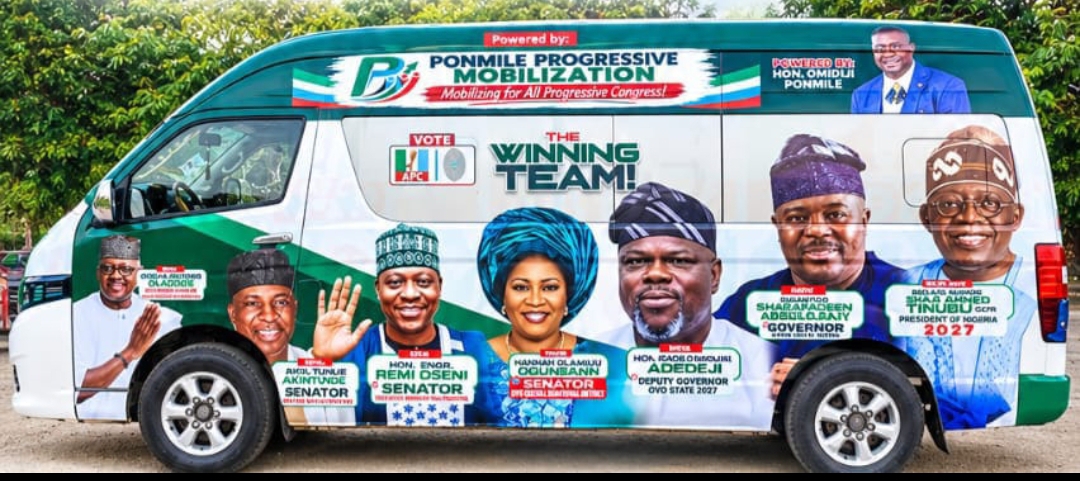
An All Progressives Congress chieftain in Oyo State, Hon. Ponmile Omidiji, has donated a brand-new bus to Ponmile Progressive Mobilization to strengthen the group’s activities ahead of the 2027 general elections.

Omidiji, who is the chairman of Ponmile Progressive Movement and Chief Executive Officer of Agbele Sporting Club, said the vehicle would facilitate members’ movement and help the group extend its grassroots mobilisation across the state.

Ponmile Progressive Mobilization operates as a subsidiary of Ponmile Progressive Movement under the motto, “Mobilizing for All Progressives Congress.”

The organisation said the bus would improve its capacity to reach communities, coordinate members and promote awareness of the APC’s programmes and agenda ahead of the 2027 polls.

Omidiji is a former National Financial Secretary of the National Association of Nigerian Students (NANS) and a former supervisor at the local government level during the administration of the late Governor Abiola Ajimobi.

He also served as Deputy Youth Leader of the Presidential and Governorship Campaign Council during the 2023 election cycle.

The organisation said the vehicle would be deployed for outreach and other activities across Oyo State as preparations for the next general elections gather momentum.

Continue Reading

Politics

Alli to Makinde: Your Presidential Bid  Dead on  Arrival

Published

on

Oyo senator’s campaign reacts to reported APM South-South vote of no confidence

The Senator Sharafadeen Alli Campaign Organisation has said the reported rejection of Oyo State Governor Seyi Makinde by leaders of the Allied People’s Movement (APM) in the South-South has reinforced its opposition to his presidential ambition ahead of the 2027 general elections.

The organisation described the development as a vindication of its position that Makinde’s presidential bid lacked the political foundation to succeed, alleging that the governor was using the ambition to negotiate a soft landing ahead of the next general elections.

The campaign organisation’s Director of Media and Publicity, Bisi Oladele, stated this in a statement on Wednesday, following a newspaper advertorial in which APM leaders in the South-South reportedly passed a vote of no confidence in the governor.

The APM leaders were quoted as accusing Makinde of lacking the substance, political will and focus to lead the party, while questioning his credibility and relationship with party members.

Reacting, Alli’s campaign organisation alleged that Makinde was pursuing a presidential ambition he knew would not succeed, claiming that his real objective was to weaken President Bola Tinubu’s political support in the South-West.

“The good news is that he will not only lose to President Tinubu in Oyo State, his lackey, Hon. Bimbo Adekanmbi, whom he is desperate to install for an undemocratic third term, will be flatly defeated by Senator Sharafadeen Alli,” the statement said.

The organisation expressed confidence that Alli’s Oyo AHEAD agenda would accelerate development in the state, insisting that the senator offered a different political direction.

It also claimed that Makinde’s political camp was losing ground, citing the reported resignations of aides and the departure of some party leaders as signs of growing dissatisfaction within his camp.

The campaign organisation argued that the reported criticism from APM stakeholders in the South-South reflected concerns about Makinde’s relationship with party structures and political associates.

“If a man cannot manage his party in his own state, how can he manage Nigeria?” an APM leader from the South-South was quoted as asking during a meeting on Tuesday.

The statement further accused Makinde of disregarding established party structures and abandoning some of those who supported his emergence as governor in 2019 and his re-election in 2023.

It also pointed to what it described as repeated resignations from the governor’s cabinet in recent weeks, arguing that the developments raised questions about the state of his political support.

The organisation maintained that the reported position of the South-South APM leaders reinforced its criticism of Makinde’s presidential ambition, which it again described as “dead on arrival”.

Continue Reading

Politics

N100bn loan: Makinde out to bankrupt Oyo, Alli campaign organisation alleges

Published

on

The Senator Sharafadeen Alli Campaign Organisation has accused Oyo State Governor, Seyi Makinde, of putting the state’s financial future at risk with a proposed N100bn loan, alleging that the move is driven by political interests ahead of the 2027 elections.

The organisation, in a statement by its Director of Media and Publicity, Bisi Oladele, condemned the proposed borrowing and criticised the Oyo State House of Assembly for approving the loan, warning that it could leave the incoming administration with a heavier debt burden.

It questioned the economic justification for taking on another major financial obligation with Makinde’s tenure expected to end in May 2027.

The campaign organisation alleged that the proposed loan had more to do with the governor’s political ambitions and succession plans than with the development of the state.

“The proposed borrowing was not driven by any genuine developmental consideration but by a desperate political agenda to finance the 2027 elections,” the statement said.

The organisation, however, did not provide evidence to substantiate its allegation that the loan was intended to fund election-related activities.

It also faulted the state House of Assembly for approving the borrowing, accusing lawmakers of failing to subject the proposal to adequate scrutiny in the interest of the people.

According to the organisation, the legislature has a responsibility to protect the state’s finances rather than approve borrowing requests without thoroughly examining their implications.

“Approval by the legislature does not automatically confer economic wisdom, transparency or public interest on a borrowing decision,” it said.

The campaign organisation further criticised Makinde’s reported presidential ambition, alleging that the governor was more concerned about his political future and preferred successor than the financial wellbeing of the state.

It insisted that no amount of borrowing could guarantee victory for the governor’s preferred candidate in the 2027 governorship election, maintaining that the people of Oyo State would decide their next governor at the polls.

The organisation warned against using the state’s borrowing powers and creditworthiness to advance partisan political interests, stressing that the consequences of excessive debt could outlast the administration that incurred it.

It also said the incoming administration could subject questionable financial commitments to lawful scrutiny, adding that legislative approval would not shield any established wrongdoing from accountability.

The campaign organisation urged Makinde to reconsider the proposed loan and ensure that he handed over a financially viable state when his tenure ends in May 2027.

“He cannot borrow his way into the presidency, neither can he borrow his preferred candidate into the Government House in Agodi,” the statement said.

It warned that although the governor’s tenure would end, the burden of any debt incurred by his administration could remain with the people for years.

Continue Reading

Trending